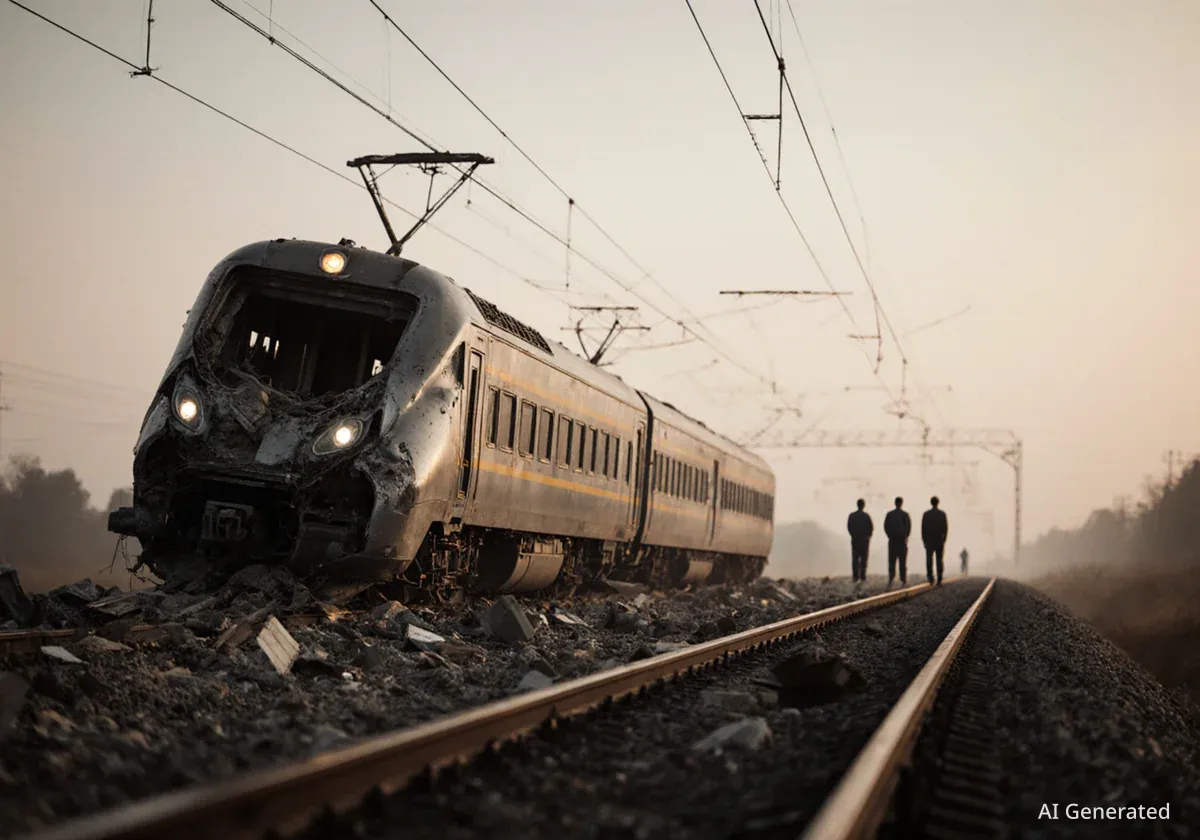
A catastrophic collision between two high-speed trains in Spain’s Andalucía region on the evening of January 18th has resulted in at least 43 fatalities and left more than 150 people injured. The incident has sent shockwaves across a nation that prides itself on its advanced and extensive rail system.
The crash, which occurred on a key route in the southern part of the country, has prompted an immediate investigation by transport authorities. The event marks a tragic turn for a network long celebrated as a symbol of Spain's modernity and efficiency, raising urgent questions about its safety protocols and future investment priorities.
Key Takeaways
- Two high-speed trains collided in Andalucía, Spain, on January 18th, 2026.
- The incident resulted in at least 43 deaths and over 150 injuries.
- Spain operates the world's second-longest high-speed rail network, a major point of national pride.
- The crash has triggered a full-scale investigation into the cause and will likely lead to a review of rail infrastructure spending.
Details of the Andalucía Collision
The collision occurred on the evening of January 18th, disrupting a typically reliable service that connects major cities across the country. Emergency services were dispatched to the scene, where they worked through the night to attend to the injured and manage the wreckage. The number of casualties was confirmed by officials early the following morning, with the injury count exceeding 150 individuals.
Eyewitness accounts describe a scene of chaos and confusion following the impact. The collision has led to the complete suspension of services on the affected line as investigators and recovery teams secure the area. The government has not yet released specific details about the two trains involved or the precise circumstances that led to the crash, pending a thorough investigation.
"Our primary focus right now is on the victims and their families. A full and transparent investigation will be launched to determine the cause of this terrible tragedy. We must understand what went wrong to ensure it never happens again," a government spokesperson stated at a press conference.
A Blow to a National Symbol
Spain's high-speed train network, known as AVE (Alta Velocidad Española), is more than just a mode of transport; it is a cornerstone of the country's modern identity. Since its inauguration, the system has been a source of immense national pride, connecting distant parts of the large country with remarkable speed and efficiency.
The Importance of Spain's High-Speed Rail
The AVE network is a critical piece of Spain's infrastructure, facilitating business and tourism by dramatically reducing travel times between cities like Madrid, Barcelona, Seville, and Valencia. Its reputation for safety and punctuality has made it a preferred choice for millions of domestic and international travelers annually.
This incident marks the most significant disaster in the history of the country's high-speed system. For many Spaniards, the crash challenges the perception of the network as an infallible example of Spanish engineering and progress. The psychological impact on public confidence is expected to be substantial, as citizens grapple with the vulnerability of a system they considered exceptionally safe.
The World's Second-Largest Network
The scale of Spain's investment in high-speed rail is immense. The country has steadily built out its network over several decades, creating a system that is second only to China in total length. This extensive network is often cited as a major achievement in European public infrastructure.
Spain's Rail Network by the Numbers
- Global Rank: 2nd longest high-speed network in the world.
- Reach: Connects dozens of cities across the Iberian Peninsula.
- Reputation: Previously held an excellent safety record, making this incident particularly jarring.
The network's success has been built on a foundation of advanced technology and rigorous safety standards. The collision now forces a difficult re-evaluation of whether those standards have been consistently maintained across the entire system, especially as the network has continued to expand.
Investigation and Future Implications
As the nation mourns, attention is turning towards the impending investigation. Authorities will examine every aspect of the incident, including signal systems, train maintenance records, and the actions of the train operators. The findings will be crucial in restoring public trust in the rail system.
The tragedy is also expected to ignite a political debate over national infrastructure priorities. Questions are already being raised about whether rapid expansion has come at the expense of maintaining and upgrading existing lines. The government will face pressure to demonstrate that it is taking decisive action to prevent a recurrence.
For now, the focus remains on the recovery effort and supporting the victims of this devastating event. However, the long-term consequences of the January 18th crash will undoubtedly reshape the future of one of Europe's most celebrated transportation networks.