VATICAN CITY — Michelangelo's monumental fresco, "The Last Judgment," located within the Sistine Chapel, is currently undergoing a significant cleaning operation. Restorers are working to remove a chalky white film of salt that has accumulated on the Renaissance masterpiece since its last major renovation three decades ago.
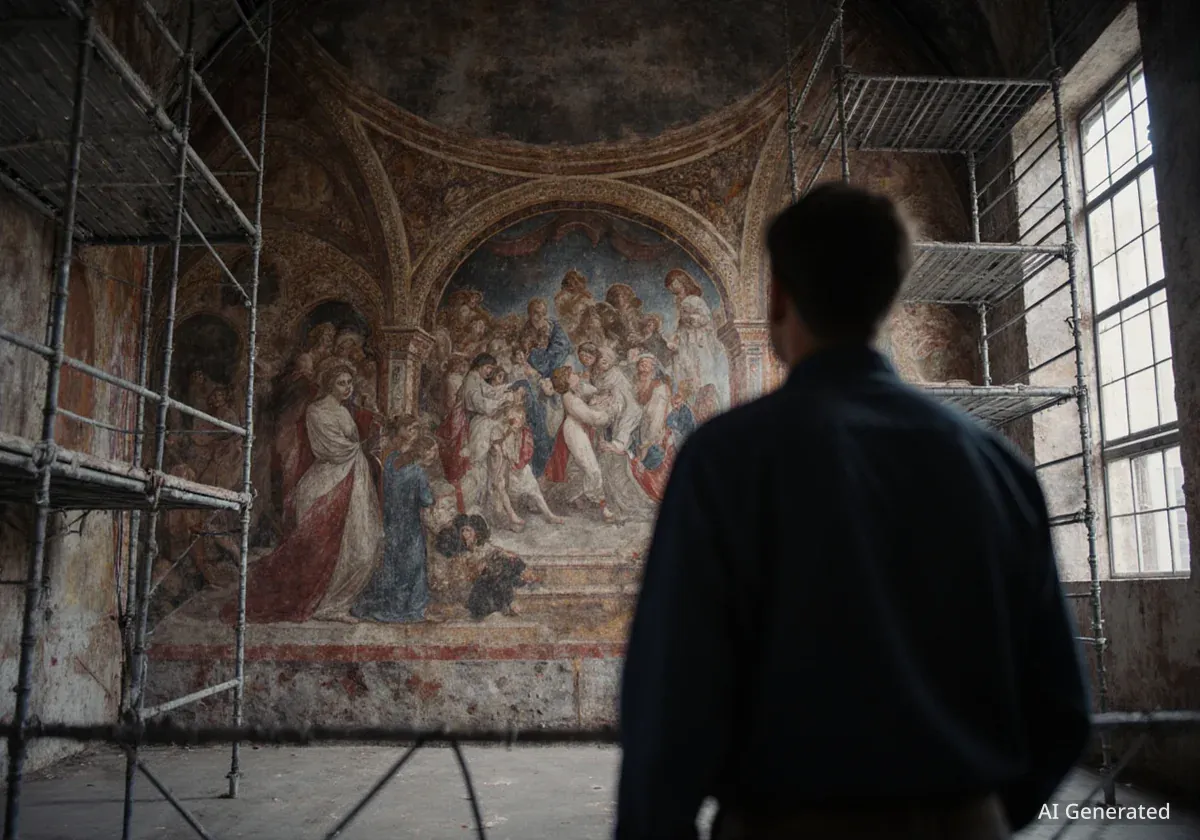
The Vatican provided media access on Saturday for a glimpse into the ongoing project. This intricate cleaning is taking place on a floor-to-ceiling scaffolding. This structure currently obscures the imposing fresco that dominates the front wall of the chapel, depicting scenes of heaven and hell.
Key Takeaways
- Michelangelo's "The Last Judgment" is undergoing restoration.
- Restorers are removing a salt film from the fresco.
- The cleaning is expected to finish by early April.
- The public can still visit the Sistine Chapel during this period.
Decades of Accumulation Being Addressed
The current restoration effort focuses on addressing the natural degradation that affects ancient artworks, particularly those exposed to environmental factors over centuries. The salt film is a common issue for frescoes, often resulting from moisture and mineral deposits that crystallize on the painted surface.
This is the first significant cleaning of "The Last Judgment" since its last major restoration concluded in 1994. That earlier project, which spanned 14 years, brought renewed vibrancy to the entire Sistine Chapel, revealing colors and details long hidden under centuries of grime.
Fresco Facts
- "The Last Judgment" was painted by Michelangelo between 1536 and 1541.
- It covers the entire altar wall of the Sistine Chapel.
- The fresco depicts the Second Coming of Christ and the final judgment of humanity.
Methodical Cleaning Process
Restorers are using specialized techniques to carefully remove the salt deposits without damaging the delicate paint layers beneath. This process requires extreme precision and a deep understanding of Michelangelo's original methods and materials.
Each section of the vast fresco is meticulously examined and treated. The goal is to preserve the artwork for future generations while restoring its original clarity and brilliance.
"Preserving these masterpieces is a continuous effort. Every generation has a responsibility to care for these irreplaceable treasures," a Vatican official stated during the media preview.
Public Access During Restoration
Despite the ongoing work, the Sistine Chapel remains open to the public. Visitors can still experience the grandeur of the chapel, though "The Last Judgment" itself is obscured by the scaffolding. To mitigate this, a reproduction of the fresco is superimposed on a screen covering the structure, allowing visitors to visualize the artwork.
This approach ensures that tourists and pilgrims can continue their visits without interruption. It also allows the crucial restoration work to proceed efficiently.
Sistine Chapel History
The Sistine Chapel is one of the most famous art treasures of the Vatican City. It is renowned for its frescoes by Michelangelo, particularly the ceiling and "The Last Judgment." The chapel serves as the site for papal conclaves, the process by which a new Pope is selected.
Anticipated Completion by Easter
The cleaning operation is on track for completion by Easter, which falls in the first week of April this year. This timeline suggests an intensive period of work by the restoration team.
Once the scaffolding is removed, the public will once again be able to view "The Last Judgment" in its restored state, with the chalky film gone and the details of Michelangelo's vision once more clearly visible.
This continuous cycle of preservation highlights the immense effort required to maintain global heritage sites. The Vatican's commitment ensures that these iconic works of art endure for centuries to come, offering inspiration and wonder to millions worldwide.