An American Airlines flight scheduled to depart from Dallas Fort Worth International Airport (DFW) for Las Vegas was forced to return to the gate after a passenger in the first-class cabin initiated a verbal tirade against a flight attendant. The incident, which involved racist remarks, led to the man's removal by airport police and caused significant delays for all travelers on board.
Key Takeaways
- An American Airlines flight from DFW to Las Vegas was delayed after a passenger's disruptive behavior before takeoff.
- The passenger directed racist comments at a flight attendant, prompting the aircraft to return to the gate.
- Airport police boarded the plane and escorted the man off, after which all passengers were deplaned to manage the situation.
- The event highlights the strict federal policies against unruly passenger conduct, which can result in substantial fines.
Verbal Confrontation Disrupts Departure
The incident began while the Boeing 737 was still parked at the gate at DFW, preparing for its flight to Las Vegas. A male passenger in the first-class section started an argument with a female flight attendant.
According to reports from others on the flight, the man accused the crew member of having an “illegal social security number.” The confrontation escalated when he loudly proclaimed, “I’m American… you’re the illegal!” He also made comments about seeing her and her family “swim the Rio Grande.”
Despite the verbal attack, the flight attendant maintained her composure. She responded directly to the passenger, stating, “You’re a racist, that’s what you are,” before continuing with her duties. Witnesses noted her professionalism throughout the encounter.
Operational Delays and Police Intervention
The flight crew made the decision to remove the passenger before departing. The initial plan was to reconnect the jet bridge to allow for his removal without further disruption. However, a technical malfunction with the jet bridge prevented this, prolonging the situation.
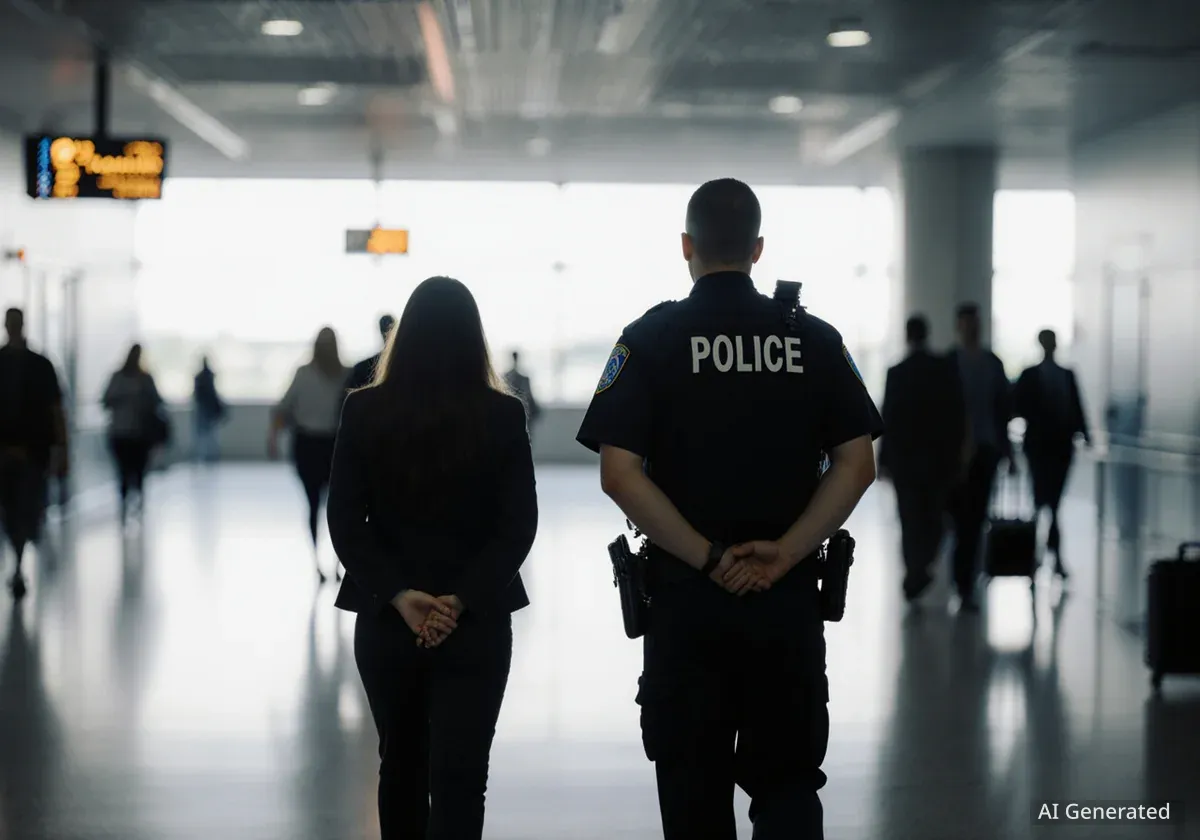
With the disruptive passenger still on board, the aircraft had to return fully to the gate. Once secured, officers from the DFW Airport Police Department boarded the plane and escorted the man off the flight. Following his removal, American Airlines made the decision to deplane all remaining passengers to reset the cabin and manage the extended delay.
A Persistent Issue in Air Travel
While unruly passenger incidents have decreased from their peak, they remain a concern. In 2021, nearly 6,000 incidents were reported to the Federal Aviation Administration (FAA). By 2023, that number had dropped significantly, but events like the one at DFW show that crew members still face challenging situations.
Federal Penalties for Unruly Behavior
Incidents involving disruptive passengers are taken very seriously under federal law. The Federal Aviation Administration has a zero-tolerance policy for behavior that interferes with the duties of a crew member or jeopardizes the safety of a flight.
This policy was strengthened following a sharp increase in onboard disruptions in 2021 and 2022. The FAA has the authority to issue significant civil penalties against unruly passengers, with fines reaching up to $43,658 per violation. Often, a single incident can involve multiple violations, leading to much larger total fines for an individual.
"Respectful behavior enhances the travel experience for all passengers and crew," U.S. Transportation Secretary Pete Buttigieg has previously stated, urging for a return to civility in air travel.
Airlines have continued to support these strict enforcement measures and provide crew members with training focused on de-escalation and conflict management. The swift action taken by the American Airlines crew and DFW airport police underscores the established protocols for handling such events.
Understanding FAA Enforcement
The FAA's zero-tolerance policy means that instead of warnings or counseling, the agency moves directly to legal enforcement action against any passenger who assaults, threatens, intimidates, or interferes with a crew member. This can include civil penalties and, in some cases, criminal prosecution. During the 2021-2022 surge, the FAA issued more than $20 million in fines.
While the number of reported incidents has decreased by over 70% since the 2021 peak, this event serves as a reminder of the challenges that can arise and the serious legal and financial consequences for those who disrupt air travel.