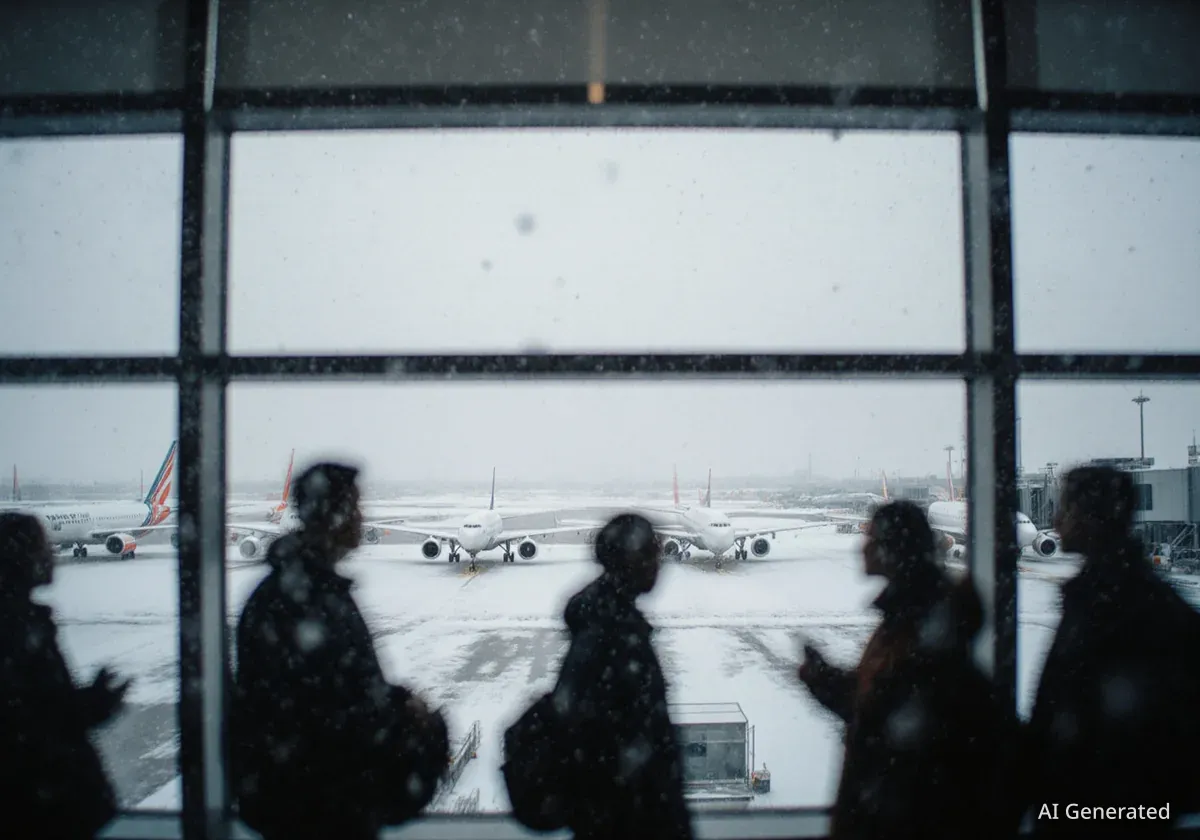
A major winter storm is set to impact the East Coast, leading airlines to cancel flights and offer fee waivers for travelers from Virginia to Maine. This comes as the region prepares for significant snowfall and strong winds, creating challenges for air travel at the end of winter break.
The National Weather Service has issued blizzard warnings for several key areas, prompting airlines to take proactive measures to mitigate disruptions. Passengers are advised to check their flight status and consider rebooking options.
Key Takeaways
- Airlines are canceling flights and waiving fees for East Coast travel.
- Blizzard warnings are in effect for parts of New York, Connecticut, and New England.
- The storm could bring up to 2 feet of snow and winds up to 55 mph.
- Delta Air Lines has seen the most cancellations so far.
- This storm follows previous severe weather that impacted airline operations.
Airlines Announce Flight Cancellations and Waivers
Several major U.S. airlines began canceling flights scheduled for Sunday and waiving change fees for passengers. This decision affects airports across a wide stretch of the East Coast, from Virginia to Maine.
Delta Air Lines, American Airlines, JetBlue Airways, United Airlines, and Spirit Airlines have all announced waivers. These waivers allow passengers to change their travel plans without incurring typical cancellation or change fees, often extending rebooking options through late February.
Flight Disruptions at a Glance
- Total U.S. Cancellations (as of Saturday 4:30 PM ET): Nearly 400 flights
- Delta Air Lines Cancellations: 174 flights (5% of mainline schedule)
- Most Affected Hub: New York airports
Rebooking Options for Passengers
Passengers affected by the storm have varying rebooking timelines depending on their airline. Delta, American, JetBlue, United, and Spirit are allowing rebookings as late as February 26.
Southwest Airlines has also offered flexibility. Customers can rebook their flights or fly standby within two weeks of their original travel date without paying a difference in fare.
Severe Weather Warnings Issued
The National Weather Service has upgraded its initial assessment of the storm's severity. Many areas could see between 1 and 2 feet of snow. This forecast presents a significant challenge for ground and air transportation.
Blizzard warnings are now in effect for major metropolitan areas including New York City, Long Island, and southern Connecticut. Coastal communities in New Jersey, Delaware, Rhode Island, and Massachusetts are also under blizzard warnings.
"The storm’s steady winds of 25 to 35 mph will make travel dangerous, if not impossible," meteorologists warned. Gusts could reach up to 55 miles per hour, further complicating conditions.
Previous Winter Storm Impacts
This upcoming storm follows Winter Storm Fern in January, which caused widespread travel disruptions across the U.S. That event, combined with bitter cold, significantly impacted airline operations.
American Airlines, for instance, faced considerable challenges in recovery, leading to criticism from flight crews. The airline estimated a revenue loss between $150 million and $200 million due to the January storm.
Impact on Key Airport Hubs
New York airports, which serve as a major hub for Delta Air Lines, are among the most affected by Sunday's anticipated disruptions. As of Saturday afternoon, Delta accounted for 174 cancellations, representing 5% of its mainline schedule.
Travelers planning to fly through these regions are strongly encouraged to check their airline's website or app for the latest updates before heading to the airport. The rapidly changing weather conditions mean forecasts and flight statuses can shift quickly.
Preparing for Travel Delays
Passengers should prepare for potential delays, extended airport stays, or even overnight disruptions. Bringing essential items, such as chargers, snacks, and any necessary medications, is advisable for those whose travel plans may be impacted.
The current storm is expected to test airline recovery efforts once again as the winter season draws to a close. Carriers are working to minimize the impact on passengers while ensuring safety.
- Check flight status frequently.
- Consider rebooking if your travel falls within the storm's path.
- Pack essentials for potential delays.
- Stay informed through official airline and weather channels.