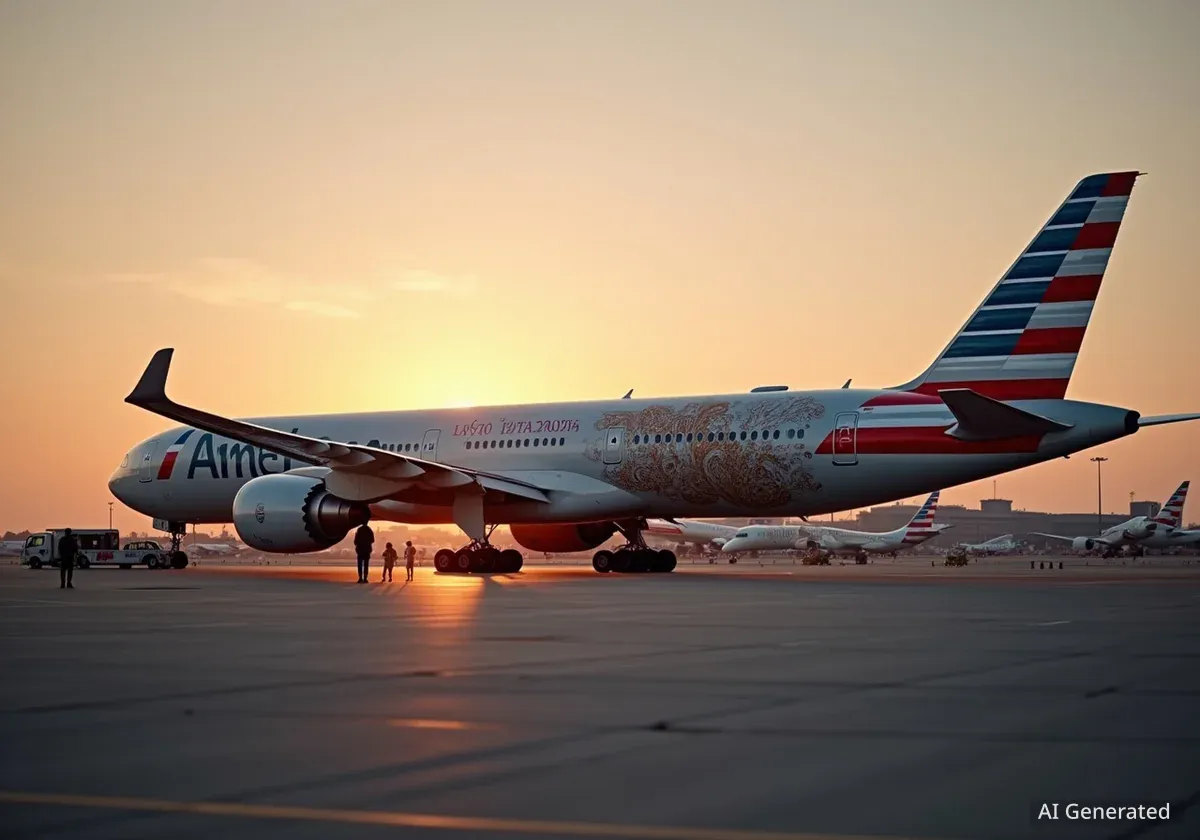
American Airlines has announced a special livery for one of its Boeing 777-300ER aircraft. This unique design will celebrate the airline's upcoming 100th anniversary in 2026. The aircraft, registered as N735AT, is expected to begin service in November 2025, showcasing a blend of historical design elements with modern aesthetics.
The livery draws inspiration from American Airlines' early days, specifically the iconic Douglas DC-3 aircraft. This move highlights the airline's long history and its commitment to honoring its heritage as it approaches a significant milestone.
Key Takeaways
- American Airlines will introduce a special centennial livery on a Boeing 777-300ER.
- The aircraft, N735AT, is named "Flagship DFW" and will enter service in November 2025.
- The livery combines the airline's current Silver Eagle paint with design elements from the 1930s Douglas DC-3.
- It features an orange lightning bolt motif and a historical eagle roundel.
- The design aims to honor American's past while looking to its future.
A Look at the Centennial Design
The new livery, dubbed "Flagship," integrates several historical features. The primary color scheme uses American's existing Silver Eagle paint. This color is currently present on more than 1,600 aircraft across American's mainline and regional fleets. The choice of Silver Eagle maintains a connection to the airline's contemporary visual identity.
A prominent element of the design is the orange lightning bolt motif. This distinctive feature first appeared nearly 90 years ago on the airline's Douglas DC-3 aircraft. Its reintroduction on a modern Boeing 777 creates a visual link to American's formative years in aviation.
Aircraft Details
- Aircraft Type: Boeing 777-300ER
- Registration: N735AT
- Name: Flagship DFW
- Service Start: November 2025
Honoring a Legacy: Flagship DFW
In line with a long-standing tradition, American Airlines will name this special aircraft "Flagship DFW." This name recognizes Dallas/Fort Worth International Airport (DFW) as the airline's primary hub and headquarters. Historically, American's new DC-3 aircraft were named after cities served by the airline. This practice continues with the centennial livery.
Towards the rear of the aircraft, a roundel design is visible. This circular emblem includes an eagle motif, one of the most recognized symbols from American's history. The eagle represents the airline's global reach and connection. This detail further reinforces the livery's historical roots.
"American has thoughtfully chosen a design that evokes our rich history while looking ahead to our next 100 years," stated Ron DeFeo, American's Chief Communications Officer. "Throughout American's history, 'Flagship' has always been recognized as our premium travel experience. Our renewed focus on the customer experience is making premium travel better than ever across all aspects of our customers’ travel journeys. Painting the original Flagship design on our Flagship aircraft is a powerful way to honor that legacy while embracing the future."
Historical Context of Airline Liveries
Airlines often introduce special liveries to mark important occasions. These designs can range from subtle tributes to bold, retro-inspired looks. American Airlines' choice to deeply reference its past stands out among recent centennial designs from other major carriers.
For example, Delta Air Lines and Lufthansa also celebrated centennials with special liveries. However, these designs were generally more modern, incorporating historical elements in a less overt way. Their centennial liveries, while notable, often required a prominent "100" on the fuselage for passengers to understand their significance.
The Douglas DC-3
The Douglas DC-3 was a pivotal aircraft in aviation history. Introduced in the 1930s, it revolutionized air travel, making it more comfortable and accessible. For American Airlines, the DC-3 was a foundational part of its early fleet, helping establish many of its original routes and services. The orange lightning bolt was a key visual identifier of these early planes.
American's Tradition of Retro Designs
American Airlines has a history of using retro liveries to honor its past. The airline currently operates Boeing 737 aircraft with designs that pay tribute to predecessor carriers like America West and Reno Air. This ongoing commitment to historical designs is a hallmark of American's branding strategy.
The new centennial livery on the Boeing 777-300ER continues this tradition. It is a direct and strong tribute to the company's origins. This approach differs from more subtle designs seen on other airlines' anniversary aircraft.
Impact and Future Outlook
The special centennial livery is expected to attract attention at airports worldwide. Its unique appearance, distinct from most modern commercial aircraft, will make it easily recognizable. The airline plans for the aircraft to enter service in November 2025, providing a year of visibility leading up to the official 100th anniversary in 2026.
The detailed renderings suggest a visually striking aircraft. Observers are keen to see how the finishes and colors appear in person. This initiative underscores American Airlines' focus on its brand identity and customer experience as it moves into its next century of operation.
- Historical Accuracy: The livery directly references specific design elements from the 1930s.
- Brand Continuity: It uses the modern Silver Eagle base, linking past and present.
- Customer Experience: The "Flagship" name aligns with American's premium travel offerings.
- Public Engagement: The distinct design is likely to generate public interest and discussion.
The introduction of this livery is more than just a paint job. It is a public statement about American Airlines' identity. It celebrates a century of aviation innovation and service. The airline aims to connect its rich history with its future plans, particularly in enhancing the customer experience. This special aircraft will serve as a flying reminder of American's journey.