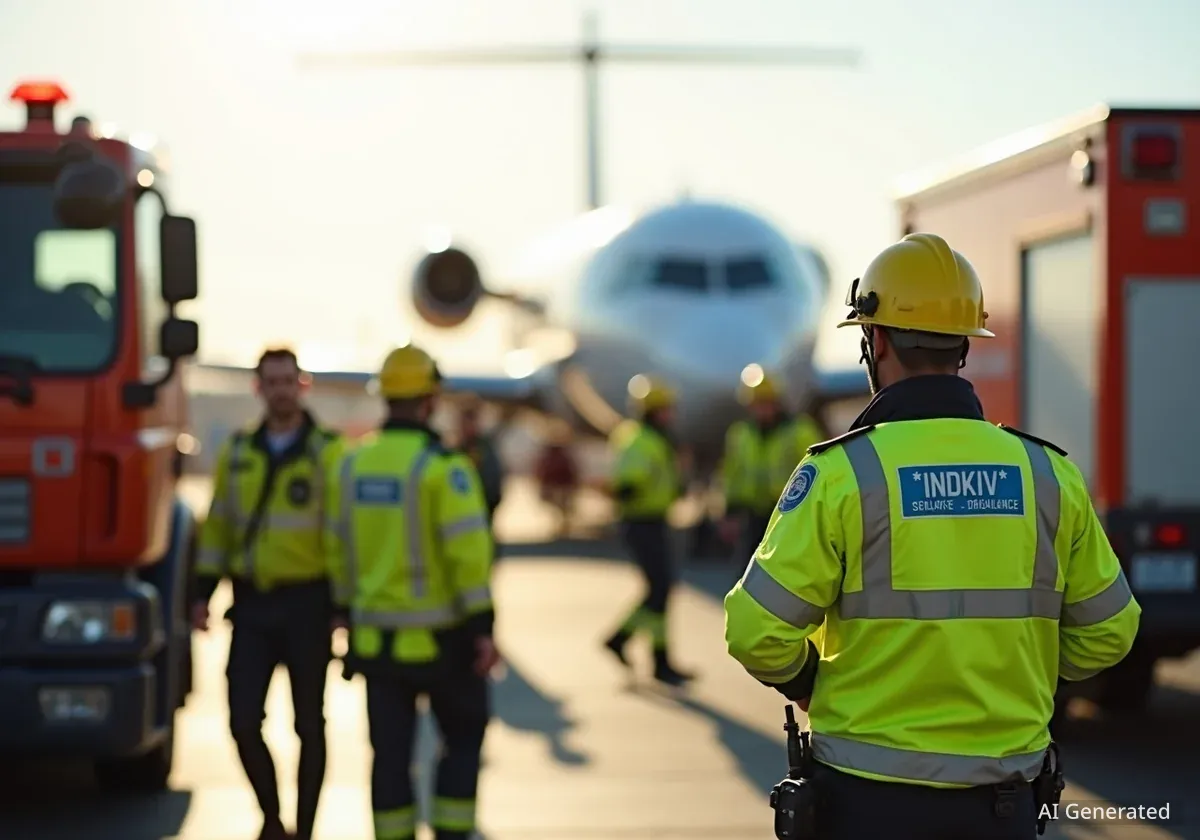

Hawaii's airports are maintaining normal operations with minimal disruption to travelers, even as a federal government shutdown causes significant delays and long security lines at airports across the mainland United States. Governor Josh Green and state transportation officials have praised the dedication of federal employees, including TSA agents and air traffic controllers, who continue to work without pay.
Key Takeaways
- Air travel in Hawaii remains largely unaffected by the ongoing federal government shutdown.
- Mainland U.S. airports are experiencing significant flight delays and long security lines due to staff shortages.
- Governor Josh Green commended essential federal workers in Hawaii for reporting to duty without pay.
- TSA agents and FAA air traffic controllers are designated as essential employees and are required to work during the shutdown.
Hawaii Operations Remain Stable
Transportation officials in Hawaii confirmed on October 13, 2025, that flights and security screenings are proceeding as usual. At major hubs like Daniel K. Inouye International Airport (HNL) in Honolulu, passengers have not experienced the widespread disruptions seen elsewhere.
This stability is critical for the state's tourism-dependent economy, which relies on a consistent flow of visitors. Officials are closely monitoring staffing levels but have so far reported full or near-full attendance from essential federal personnel.
The situation in Hawaii presents a sharp contrast to reports from major mainland airports, where a growing number of TSA agents and air traffic controllers not reporting for work has led to operational challenges. The absence of these workers has resulted in longer wait times and flight delays in several major cities.
Why Are Federal Workers on the Job?
During a federal government shutdown, employees are categorized as either "essential" or "non-essential." Essential employees, whose work is deemed necessary to protect life and property, are required to continue working. This group includes air traffic controllers, TSA security officers, and certain other federal law enforcement and safety personnel. However, they do not receive their paychecks until the shutdown ends and a funding bill is passed by Congress.
Governor Praises Unpaid Federal Workforce
Governor Josh Green issued a statement expressing his gratitude for the federal employees who are keeping Hawaii's airports safe and operational. He highlighted the personal and financial sacrifice these workers are making for the public good.
"We are incredibly grateful to the dedicated federal workers here in Hawaii who continue to show up every day," Governor Green stated. "They are ensuring the safety of our residents and visitors, all while facing uncertainty about their next paycheck. Their commitment is a testament to their professionalism and public service."
State transportation leaders echoed the governor's sentiments, emphasizing the seamless coordination between state and federal teams at the airports. This cooperation has been key to preventing the kind of travel chaos emerging in other parts of the country.
A National Perspective on Travel Disruptions
While Hawaii's travel sector remains stable, the national picture is markedly different. According to reports from across the United States, the federal shutdown is straining the national aviation system. The primary cause is an increase in unscheduled absences among unpaid essential workers.
Airports in major metropolitan areas have reported:
- Longer Security Lines: With fewer TSA agents available, security checkpoints are taking longer to process passengers, causing some to miss their flights.
- Flight Delays: Shortages of air traffic controllers at some facilities have led to a reduction in the rate of arriving and departing flights, creating cascading delays.
- Reduced Services: Some airport services managed by federal employees have been curtailed or suspended.
Aviation by the Numbers
The U.S. aviation system is a massive operation. On an average day, the Transportation Security Administration (TSA) screens over 2 million passengers. The Federal Aviation Administration (FAA) handles more than 45,000 flights daily. Even small staffing shortages can have a significant ripple effect across this complex network.
The Economic and Personal Toll of the Shutdown
For the federal employees working without compensation, the shutdown creates significant financial hardship. Many live paycheck to paycheck, and the uncertainty of when they will be paid next forces difficult decisions about bills, rent, and daily expenses.
Economists also warn that a prolonged shutdown could have broader negative impacts. In a state like Hawaii, where tourism is the primary economic driver, any disruption to air travel could be damaging. Smooth airport operations are essential for maintaining visitor confidence and protecting the state's economy.
Officials have not provided a timeline for how long Hawaii's airports can maintain normal operations if the shutdown continues. The longer federal workers go without pay, the higher the risk of increased absenteeism, which could eventually impact travel in the islands. For now, however, the dedication of these employees is keeping Hawaii's connection to the world open.