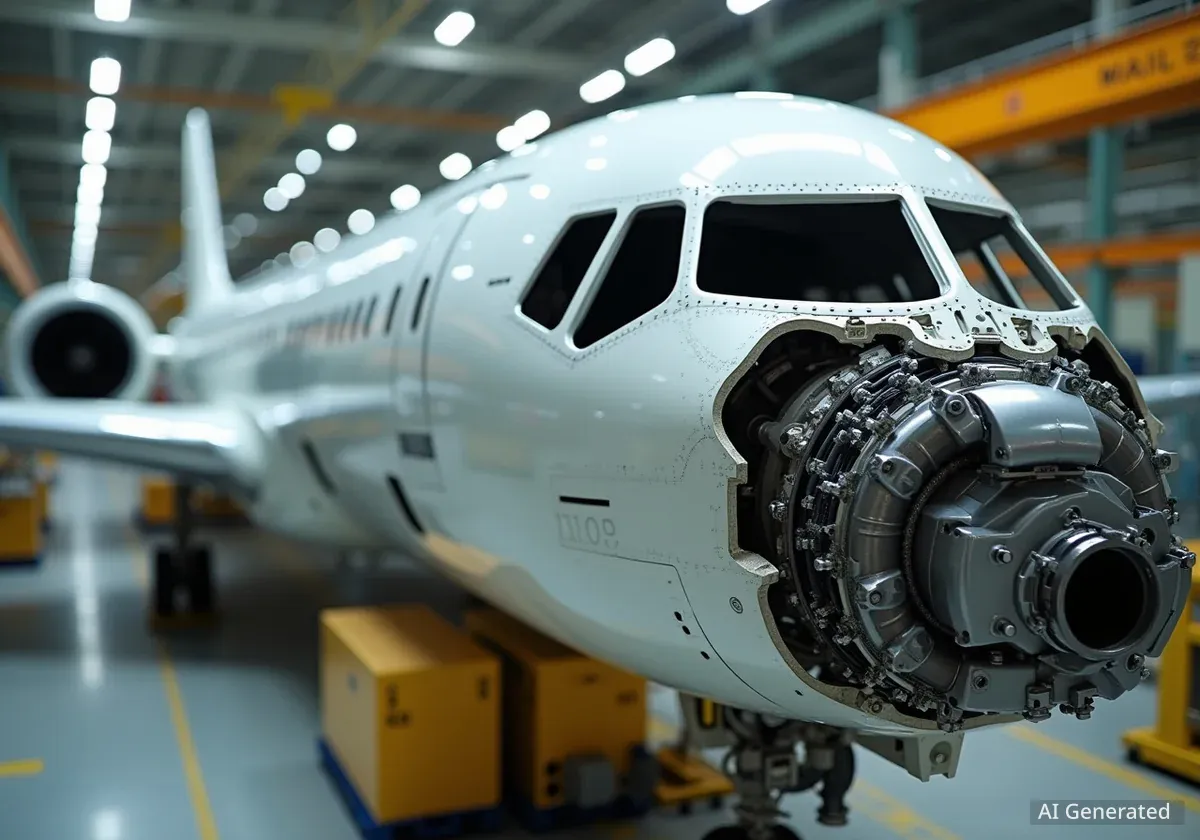

India's aviation regulatory body has directed Air India to inspect the emergency power systems on some of its Boeing 787 Dreamliner aircraft. This directive follows an incident where a Ram Air Turbine (RAT) deployed unexpectedly on an Air India flight during its final approach to an airport in the United Kingdom.
The Directorate General of Civil Aviation (DGCA) issued the instruction on Monday, October 13, 2025. This action highlights the regulator's focus on maintaining aircraft safety standards within India's airline fleet.
Key Takeaways
- India's aviation regulator ordered Air India to inspect emergency power systems on specific 787 jets.
- The directive came after an unexpected Ram Air Turbine (RAT) deployment on an Air India flight.
- Boeing, the aircraft manufacturer, has been asked to submit a detailed report on the incident.
- This is not the first reported instance of a RAT deployment on an Air India 787.
DGCA Mandates Inspections and Boeing Report
The Directorate General of Civil Aviation (DGCA) has specifically asked Air India to examine the Ram Air Turbine (RAT) system on a portion of its Boeing 787 fleet. This system is crucial for providing emergency power to an aircraft's essential systems if main power sources fail.
In addition to the airline inspections, the DGCA has also contacted Boeing, the manufacturer of the 787 Dreamliner. The regulator requested a comprehensive report from Boeing. This report should include detailed information about the recent incident and outline any preventive measures related to RAT deployment events.
Fact: Ram Air Turbine (RAT)
- A RAT is a small turbine connected to a hydraulic pump or electrical generator.
- It deploys into the airstream to generate power from the aircraft's speed.
- This system is a critical safety feature, providing emergency power to essential flight controls and instruments.
- RATs are designed to deploy automatically or manually in specific emergency situations.
Incident During Final Approach
The DGCA's order comes after an incident involving an Air India 787 Dreamliner. The aircraft was operating a flight from Amritsar, a city in northern India, to Birmingham, United Kingdom.
According to a statement released by Air India on Sunday, the flight crew detected the deployment of the emergency power system during the final phase of its approach to Birmingham. Unexpected deployment of a RAT can be a serious event, as it indicates a potential issue with the aircraft's primary power systems or a malfunction of the RAT itself.
"The crew of an Air India 787 Dreamliner... detected deployment of the power system during the final approach," Air India stated in a Sunday announcement.
Boeing and Air India Response
As of the time of reporting, neither Boeing nor Air India have provided immediate comments regarding the DGCA's request for inspections and reports. Reuters had reached out to both entities for their statements on the matter.
The lack of immediate comment is typical in ongoing investigations, as companies often wait to gather all facts before making official statements.
Prior Incidents and Safety Concerns
This is not the first time a Ram Air Turbine deployment has been reported in connection with an Air India Boeing 787. Indian investigators previously mentioned a similar incident in July. That report detailed a RAT deployment during the initial climb phase of an Air India Boeing 787 flight.
The earlier incident was related to a crash that occurred in June, which resulted in the deaths of 260 people. The repeated occurrence of RAT deployments on the same aircraft type raises significant safety questions for the airline and the manufacturer.
Context: Aviation Safety Investigations
Aviation regulators worldwide, like India's DGCA, are responsible for overseeing airline safety. When incidents occur, they launch investigations to determine the cause and implement corrective actions.
These investigations often involve collaboration with aircraft manufacturers, airlines, and international aviation authorities. The goal is to prevent similar incidents from happening again and ensure the safety of air travel.
Focus on Aircraft Systems
The DGCA's focus on the emergency power system underscores the importance of every aircraft component working as intended. Modern aircraft rely on complex electrical and hydraulic systems. The RAT acts as a crucial backup, but its unexpected deployment indicates a potential problem.
Inspections will likely examine the RAT's mechanical and electrical components, its deployment mechanism, and any sensors or software that control its activation. The findings will be important for understanding the root cause of the recent incident.
Impact on Air India Operations
The directive from the DGCA will require Air India to dedicate resources to these inspections. This could involve temporarily grounding some aircraft or adjusting maintenance schedules. The airline operates a fleet of Boeing 787 Dreamliners for its long-haul international routes.
Ensuring the safety of its fleet is a top priority for Air India, especially as it continues its modernization efforts and aims to expand its global presence.
Long-Term Implications
The outcome of these inspections and Boeing's report could have wider implications for the 787 fleet globally. If a systemic issue is identified, it could lead to directives for other airlines operating the same aircraft type to conduct similar checks or implement modifications.
Aviation safety is a collaborative effort involving regulators, airlines, and manufacturers. Transparency and prompt action following incidents are vital for maintaining public trust in air travel.