
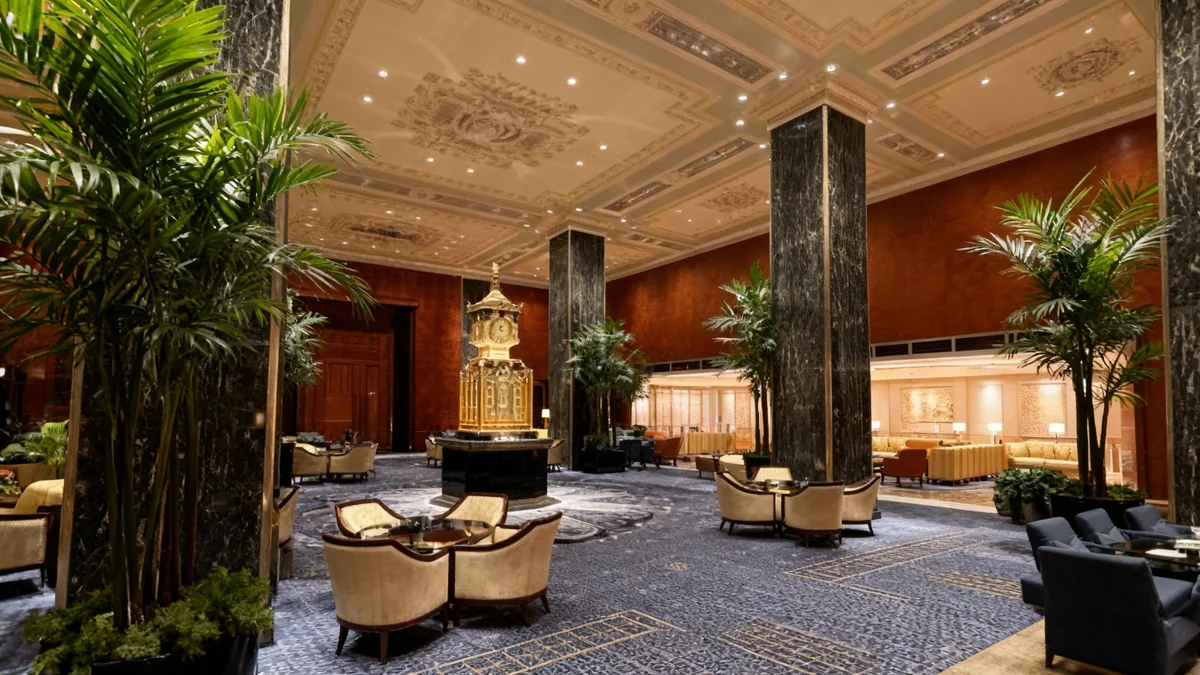
The Waldorf Astoria New York, a landmark hotel in Midtown Manhattan, is expected to be put up for sale soon. Its current owners, a company controlled by the Chinese government, are looking to divest the property after an extensive, multi-year renovation that ran significantly over budget and behind schedule.
Key Takeaways
- Waldorf Astoria New York to be sold by Chinese state-owned firm.
- The sale follows an eight-year, $2 billion renovation.
- Owners anticipate a significant financial loss on the sale.
- The property was initially purchased for $1.95 billion in 2014.
- Hilton's 100-year management contract is expected to remain in place.
A Historic Property and Costly Renovation
The Waldorf Astoria New York holds a prominent position in Manhattan, occupying an entire city block on Park Avenue. It reopened recently after an eight-year renovation project. This renovation lasted approximately five years longer than initially planned and cost more than $2 billion.
The extensive work transformed the property from a 1,400-room hotel into a mixed-use development. It now features 375 hotel rooms and 372 luxury condominiums. This conversion is considered one of the most complex and expensive real estate projects ever undertaken.
Quick Facts
- Original Purchase Price (2014): $1.95 billion
- Renovation Cost: Over $2 billion
- Total Rooms Before Renovation: 1,400
- Current Hotel Rooms: 375
- Current Condominiums: 372
- Renovation Duration: 8 years (5 years over schedule)
Ownership History and Reasons for Sale
The property was acquired in 2014 for $1.95 billion by Anbang Insurance Group, a Chinese company. This purchase was one of the most expensive hotel sales in history. However, Anbang's CEO later faced charges from Chinese authorities for fraudulent fundraising and abuse of power.
Following these legal issues, the Chinese government took control of Anbang and its assets. State-run Dajia Insurance Group was then installed to manage these holdings, which included the Waldorf Astoria. The upcoming sale is part of a broader trend of Chinese property owners divesting assets in the United States.
This shift reflects worsening political tensions between the two countries. Previously, large investments in the U.S. were seen as prestigious and long-term opportunities. However, the sentiment in China appears to have changed.
"The sale is expected to include the hotel’s adjoining restaurants, shops, and other amenities, while condos would continue to be sold separately."
Anticipated Financial Loss
Owners do not expect to recover all their investment from the sale. The high price tag and the substantial renovation costs suggest a significant financial loss is likely. Potential buyers for a property of this scale and price are limited.
Sovereign wealth funds are often considered for such high-value assets. For example, Qatar currently owns other prominent New York hotels like the St. Regis New York and the Plaza Hotel New York.
Background on Chinese Divestment
The planned sale of the Waldorf Astoria New York is not an isolated event. It aligns with a broader trend of Chinese entities reducing their real estate holdings in the United States. This divestment is influenced by evolving geopolitical dynamics and economic considerations.
Impact on Hotel Operations and Guests
Despite the change in ownership, the Waldorf Astoria New York is expected to retain its current branding. Hilton has a 100-year management contract for the hotel. This long-term agreement means that operational changes due to the sale are unlikely to directly affect guests or the hotel's brand identity.
Any financial challenges faced by the property likely stem from the massive cost overruns during renovation and competition in the New York hotel market, rather than issues with the brand itself. A new owner committed to investing in the property's maintenance would be beneficial for its long-term quality.
It remains unclear how profitable the property is currently. Therefore, the direct impact on hotel guests, beyond the ownership structure, is difficult to predict. However, the Hilton management contract provides a layer of stability for the hotel's operations.
Long-Term Outlook for the Waldorf Astoria
The sale process will be watched closely by industry observers. Finding a buyer willing to take on a property with such a high valuation and complex history will be a key challenge. The future owner's commitment to ongoing investment will play a critical role in maintaining the Waldorf Astoria's reputation as a luxury destination.
The hotel's transition from 1,400 rooms to a mixed-use model with 375 rooms and 372 condominiums represents a significant strategic shift. This change aims to maximize revenue streams in a competitive market.
Ultimately, the sale signifies a notable moment in the luxury hotel market in New York City. It highlights the complexities of large-scale international real estate investments and the impact of geopolitical factors on business decisions.