Chicago's L train system is seeing a concerning rise in subway surfing incidents, a dangerous activity where individuals ride on top of or outside moving trains. While not as widespread as in New York City, local transit authorities have recorded 24 such incidents since 2023, prompting warnings about the severe risks involved.
Key Takeaways
- Chicago has reported 24 subway surfing incidents on L trains since 2023.
- The behavior, often filmed for social media, carries extreme risks including electrocution and falls.
- New York City has seen nine deaths and 300 arrests related to subway surfing since last year.
- CTA and police are increasing surveillance and response efforts, urging the public to avoid this dangerous trend.
The Growing Trend of Train Surfing
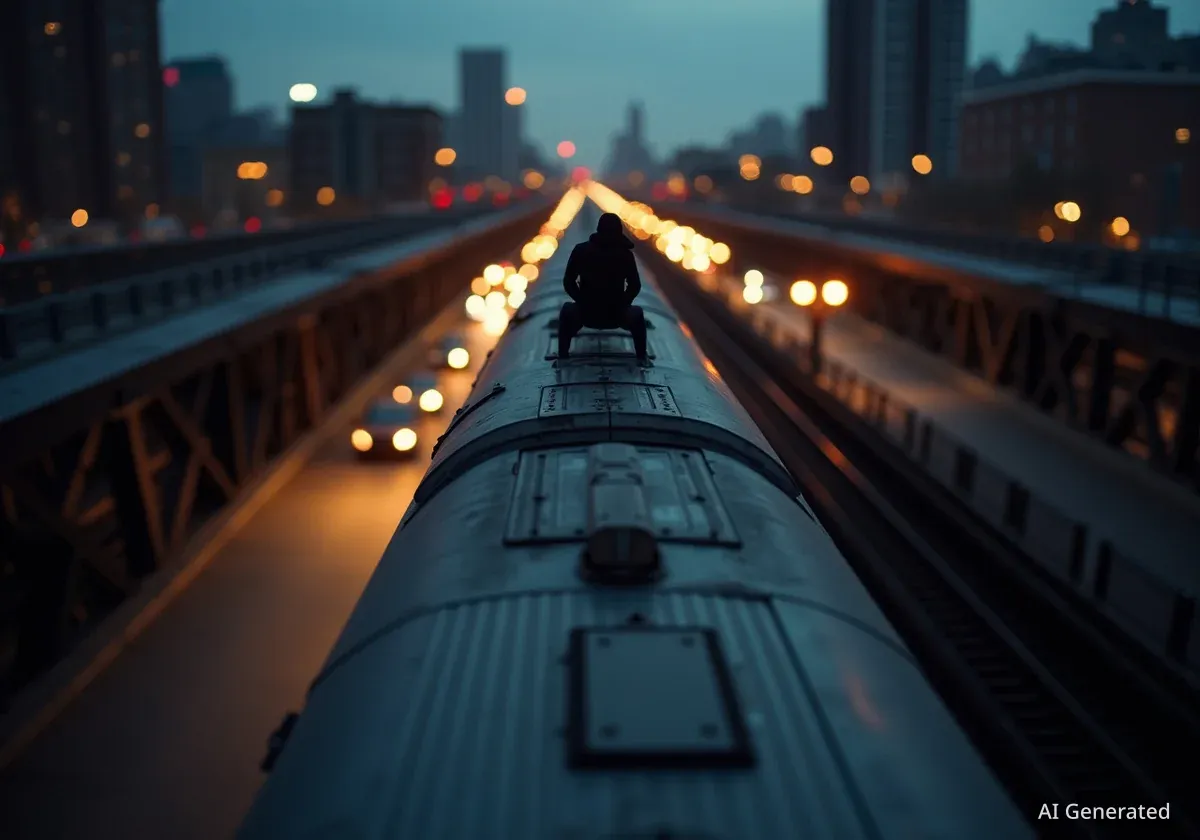
Subway surfing, a high-stakes thrill-seeking activity, involves climbing onto the exterior of moving trains. In Chicago, this has mainly occurred on the elevated L tracks. An individual who claims to have surfed multiple times since his teenage years described the experience as "the most freeing thing ever," comparing it to an addiction. He requested anonymity due to the illegal nature of the activity.
While Chicago's numbers are significantly lower than New York City's, the trend is worrying. Authorities in New York have reported nine fatalities and approximately 300 arrests related to subway surfing since last year. The Metropolitan Transportation Authority (MTA) in New York has even launched a public awareness campaign titled "Ride inside, stay alive" to combat the issue.
Fast Facts on Chicago Incidents
- Total Incidents: 24 since 2023
- 2024 Incidents (so far): 9
- 2023 Incidents: 3
- Affected Lines: Red Line (6), Brown Line (6), Green Line (4), Blue Line (3), Orange Line (2), Purple Line (2), Pink Line (1).
- Unaffected Line: Yellow Line
Dangers and Disruptions
The risks associated with subway surfing are severe. Riders face the danger of falling from moving trains, hitting overhead structures, or coming into contact with the third rail, which carries 600 volts of electricity. No injuries have been officially reported in Chicago, but the potential for serious harm is constant.
Beyond personal injury, these incidents also cause significant disruptions for everyday commuters. When a surfer is spotted, train operators often have to slow down or halt the train, leading to delays. Power may also need to be cut from sections of the track, further impacting service.
"The feeling that you get is one of the most insane feelings on earth because you’re putting yourself in a spot that’s not really natural," stated a man who has engaged in subway surfing, highlighting the intense thrill. "It’s the most freeing thing ever."
On August 24, for example, three unknown males were seen surfing on a southbound Brown Line train in the Loop. They disembarked at Washington/Wells station. Just days earlier, a male was found sleeping atop a Red Line train near 47th Street, causing a three-minute delay.
Motivations Behind the Risky Behavior
Interviews with individuals involved in subway surfing reveal a mix of motivations. For some, it is the pure adrenaline rush. The man who spoke about his experiences mentioned seeking a feeling of "power" that he couldn't find elsewhere, including through graffiti, an activity he also engaged in.
Social Media Influence
Many incidents are filmed and posted on social media platforms, suggesting a desire for recognition and 'likes' within certain online communities. This mirrors a broader trend seen in New York, where lawsuits have been filed against social media companies for allegedly popularizing such dangerous videos.
The allure also extends to a sense of freedom, particularly amplified during the pandemic. The individual recounted, "It felt like people had the freedom to do whatever. We were in lockdown and didn’t know what was going to come next… so we were like, ‘We can f— do whatever we want.’"
The Role of Graffiti Culture
The history of urban exploration and graffiti also plays a part. The man's father was deeply involved in street art, influencing his son from a young age. He was drawn to online videos showcasing daring feats and urban exploration, wanting to create his own identity through these activities.
Chicago's elevated tracks, unlike New York's extensive underground system, offer more exposure to the elements. This might deter some, but for others, the visibility adds to the thrill and potential for social media content.
Transit Authority Response and Challenges
The Chicago Transit Authority (CTA) and Chicago Police Department (CPD) are working to address the issue. However, they are reluctant to provide extensive details or release surveillance footage, fearing it might inadvertently glamorize the dangerous practice and encourage more incidents.
When surfers are spotted, train operators are trained to respond cautiously. Pennie McCoach, president of Amalgamated Transit Union Local 308, which represents CTA rail employees, explained that operators do not slam on brakes. A sudden stop at high speed could cause severe injury to someone on the roof of a train.
CTA Employee Observations
- Green Line employee notes surfers are drawn to the line for its speed and social media opportunities.
- Red Line motorman recalls seeing a man dressed in all black frequently surfing on the South Side.
- Highway drivers sometimes honk to alert train operators about surfers on trains passing through the Dan Ryan Expressway.
Instead, trains are typically slowed or brought to the nearest station, and power is cut if the individual moves onto the tracks. Those caught may face arrest or be escorted off CTA property. Surveillance systems are also becoming more sophisticated, making it harder for surfers to evade detection.
Preventing a Wider Problem
Chicago transit officials hope to prevent subway surfing from escalating to the levels seen in New York. The city has a history of absorbing urban trends from New York, such as the spread of graffiti culture in the 1970s. That era saw a surge in vandalism and a sense of lawlessness on trains, which transit systems eventually curbed through rapid clean-up policies and increased security.
The interviewed surfer, who claims to have stopped the practice over a year ago, now expresses concern for younger individuals. He stated, "I was lucky enough to understand what I’m doing but I feel these kids doing it don’t really understand." He also recounted harrowing experiences, including evading capture after a train was halted and being struck by a tree branch.
While subway surfing is a serious concern, some CTA employees suggest that regular crime remains a larger problem on the transit system. Reports of crime surged during the pandemic and are only recently beginning to subside.
The CTA continues to monitor the situation, working to ensure the safety of both passengers and the public. The message from authorities is clear: the risks of subway surfing far outweigh any perceived thrill.