
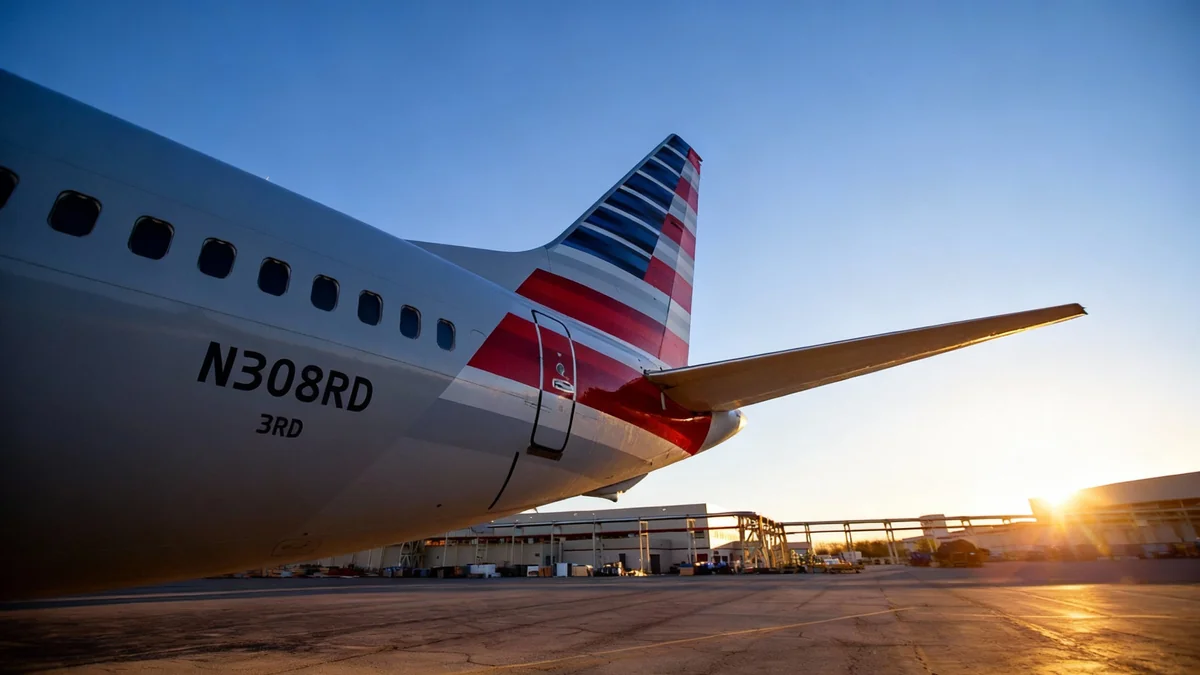
American Airlines announced a net loss of $114 million for the third quarter of 2025. Despite this financial setback, the airline appears to have won over Wall Street investors, with shares rising after the report. This shift in sentiment comes as the company emphasizes operational reliability, premium revenue growth, and strict cost management.
Key Takeaways
- American Airlines reported a $114 million net loss in Q3 2025.
- This loss is narrower than the $149 million loss in Q3 2024.
- Revenue for the quarter reached $13.69 billion.
- Investors reacted positively, pushing shares up, due to a focus on reliability and cost discipline.
- The airline raised its full-year profit outlook.
Q3 Financials Show Narrowed Loss
American Airlines' third-quarter results reveal a net loss of $114 million. This figure marks an improvement from the $149 million loss recorded in the same quarter of the previous year, Q3 2024. However, it represents a significant drop from the $599 million profit the airline posted in Q2 2025. Total revenue for the quarter stood at $13.69 billion, reflecting the ongoing challenges in the aviation sector.
Despite the loss, the narrative surrounding American Airlines has shifted. The company's leadership highlighted key areas of progress that resonated with the market. This includes a renewed focus on operational excellence and financial prudence.
Fast Fact
American Airlines is the world's third-largest airline by fleet size, operating thousands of flights daily across its global network.
Investor Confidence Rises on Strategic Focus
Wall Street responded positively to American Airlines' earnings report, leading to an increase in the company's stock value. Investors appear to be giving credit to management for their strategic direction. The airline's focus on improved reliability, growth in premium revenue, and disciplined capacity management seems to have convinced the market that a credible path forward exists.
"Our plan is starting to take hold," stated CEO Robert Isom, emphasizing the airline's commitment to improved reliability and cost discipline.
This investor confidence is a notable development, especially considering the reported net loss. It suggests that the market is valuing the airline's long-term strategy over immediate profitability in this instance. The company also raised its full-year profit outlook, further boosting investor sentiment.
Operational Reliability as a Key Driver
A significant part of American Airlines' updated strategy centers on enhancing operational reliability. This involves ensuring flights run on schedule and minimizing disruptions for passengers. For an industry often scrutinized for delays and cancellations, this focus is critical for customer satisfaction and brand reputation.
Better operational performance can lead to cost savings by reducing expenses related to compensation, rebooking, and disrupted crew schedules. It also strengthens the airline's appeal to business and premium travelers who prioritize punctuality.
Managing Costs and Premium Revenue
Beyond reliability, American Airlines is also concentrating on cost discipline and increasing premium revenue. This two-pronged approach aims to improve the airline's financial health from both expense and income perspectives. Cost management involves scrutinizing every aspect of operations to find efficiencies without compromising safety or service quality.
Meanwhile, the emphasis on premium revenue means attracting more passengers to higher-fare cabins like first class and business class. These segments typically offer higher profit margins. Investing in premium services and amenities can help achieve this goal.
Industry Expectations
The aviation industry often sees stock prices react to expectations. If a company is expected to perform poorly but does slightly better, its stock can rise. Conversely, if a company is expected to do exceptionally well but falls short, its stock may drop, even if it reports a profit.
The Path Ahead: Sustained Discipline
While the market's reaction is encouraging, the true test for American Airlines lies in its ability to maintain this discipline over multiple quarters. The airline still carries substantial debt, and external factors like fluctuating fuel prices or economic downturns could quickly impact any gains made. Consistent execution of its strategy will be crucial for transforming investor patience into durable confidence.
The next financial reports will show if this quarter's narrative win translates into sustained financial improvements. The focus will remain on whether American Airlines can meet its revised full-year profit projections through continued operational excellence and financial prudence.
- Debt remains a challenge: Heavy debt levels persist, requiring careful management.
- Fuel price volatility: Global fuel markets can significantly impact operating costs.
- Economic sensitivity: Airline performance is closely tied to broader economic conditions and consumer spending on travel.
The airline's ability to stack consistent execution on top of its recent messaging will determine its long-term success. The industry will watch closely to see if this renewed focus becomes the new normal for American Airlines.