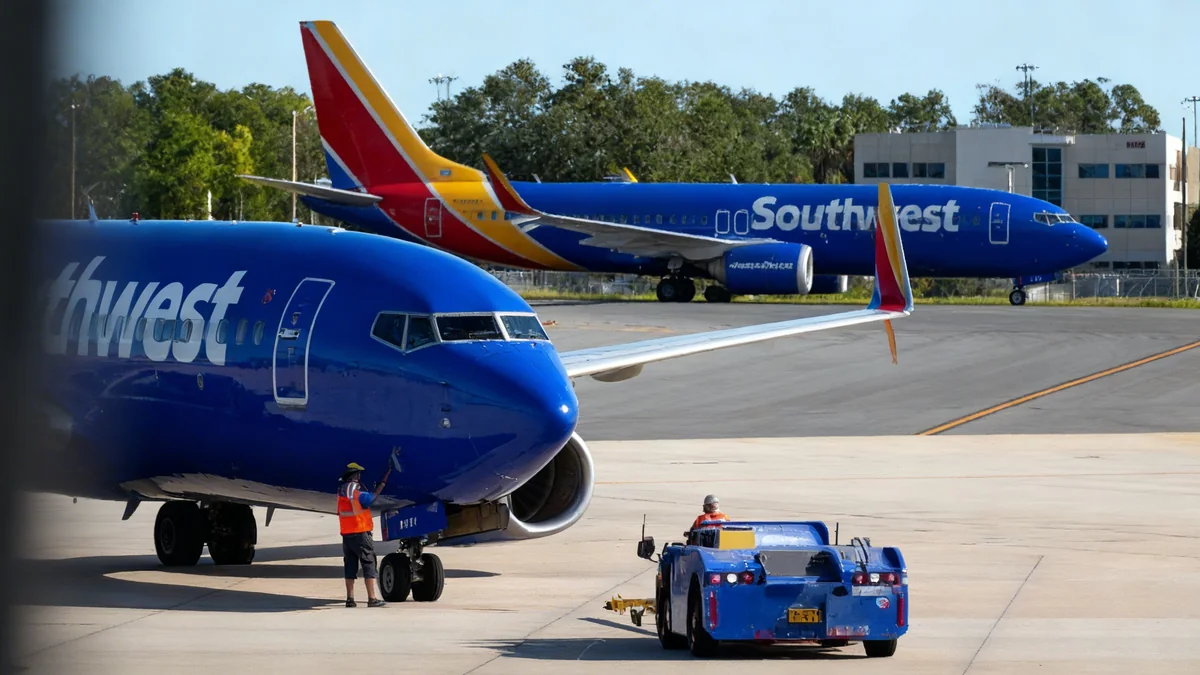
Southwest Airlines is facing a lawsuit after a 64-year-old wheelchair user, Mary Lynn Ellison, alleged she was abandoned in a restroom at Hartsfield-Jackson Atlanta International Airport. The incident, which reportedly occurred on February 11, 2024, has brought renewed attention to airline accessibility services and the coordination of third-party assistance for passengers with mobility needs.
Key Takeaways
- Mary Lynn Ellison, a 64-year-old wheelchair user, is suing Southwest Airlines.
- She claims abandonment in an Atlanta airport restroom on February 11, 2024.
- The lawsuit highlights issues with third-party contractor coordination for mobility assistance.
- It raises questions about airline responsibility and federal accessibility standards.
Passenger Alleges Abandonment and Distress
According to court filings, Ms. Ellison, who uses a wheelchair and has severe panic disorder, was being escorted to her gate by a courtesy cart driver. During this transfer, she requested to use a restroom. The driver took her to the facility but then left, failing to return to assist her exit.
Ms. Ellison reportedly waited alone on the terminal floor for an extended period. The complaint details her feelings of panic and helplessness as time passed without any support. The lawsuit argues that this lapse in service continuity caused significant emotional harm.
"Southwest's conduct was extreme and outrageous, going beyond all possible bounds of decency, including the conscious abandonment of a known disabled passenger mid-connection after repeated requests for help."
Breakdown in Assistance Protocol
Passengers who use wheelchairs often rely on a coordinated chain of assistance from check-in through boarding, especially during connections at large airports. Any interruption in this chain can leave individuals unable to navigate busy terminals independently. The lawsuit contends that established procedures for assisting passengers were not followed in Ms. Ellison's case.
Fact Check
- The incident occurred on February 11, 2024, at Hartsfield-Jackson Atlanta International Airport.
- Mary Lynn Ellison, 64, is the plaintiff.
- She suffers from severe panic disorder and uses a wheelchair for mobility.
- Southwest Airlines offered a $150 voucher after the incident, claiming Ms. Ellison 'stayed in the restroom too long.'
Challenges at Busy Airports
Hartsfield-Jackson Atlanta International Airport is one of the world's busiest airports by passenger volume. This high throughput can create complex challenges for coordinating support services, including wheelchair assistance. Airlines frequently outsource these operations to specialized ground service providers.
While airlines remain responsible under federal law for ensuring accessibility, the day-to-day management often falls to these contractors. High passenger numbers and tight connection schedules can strain these support services, with attendants often assigned multiple passengers during peak travel times.
Oversight and Accountability Concerns
The lawsuit is expected to examine where operational responsibility truly lies: with Southwest Airlines' oversight or with the contracted service provider. Advocates for accessible travel argue that without real-time tracking systems and strict handoff procedures, service gaps are more likely to occur.
The outcome of this case could clarify accountability standards for airlines and their contractors in similar disputes. It may also prompt airports and airlines to review how assistance requests are logged, monitored, and executed to prevent future incidents.
Background on Accessibility Rules
Air carriers operating in the United States must comply with federal accessibility regulations. These rules are designed to protect passengers with reduced mobility by ensuring timely and appropriate assistance throughout their travel journey. The US Department of Transportation oversees the enforcement of these requirements, investigating complaints and imposing penalties for noncompliance.
Broader Implications for Air Travel Accessibility
For airlines like Southwest, which operates an extensive domestic network with rapid aircraft turnarounds, consistent passenger assistance is crucial. Ensuring smooth coordination among gate agents, ground crews, and third-party contractors is essential for meeting federal standards and ensuring passenger safety and comfort.
Even isolated incidents can attract significant public and regulatory attention, impacting an airline's reputation. As demand for accessible air travel continues to grow, airlines and airports face increasing pressure to strengthen their oversight mechanisms.
Industry experts suggest that investments in better staffing, comprehensive training, and advanced digital tracking tools could help reduce the risk of similar issues in the future. This lawsuit underscores the critical importance of reliable mobility support for the overall passenger experience and compliance with established regulations.
- Airlines face legal, financial, and reputational risks for service failures.
- The US Department of Transportation enforces accessibility regulations.
- Improved staffing, training, and tracking tools could enhance service.