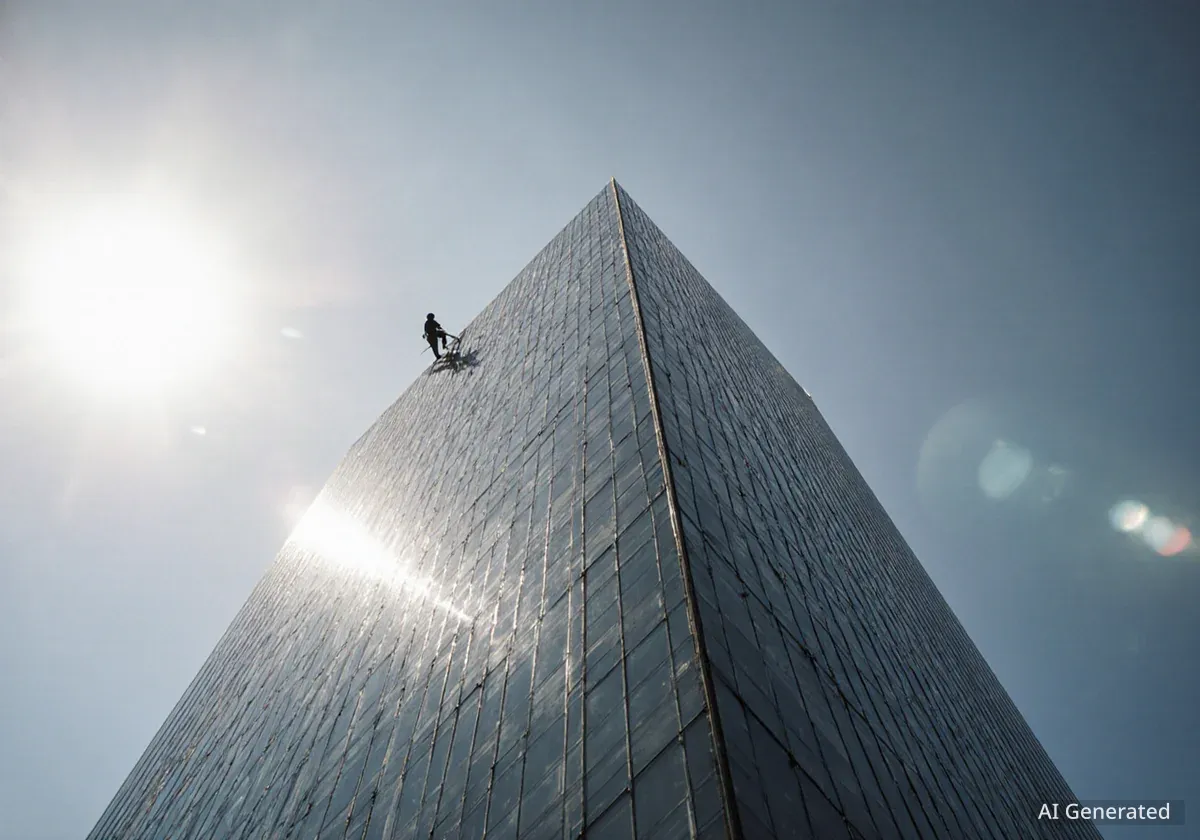
American rock climber Alex Honnold successfully free soloed the Taipei 101 skyscraper, a 1,667-foot (508-meter) structure in Taiwan, without the use of ropes or safety equipment. The climb, broadcast live, captured global attention as Honnold ascended the 101-story building in approximately one hour and 32 minutes.
Honnold's ascent marked the first known free solo climb of Taipei 101. Crowds gathered below the iconic structure, cheering him on with shouts of "Add oil!" as he made his way up the exterior. Taiwan's President Lai Ching-te congratulated Honnold, noting the event showcased both the climber's skill and the warmth of the Taiwanese people.
Key Takeaways
- Alex Honnold completed the first known free solo climb of Taipei 101.
- The 1,667-foot ascent took approximately 92 minutes.
- Taipei 101 is engineered to withstand earthquakes and typhoons.
- Honnold hopes his climb inspires others to pursue meaningful goals.
- Netflix streamed the event live, marking its first international live broadcast.
The Ascent of Taipei 101
Honnold began his climb of Taipei 101 after a 24-hour delay caused by poor weather conditions. He stated the inclement weather made the experience feel more like a traditional rock climbing expedition. The skyscraper, known for its unique design resembling eight stacked bamboo segments, presented a different challenge compared to the natural rock faces Honnold typically scales.
The climb involved navigating the building's distinct architectural features. Honnold successfully passed the eight "bamboo box" sections, each comprising eight stories. The final portion of the ascent involved climbing from the 92nd to the 101st floor, culminating at the building's metallic lightning rod structure.
Taipei 101 at a Glance
- Height: 1,667 feet (508 meters)
- Floors: 101
- Design: Eight stacked segments, resembling bamboo
- Engineering: Built to withstand strong earthquakes and typhoons
- Key Feature: Tuned mass damper, a huge orb-like pendulum counteracting sway
Preparation and Mindset
Honnold described the climb as "very safe," an assessment that might surprise many given the extreme nature of free soloing. He emphasized that for him, as a professional rock climber, it was not significantly different from his day-to-day activities. His preparation involved extensive training, which he stated he enjoyed.
"I think about risk and death and mortality, all those kinds of things, far more than the average person," Honnold said. "You’re choosing to do them anyway because it provides richness and meaning to your life."
His wife, Sanni McCandless, was present at the scene. She waved to him from inside Taipei 101 as he ascended past her location. She later joked that she was "having a panic attack the entire time" despite her husband's calm demeanor.
Taipei 101: An Engineering Marvel
Taipei 101 is not just a tall building; it is a marvel of modern engineering. For several years, it held the title of the world's tallest building before being surpassed by structures like the Burj Khalifa. It remains the tallest building in Taipei and a prominent feature of the city's skyline.
The skyscraper's design and construction are specifically tailored to Taiwan's environment, which is prone to strong earthquakes and typhoons. It uses reinforced concrete, combining the compressive strength of concrete with the tensile strength of steel. This blend allows the building to be flexible enough to sway with high winds, yet rigid enough to resist seismic activity.
Anti-Earthquake Technology
A key innovation within Taipei 101 is its tuned mass damper, a massive steel pendulum located high within the tower. This orb-like device weighs 660 metric tons and is suspended between the 87th and 92nd floors. It moves in opposition to the building's sway during high winds or earthquakes, significantly reducing oscillations and enhancing stability for occupants.
Honnold's Legacy and Inspiration
Alex Honnold is widely recognized for his groundbreaking free solo ascent of El Capitan in Yosemite National Park in 2017. This feat, documented in the Oscar-winning film "Free Solo," cemented his reputation as one of the most daring climbers in history. El Capitan, a 3,200-foot granite monolith, was considered an impossible free solo climb. Honnold spent over a year preparing, memorizing every move.
The challenges of climbing a skyscraper differ from scaling natural rock formations. Honnold had expressed a desire to climb a building for about a decade. His successful ascent of Taipei 101 adds another unique achievement to his illustrious career.
Inspiring Others
Following his climb, Honnold expressed his hope that his actions would inspire others. He believes people often take away personal messages from his climbs, using them as motivation to pursue their own goals and challenges.
"Often they’ll watch something like this and it’s a reminder that their time is finite and they should use it in the best way, the most meaningful way that they can. If anything, I hope that that’s what people take from it," Honnold stated.
He balances his intense climbing career with his family life. His two young children are not yet aware of his free solo adventures. Honnold climbs five days a week but prioritizes his family above all.
Netflix's Live Broadcast
The Taipei 101 climb was notable for being Netflix's first international live event, broadcast under the title "Skyscraper Live." The streaming service, traditionally known for on-demand content, is expanding into live programming to retain subscribers and attract new ones. Netflix co-CEO Ted Sarandos referred to the event as an "edge-of-your-seat TV experience."
The live feed included a ten-second delay, a standard practice for such events. This delay allows for critical control room intervention if unforeseen circumstances occur. Netflix has reportedly executed over 200 live events, including comedy specials and sports, mostly for US audiences, but is now expanding its global live offerings.
Previous Taipei 101 Climbs
While Honnold is the first to free solo Taipei 101, he is not the first person to climb the building. In 2004, French urban climber Alain Robert, known as the "French Spiderman," ascended the skyscraper using ropes and a safety belt. Robert completed his climb in four hours amid rainy weather, during the building's opening.
Robert, who often climbs famous landmarks without safety equipment, provided commentary during Honnold's ascent. He noted the difference in weather conditions and praised Honnold's focused and precise movements.
Honnold's climb of Taipei 101 solidifies his position as a pioneer in extreme climbing, pushing the boundaries of what is considered possible in both natural and urban environments.