
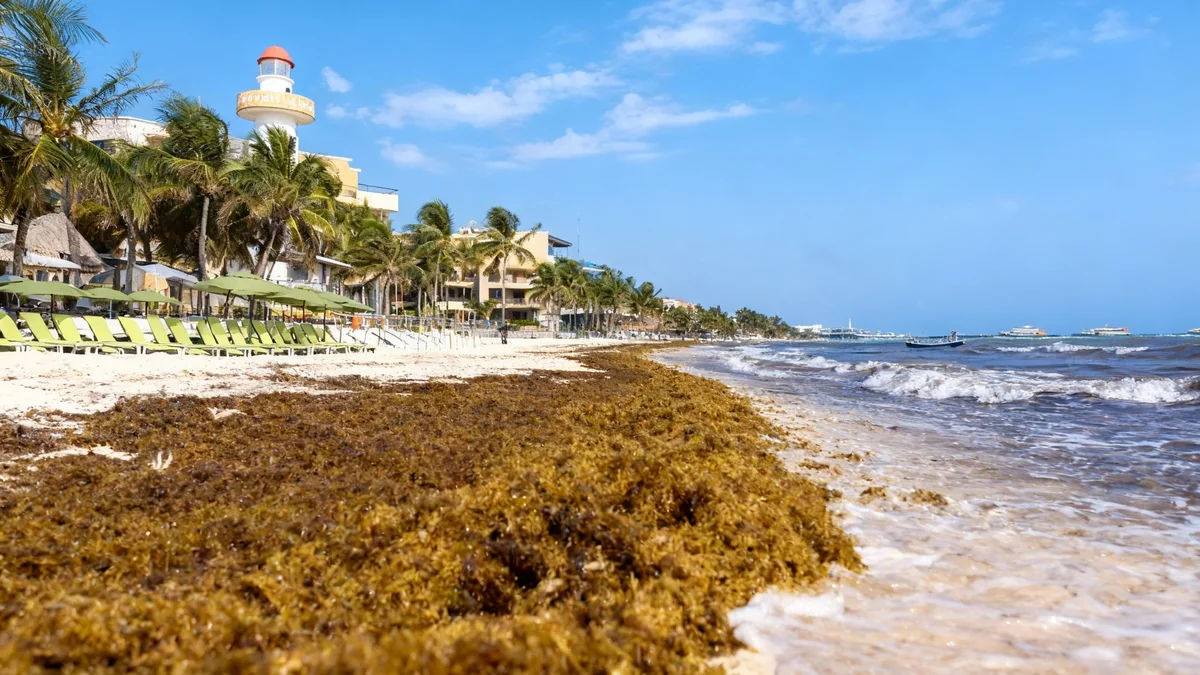
Travelers visiting Mexico's Riviera Maya this winter encountered an unwelcome surprise on the region's famous white-sand beaches: large quantities of sargassum seaweed. The arrival of the algae in January, a month historically known for crystal-clear waters, is disrupting vacations and raising concerns among scientists about a potential shift in the seaweed's seasonal patterns.
An unusual surge of sargassum has challenged the long-held belief that the winter months offer a guaranteed escape from the brown tide, forcing local authorities to deploy cleanup crews and prompting experts to re-evaluate long-term forecasts for the popular tourist destination.
Key Takeaways
- A massive, atypical wave of sargassum hit Riviera Maya beaches in early January 2026, a period normally considered the 'safe season'.
- On January 8, approximately 25 tons of seaweed washed ashore in Playa del Carmen, requiring emergency cleanup operations.
- Scientists at the University of South Florida note that the Atlantic sargassum bloom did not experience its typical winter die-off in late 2025, leading to this early arrival.
- The event suggests sargassum could become a year-round issue, changing how travelers should plan their trips to the region.
A Winter Surge Shocks Tourists and Locals
The traditional understanding for Caribbean travel has long been that winter provides a reliable window of pristine beaches. However, that expectation was broken in the first weeks of 2026. On January 8, a significant and uncharacteristic influx of sargassum blanketed the coastline of Playa del Carmen.
The popular beach club area around Playa Mamitas was particularly affected, with an estimated 25 tons of seaweed accumulating in less than 24 hours. The volume was so substantial that it required the immediate deployment of Zofemat, the local maritime authority, with heavy machinery to clear the shoreline. This was not a minor dusting of algae but a thick, dense layer that made swimming impossible.
While Playa del Carmen saw the most dramatic impact, other key tourist spots were not spared. Reports confirmed fresh arrivals in Tulum, and currents began pushing the floating mats of seaweed north toward Cancun's hotel zone.
By the Numbers: The January 8th Event
- Location: Playa del Carmen, Riviera Maya
- Seaweed Volume: Approximately 25 tons
- Timeframe: Less than 24 hours
- Response: Emergency cleanup crews and heavy machinery were deployed.
Scientific Explanation for the Early Arrival
The phenomenon is being closely monitored by researchers, including those at the University of South Florida (USF), a leading institution for tracking sargassum blooms. Their data suggests a significant deviation from normal patterns occurred in late 2025.
Typically, the vast sargassum population in the Atlantic Ocean blooms in the spring and summer before shrinking dramatically as water temperatures cool in November and December. This "winter die-off" did not happen as expected last year. Instead, the sargassum biomass remained unusually strong and continued to grow.
This lack of a seasonal reduction meant that a massive reserve of seaweed survived the winter, ready to be carried toward the Caribbean by currents far earlier than the usual April or May timeframe. Experts warn that such early arrivals are often a precursor to a major sargassum season in the months to come.
"We are potentially entering a new era where sargassum is a year-round reality rather than a seasonal annoyance. The data from late 2025 shows the bloom's resilience in cooler waters, which is a significant change."
What This Means for Future Travel Plans
The possibility of a year-round sargassum presence fundamentally alters the travel calculus for the Riviera Maya. Previously, visitors paid premium prices in winter for the certainty of clear water. Now, that certainty is diminishing, turning peak-season travel into more of a gamble.
The Old vs. New Travel Reality
The Old Rule: Book travel between December and March for guaranteed sargassum-free beaches.
The New Reality: Sargassum can arrive at any time of year, including peak winter months. Travelers must now plan with this possibility in mind.
Instead of relying on the calendar, travel experts suggest a new strategy focused on geography. Since sargassum drifts in from the east on Atlantic currents, locations with natural barriers or westward-facing coastlines offer a much higher chance of clear water, regardless of the season.
Adapting Your Itinerary
For travelers determined to find pristine swimming conditions, a few key strategies can help mitigate the impact of sargassum:
- Look to the West: Islands like Isla Mujeres and Cozumel offer natural protection. The famous Playa Norte on Isla Mujeres is shielded by the island itself, keeping it almost perpetually clear. Similarly, the entire west coast of Cozumel remains protected from the eastward-drifting seaweed.
- Explore Inland Waters: The Yucatan Peninsula is home to thousands of cenotes—stunning natural sinkholes filled with fresh, cool water. These geological wonders are completely immune to sargassum and offer a unique and refreshing swimming experience.
- Stay Flexible: Monitor local beach webcams and sargassum reports before and during your trip. Be prepared to take a day trip via ferry to Isla Mujeres or book a tour to a cenote if your hotel's beach is affected.
The recent events in the Riviera Maya serve as a clear indicator that environmental patterns are shifting. While the beauty of the region remains, travelers must now be more informed and adaptable to ensure their Caribbean getaway lives up to expectations.