
Air travelers are currently navigating a complex landscape of rising airfares, potential flight disruptions, and security checkpoint delays. Recent global events have significantly impacted the aviation industry, leading to increased operational costs for airlines and longer wait times for passengers at several major airports.
Key Takeaways
- Airfares are expected to rise sharply due to increased jet fuel costs.
- Some major airports experienced significant TSA screening delays.
- Global Entry processing has resumed after a temporary shutdown.
- Alaska Airlines is adjusting California routes, increasing SFO-LAX capacity.
- LAX's new Consolidated Rent-a-Car Center is now open.
Rising Airfares Due to Higher Fuel Costs
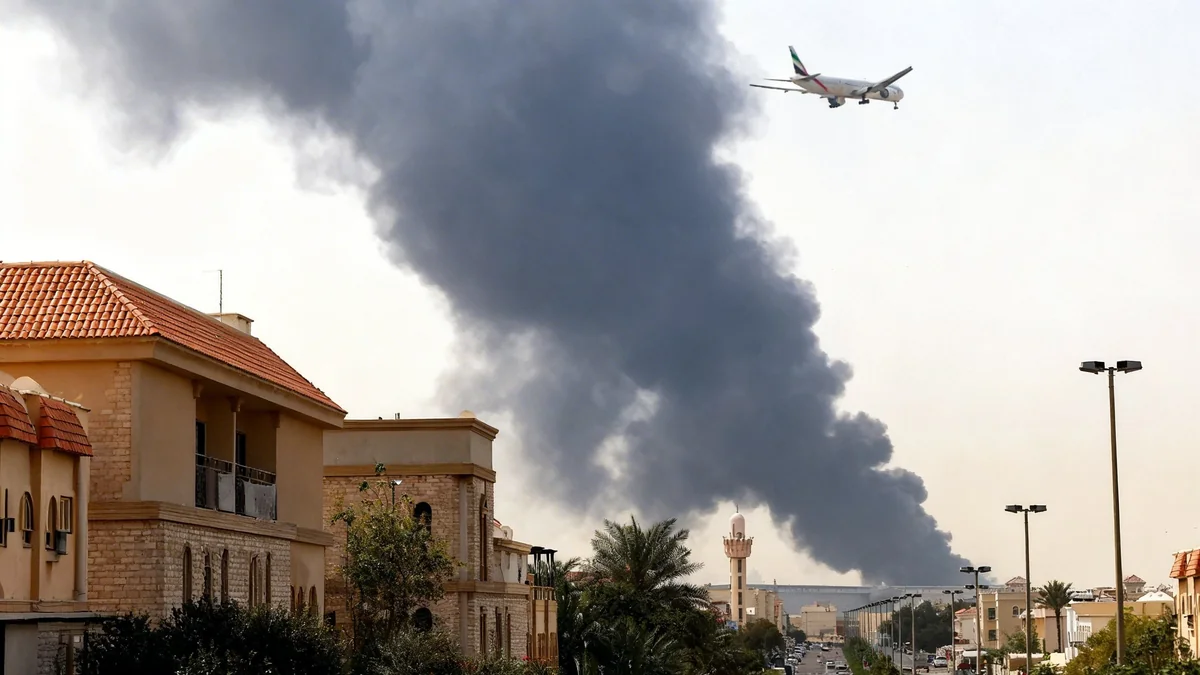
The cost of air travel is on an upward trajectory. This increase stems from a sharp rise in jet fuel prices. The vital Strait of Hormuz, a key shipping route, experienced disruptions, causing crude oil prices to surge. In some markets, jet fuel prices have reportedly doubled.
During the first week of recent global conflicts, U.S. jet fuel prices jumped by 58%. United Airlines CEO Scott Kirby indicated that the impact on airfares would likely be felt quickly by consumers.
Fuel Price Impact
Deutsche Bank's analysis warned that without immediate relief, airlines could be forced to ground thousands of aircraft. Financially weaker carriers might even halt operations entirely.
Reports from the U.K. newspaper, The Independent, noted that major Gulf State producers reduced production because of shipping disruptions. This contributed to the oil price spike. Long-haul flights between Asia and Europe have already seen massive fare increases. For example, a Korean Air flight from Seoul to London on March 11 reportedly jumped from $564 to $4,359 in just one week.
"Airfare could rise sharply in the coming days and weeks amid fallout from the conflict in the Middle East — and it could be bad news for consumers hoping to lock in flight reservations for the coming months."
Industry consultants advise travelers planning summer trips to book their airfare now. Prices could surge at any moment, especially for June and July, which are typically the busiest and most expensive summer travel months.
TSA Delays and Global Entry Resumption
Passengers at several major U.S. airports faced extensive delays at Transportation Security Administration (TSA) checkpoints recently. These staffing shortages began last weekend, with some travelers waiting for hours in lines that extended outside terminal doors.
New Orleans and Houston Hobby airports were among the first affected, with average wait times reaching three hours and three and a half hours, respectively. Other airports reporting extra-long lines included Houston Bush Intercontinental, Charlotte Douglas Airport, and Atlanta Hartsfield-Jackson.
These delays caused some travelers to miss their flights on Sunday, March 8. This day marked the busiest air travel day in the U.S. since early January's holiday rush.
The DHS Shutdown's Impact
The delays were particularly concerning as airlines anticipate a significant increase in passenger numbers during March and April. Airlines for America CEO Chris Sununu stated that the shutdown had "very real consequences" for aviation workers and passengers.
Normally, travelers can check estimated TSA wait times via the agency’s website or the MyTSA mobile app. However, due to the Department of Homeland Security (DHS) shutdown, these updates were unavailable. Travelers were advised to check individual airport websites for status reports.
Global Entry Reopens
On a positive note for international travelers, the DHS has reopened its Global Entry checkpoints. These checkpoints provide expedited processing through passport control. Global Entry had been suspended until recently, causing members to join regular screening lines at ports of entry.
During the suspension, airport lines for international travelers were unpredictable. Some reported waiting over an hour at customs, while others passed through in minutes. CNBC reported that the program restarted after pressure from airlines and travel groups, alleging that the lack of Global Entry led to lines of three hours or more at some airports.
The initial reasoning for the shutdown, which also briefly affected TSA PreCheck, was to prioritize the general traveling population. However, industry observers pointed out that Global Entry and TSA PreCheck are more efficient for screening travelers, reducing the number of employees needed. Closing these programs was counterproductive if staffing was short.
Airline Route Changes and Airport Developments
Alaska Airlines is implementing the next phase of its California route overhaul next week. The airline plans to significantly increase capacity between San Francisco International (SFO) and Los Angeles International (LAX). Six of its seven daily flights on this route will upgrade from 76-seat SkyWest E175 regional jets to 178-seat 737-900ERs, effective March 18.
Also starting March 18, Alaska Airlines will introduce new service between Sonoma County Airport in Santa Rosa and Ontario, California, with one daily E175 round trip. Another new daily E175 flight will connect San Diego and Tulsa, Oklahoma. The airline also plans to add a third daily round trip between Santa Rosa and San Diego, and a third daily round trip between Santa Rosa and Portland.
Route Eliminations
- SFO to Hollywood Burbank
- SFO to Phoenix
- SFO to Salt Lake City
- San Diego to Atlanta
These changes will take effect as of March 17.
Meanwhile, American Airlines plans to discontinue its twice-daily route from Santa Maria, California, to its Phoenix hub, operated by American Eagle/SkyWest. This service, launched just five months ago, will end on May 7. A spokesperson for American Airlines stated the route "did not meet performance expectations."
JSX Resumes Napa Service
Public charter operator JSX is set to resume service to Napa County Airport (APC) from Southern California on April 17. The company will offer four to seven flights a week between Napa and Hollywood Burbank, Orange County Airport in Santa Ana, and Santa Monica Airport. Orange County and Burbank flights will use Embraer regional jets, while the new Santa Monica service will employ JSX’s new ATR 42-600 turboprops. Napa County Airport is a private facility without regular commercial airline service.
LAX Opens New Car Rental Center, Clear Expands
Los Angeles International Airport (LAX) has begun operations at its new Consolidated Rent-a-Car Center (ConRAC). This facility, years in the making, is located at 5251 West 98th St. ConRAC now houses LAX’s 12 on-airport rental companies, including Alamo, Avis, Budget, and Hertz.
Customers for these companies should proceed to the purple Rental Car Shuttles sign outside baggage claim on the Lower/Arrivals level for pickup. The new ConRAC is designed to hold up to 18,000 vehicles. It will eventually connect to LAX’s Automated People Mover trains, eliminating the need for shuttle rides to and from the terminals.
Off-airport rental companies, such as Allied and Ace, continue to use their own locations. These companies require customers to meet at the LAX Economy Parking Garage at 6100 West 94th St. Travelers should take the LAX Economy Parking shuttle from the pink LAX Shuttles sign outside baggage claim and then follow signs to the Off-Airport Rental Car Companies waiting area.
Clear Expands to San Jose
Clear, known for its biometric e-gates, has expanded its service to San Jose Mineta Airport. This follows its introduction at San Francisco International in November and Oakland San Francisco Bay Airport in January. Members of the Clear+ program can use these new e-gates to verify their identity in under five seconds. This allows them to bypass the ID check at TSA podiums and go directly to screening.
The Clear e-gates at San Jose are located in Terminal B near the TSA PreCheck lane. Clear now offers these time-saving e-gates at nearly 40 airports nationwide.