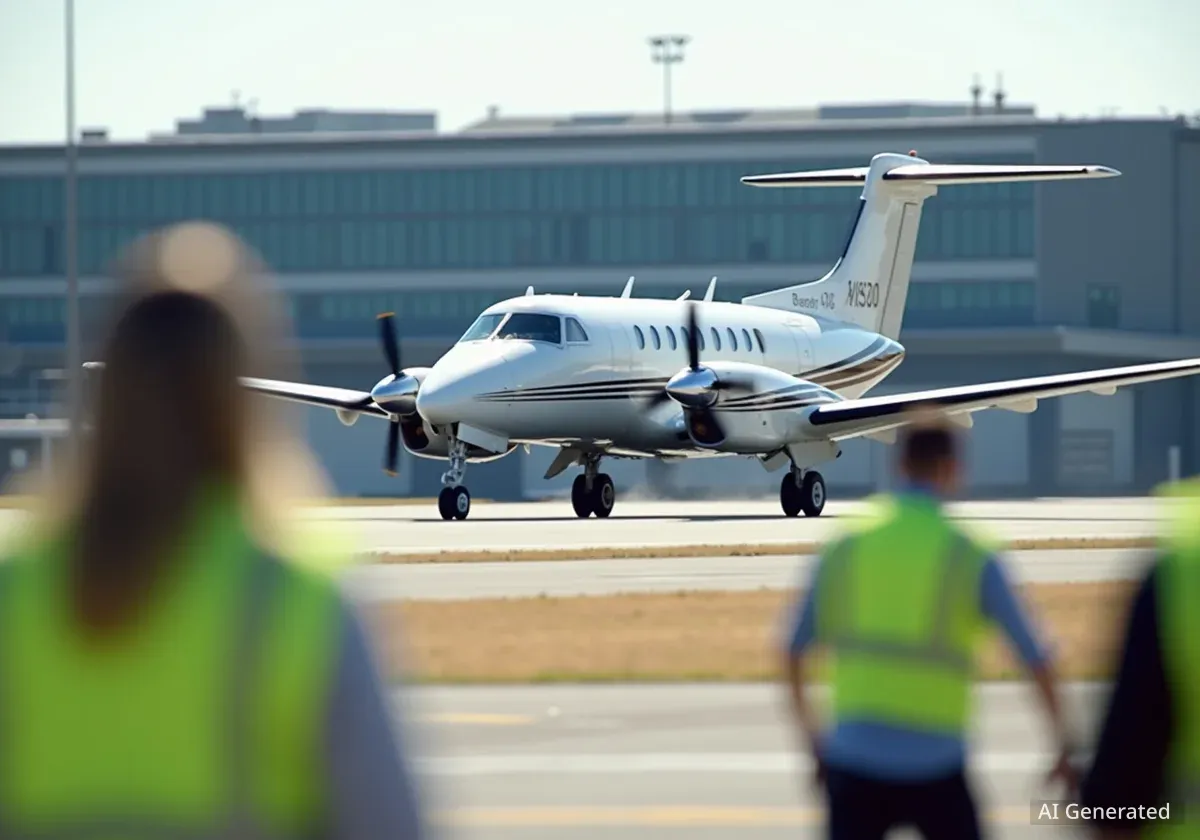
A Beechcraft Super King Air 200 aircraft recently completed an automatic landing following an in-flight emergency, marking a significant first for aviation automation. Two individuals on board emerged unharmed after the twin-engine turboprop landed at Rocky Mountain Metropolitan Airport near Denver.
This incident highlights the growing capabilities of advanced autopilot systems in ensuring safety during critical situations. The aircraft landed under the control of Garmin's Autoland system, a technology now installed on approximately 1,700 airplanes.
Key Takeaways
- An airplane automatically landed itself for the first time in an actual emergency.
- The Garmin Autoland system successfully engaged after a rapid loss of cabin pressurization.
- Two people on board were uninjured.
- The Federal Aviation Administration is investigating the incident.
First Successful Autoland in Emergency
The incident involved a Beechcraft Super King Air 200, operated by charter company Buffalo River Aviation. The aircraft was flying from Aspen with no passengers when the emergency occurred. This event represents the first time Garmin's Autoland system has been used from start to finish in a real-world emergency situation.
According to Garmin, the system engaged precisely as designed. The pilots, who were wearing oxygen masks due to the emergency, chose to allow the system to complete the landing. This decision allowed them to focus on other aspects of the unfolding situation.
System Snapshot
- Aircraft Type: Beechcraft Super King Air 200
- System Used: Garmin Autoland
- Total Installations: Approximately 1,700 airplanes currently equipped
- Outcome: Two occupants uninjured
Details of the In-Flight Event
Chris Townsley, CEO of Buffalo River Aviation, confirmed that the aircraft experienced a rapid, uncommanded loss of pressurization. This critical event prompted the pilots to don their oxygen masks immediately. The Autoland system then automatically activated when the cabin altitude surpassed safe levels.
Townsley clarified that initial reports of pilot incapacitation were incorrect. These reports stemmed from the Garmin system's automated communication functions. The crew made a conscious decision to utilize all available tools, including Autoland, to minimize variables in an unpredictable situation. Their priority was the safety of life and a successful outcome, consistent with their training.
"The aircraft experienced a rapid, uncommanded loss of pressurization," said Chris Townsley, CEO of Buffalo River Aviation. "Autoland automatically engaged exactly as designed when the cabin altitude exceeded the prescribed safe levels, and the pilots made the decision to leave the system engaged."
How Autoland Technology Works
Garmin's Autoland system is designed to take control of an aircraft during an emergency, such as pilot incapacitation or a severe cabin pressurization issue. The system identifies the most suitable airport, navigates the aircraft, communicates with air traffic control, and executes a fully automated landing.
During a demonstration of the system in a Cirrus Aircraft SR22, the process was observed. Activating a large red button engages the on-board autopilot. The system then steers the plane to an appropriate airport and makes automated announcements to air traffic controllers. Air traffic control audio from the recent incident included an automated voice stating, "Pilot incapacitation," and warning other pilots about an "Emergency auto-land in less than 1 minute on runway 3-0 right."
Aviation Automation Evolution
The concept of automated landing systems has been under development for decades. Early systems focused on Instrument Landing Systems (ILS) to assist pilots. Modern systems like Autoland represent a significant leap, offering fully autonomous emergency landing capabilities without pilot input once activated. This technology aims to enhance safety, especially in single-pilot operations or situations where pilots are incapacitated.
The Role of Pilot Discretion
The Buffalo River Aviation CEO emphasized that the crew's decision to keep the Autoland system engaged was a deliberate tactical choice. This highlights a crucial aspect of aviation safety: technology acts as a powerful tool, but human judgment remains central. Pilots are trained to assess emergent situations and use all available resources to ensure the safest possible resolution.
By allowing the system to manage the landing, the pilots could dedicate their attention to other vital checks and communications. This approach can reduce workload and stress in high-stakes environments, ultimately contributing to a safer outcome.
Ongoing Investigation
The Federal Aviation Administration (FAA) has initiated an investigation into the incident. Such investigations are standard procedure following any aviation emergency. They aim to understand all factors involved, verify system performance, and identify any lessons that can improve future safety protocols and technology. The findings from this investigation will provide valuable data on the real-world performance of advanced automation in emergency scenarios.
- The FAA will review flight data.
- They will analyze communications logs.
- The investigation will confirm system functionality.
This successful automated landing marks a significant milestone in aviation safety. It demonstrates the potential of advanced technology to mitigate risks during critical in-flight emergencies, paving the way for even safer air travel in the future.