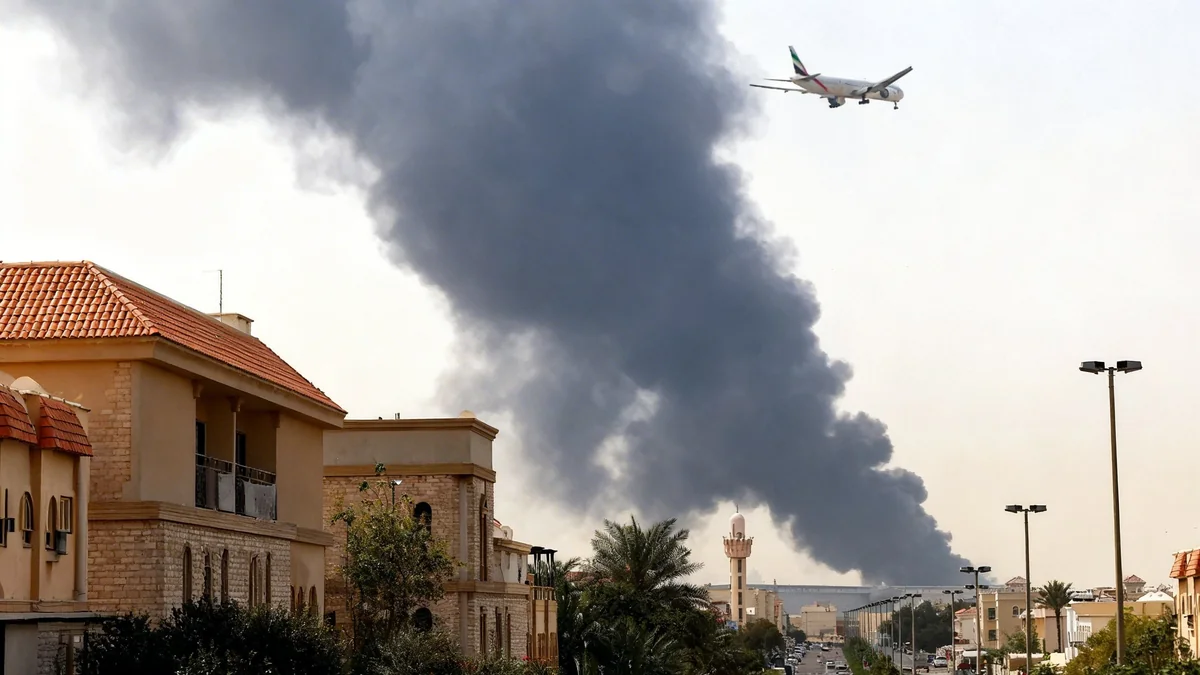
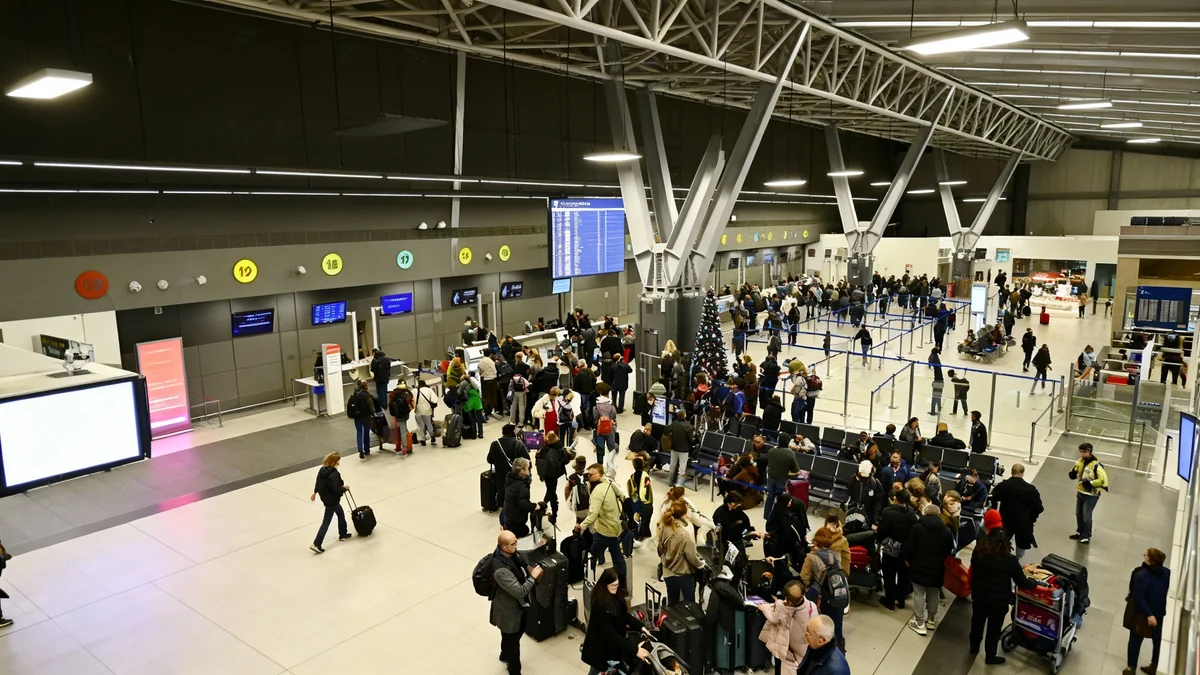
Thousands of travelers across Europe faced significant delays and cancellations on Sunday following a critical communications failure that forced Greece to close its airspace. The disruption, which began on Sunday morning, led to the temporary suspension of both arrivals and departures, leaving passengers stranded at various airports.
Athens International Airport was among the most affected, while Thessaloniki Airport experienced a complete shutdown. Authorities are actively working to determine the cause of the radio communications breakdown.
Key Takeaways
- Greece's airspace closed due to a radio communications failure.
- Thousands of passengers are stranded across Europe.
- Athens and Thessaloniki airports experienced major disruptions.
- Initial investigations point to an antenna failure in the Gerania Mountains.
- International assistance is helping manage the air traffic situation.
Widespread Impact on Flights Across Europe
The sudden closure of Greek airspace caused a ripple effect across the continent. Airlines were forced to divert or cancel flights, impacting travelers heading to and from Greece.
Early reports indicated that more than 90 flights were affected at Athens International Airport alone. While some departures have since resumed, inbound flights continued to face diversions or were instructed to return to their origin airports for several hours.
Flights originating from cities like Dublin, Barcelona, and Paris were ordered to turn back. Services from Copenhagen and Malta were canceled entirely. Other arrivals into Athens were held on standby, contributing to the growing chaos.
Flight Disruptions at a Glance
- Athens Airport: Over 90 flights affected.
- Thessaloniki Airport: Closed entirely.
- Departures: Some resumed, allowing 35 aircraft per hour.
- Inbound Flights: Mostly diverted or cancelled.
- Affected Origins: Dublin, Barcelona, Paris, Copenhagen, Malta.
Passenger Frustration Mounts
Travelers caught in the disruption expressed significant frustration, citing a lack of clear information. Many were concerned about missing important commitments, including work.
"I was supposed to fly to London, via Stockholm, with SAS," one passenger at Athens International Airport told a local broadcaster. "I'm working on Newport Hospital tomorrow morning. I'm not going to be there on time, I don't know what else to say. Who is going to pay for the additional cost this travel will cost me? We still don't know if and when we're going to leave, no one is telling us anything."
Another passenger, whose flight to Rhodes turned back to Athens mid-journey, reported receiving no information for hours after landing. This lack of communication added to the stress for many.
Technical Glitch Identified
The root cause of the widespread disruption is believed to be a technical issue with the radio system used by air traffic controllers. This system is crucial for communicating with aircraft in Greek airspace.
Panagiotis Psarros, chair of the Association of Greek Air Traffic Controllers, confirmed the severity of the problem. He stated that all frequencies were "suddenly lost," making it impossible to communicate with aircraft in the sky.
Air Traffic Control Communication
Air traffic control relies on stable radio frequencies to guide aircraft safely. Controllers provide instructions for takeoff, landing, and navigation. A loss of these frequencies can severely compromise safety and lead to immediate airspace closures.
An initial investigation by Greek security services suggests the problem may stem from the failure of an antenna located in the Gerania Mountains, near Athens. This antenna is vital for maintaining consistent radio contact across the region.
International Support and Recovery Efforts
As Greece grapples with the fallout, neighboring countries are providing assistance. Italy, Turkey, and Cyprus are working with Greek authorities to manage the complex air traffic situation.
The timing of the disruption is particularly challenging. It coincides with a busy period for air travel as many individuals return from winter holidays. Athens typically handles more than 600 scheduled flights per day, underscoring the scale of the impact.
While domestic travelers might consider Greece's rail network as an alternative, this option would involve significantly longer travel times, making it impractical for many.
Key Details of the Incident
- Cause: Radio communications failure.
- Suspected Origin: Failed antenna in Gerania Mountains.
- Assisting Nations: Italy, Turkey, Cyprus.
- Peak Travel Time: Many returning from winter holidays.
Authorities continue to work towards fully restoring communications and normalizing air travel. The focus remains on ensuring safety and minimizing further inconvenience for affected passengers.