London's Heathrow Airport (LHR) has officially removed its long-standing restrictions on carry-on liquids and large electronic devices. Travelers can now pass through security checkpoints with full-sized bottles of liquids and leave laptops inside their bags, marking a significant change for one of Europe's busiest travel hubs.
Key Takeaways
- Heathrow Airport has eliminated the 100-milliliter carry-on liquids rule.
- Passengers no longer need to remove large electronic devices from bags.
- The change applies across all airport terminals.
- New security scanning technology enabled this policy shift.
- The move is expected to save millions of single-use plastic bags.
New Security Measures Streamline Travel
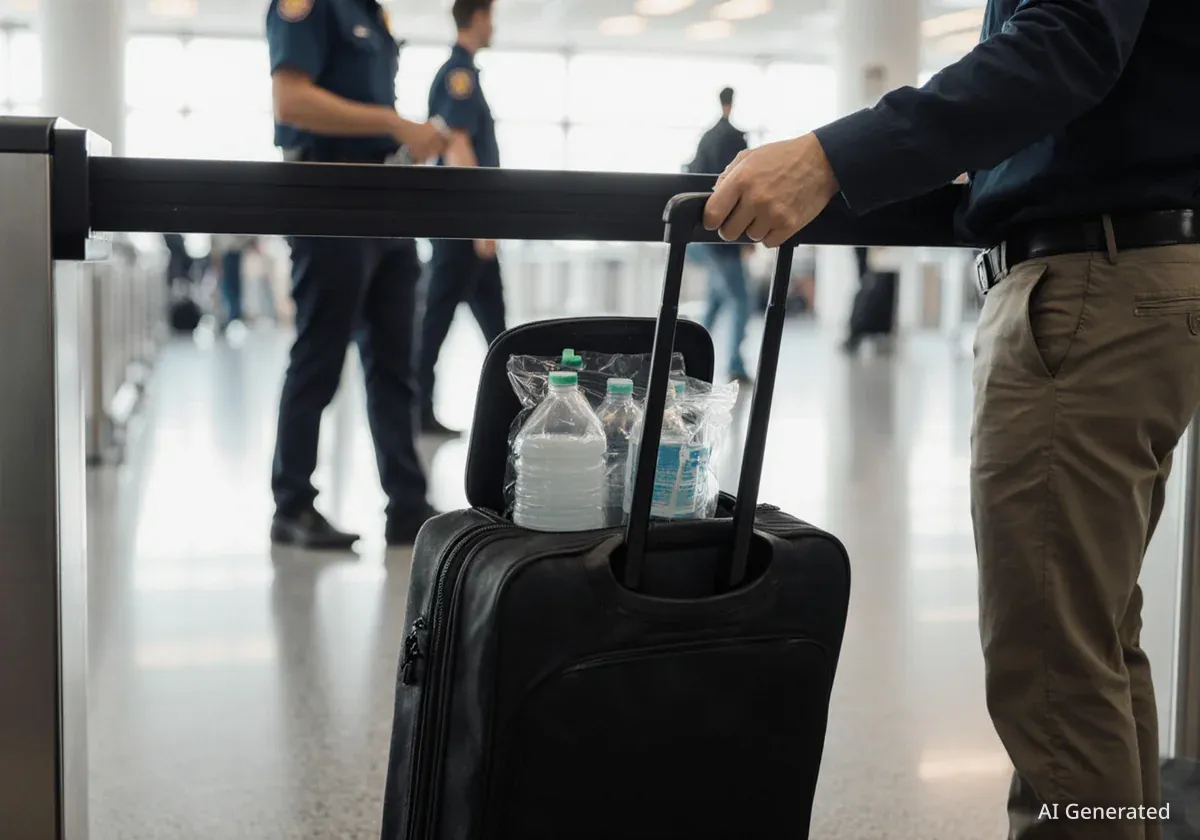
The updated policy, announced on Friday, January 23, 2026, means passengers no longer face the 100-milliliter limit per container for liquids. This restriction had been in place for decades, impacting how travelers packed their carry-on luggage.
The change also extends to large electronic devices. Travelers can now keep items like laptops within their bags as they go through security screening. This represents a major step towards a more efficient and less stressful airport experience.
Fast Fact
Heathrow Airport is the largest airport globally to fully implement the latest security scanning technology, allowing for the removal of these long-standing restrictions.
A Long-Awaited Change
The move to relax liquid limitations at Heathrow has been in progress for several years. The U.K.'s Department for Transport had previously instructed airports to prepare for this shift, driven by advancements in security screening technology. While some individual airports in the U.K. and European Union had already eased similar rules, Heathrow's announcement marks a significant milestone due to its size and passenger volume.
"Every Heathrow passenger can now leave their liquids and laptops in their bags at security as we become the largest airport in the world to roll out the latest security scanning technology," said Thomas Woldbye, Heathrow CEO. "That means less time preparing for security and more time enjoying their journey – and millions fewer single-use plastic bags."
Airport officials anticipate that this new policy will lead to a reduction of approximately 16 million single-use plastic bags. These bags were previously required for passengers to separate their liquid containers before security checks.
Impact on Global Travelers
Heathrow serves as a crucial hub for international travel, particularly between the United States and Europe. Data from aviation analytics firm Cirium shows that airlines operated 41,000 flights from LHR to the U.S. in 2025 alone. This policy change will directly benefit millions of travelers connecting through London or flying to and from the U.S.
The enhanced security technology allows for more thorough and efficient screening of bags, making the removal of liquids and electronics from carry-ons unnecessary. This contributes to a smoother process for everyone passing through the airport.
Background on Liquid Restrictions
Size restrictions on carry-on liquids were first implemented at airports worldwide in the mid-2000s. These measures were a direct response to heightened terrorism concerns at the time. Over the past decade, improved bag-screening technology has prompted security officials in many regions to re-evaluate these policies.
Will the U.S. Follow Suit?
With Heathrow's decision, attention now turns to whether the United States Transportation Security Administration (TSA) will adopt similar changes to its 3-1-1 liquids policy. This rule limits liquids, gels, and aerosols to containers of 3.4 ounces (100 milliliters) or less, requiring them to fit into a single quart-sized bag.
While discussions about ending the liquids rule have occurred within the U.S. government, TSA officials have indicated that such a change is likely still some years away. Former TSA Administrator David Pekoske stated in late 2024, "I'm hoping it will be earlier rather than later. But it's not around the corner."
The U.S. has made other adjustments to its security procedures. For example, in July 2025, the TSA stopped requiring most passengers to remove their shoes at checkpoints, another long-standing security measure.
The Future of Airport Security
The trend towards more advanced screening technologies is reshaping airport security globally. These new systems use sophisticated imaging to analyze bag contents without the need for passengers to unpack their belongings. This not only enhances security but also significantly improves the passenger experience.
- Reduced wait times at security checkpoints.
- Less hassle for travelers, especially those with connecting flights.
- Environmental benefits from reduced plastic bag usage.
As more airports invest in these technologies, it is likely that other major hubs will follow Heathrow's lead, further simplifying air travel for millions worldwide. The focus remains on balancing robust security measures with efficient and passenger-friendly processes.