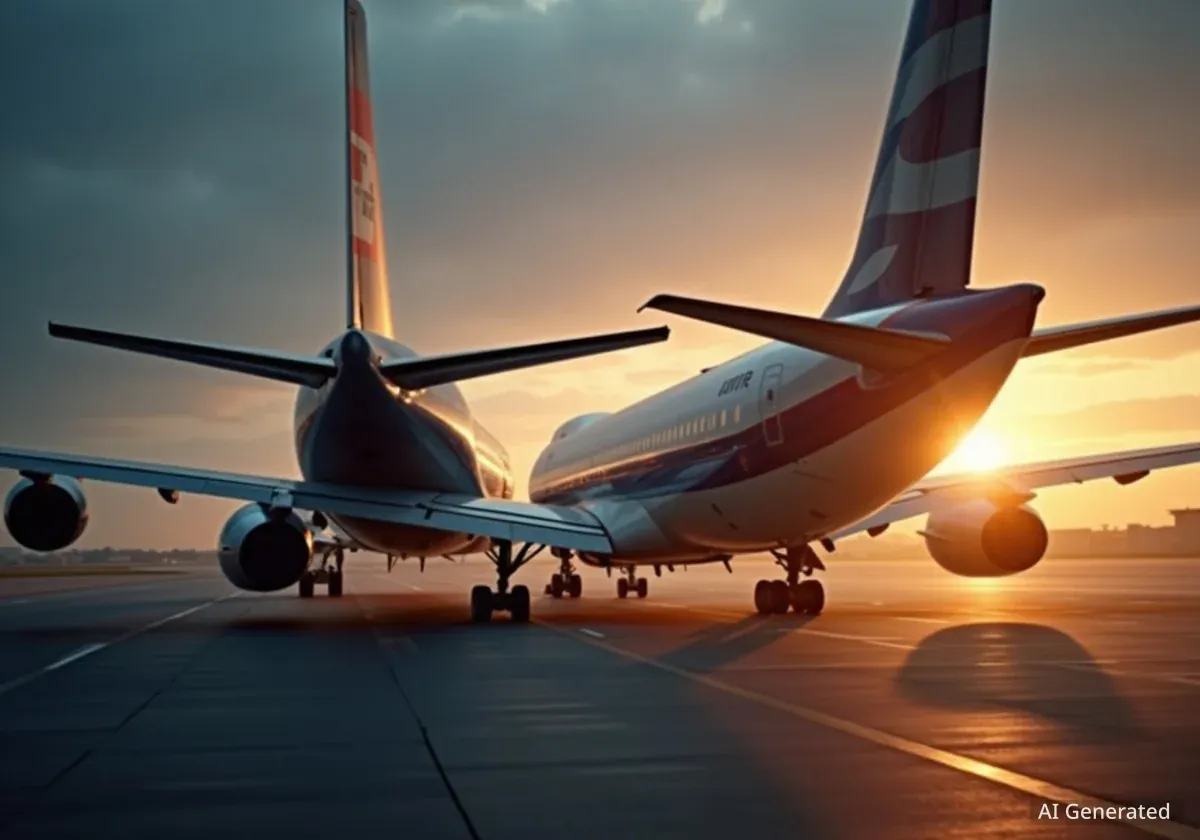
Two aircraft at Houston's George Bush Intercontinental Airport nearly collided on December 18. Air traffic control recordings reveal that a Volaris Airlines flight made an unauthorized turn into the path of a United Express jet. Both planes received immediate collision avoidance warnings and took evasive action.
Key Takeaways
- A Volaris Airlines jet made an unauthorized turn at Houston Bush Intercontinental.
- The turn placed it directly in the path of a United Express flight.
- Both aircraft received collision avoidance alarms.
- Pilots performed evasive maneuvers to prevent a mid-air collision.
- The Federal Aviation Administration is investigating the incident.
Unauthorized Turn Leads to Near Miss
The incident involved Volaris Airlines Flight Y4-1571, destined for El Salvador, and United Express Flight 5109, heading to Jackson, Mississippi. Air traffic control (ATC) communications indicate that the Volaris aircraft initiated a right turn without clearance. This maneuver brought it dangerously close to the United Express plane, which was also taking off.
Flight records confirm the Volaris jet's unauthorized movement. The precise reason for this deviation remains unclear. Investigations are now underway to determine the sequence of events and pilot actions leading up to the near collision.
Fact Check
- Date of Incident: December 18
- Location: George Bush Intercontinental Airport (IAH), Houston, Texas
- Aircraft Involved: Volaris Airlines Flight Y4-1571 and United Express Flight 5109
- Destination of Volaris Flight: El Salvador
- Destination of United Express Flight: Jackson, Mississippi
Collision Avoidance Systems Activate
Both flight crews were alerted to the imminent danger by their onboard collision avoidance systems. These systems are designed to provide pilots with warnings and instructions to prevent mid-air collisions. Upon receiving the alerts, both pilots responded quickly.
They executed evasive maneuvers as directed by the warning systems. This swift action was crucial in preventing a catastrophic event. Following the successful avoidance, both flights continued their journeys to their respective destinations without further incident.
"The immediate activation of the collision avoidance systems and the pilots' quick reaction were critical in averting a disaster. This highlights the importance of these safety protocols in modern aviation."
The Role of Air Traffic Control
Air traffic controllers play a vital role in maintaining safe distances between aircraft. Their instructions guide pilots through complex airport environments and crowded airspace. In this case, the ATC recordings will be a key part of understanding how the unauthorized turn occurred.
The recordings provide a timeline of communications between the tower and the aircraft. They also show the instructions given and the responses received. This data helps investigators piece together the events leading to the near miss.
Aviation Safety Protocols
Aviation safety relies on multiple layers of protection. These include strict air traffic control procedures, advanced onboard technology like TCAS (Traffic Collision Avoidance System), and extensive pilot training. Incidents like this are rare due to these robust systems.
When an unauthorized movement or deviation occurs, these layers are tested. The successful avoidance in this instance demonstrates that the safety systems and pilot training worked as intended.
Federal Aviation Administration Investigates
The Federal Aviation Administration (FAA) has launched an investigation into the incident. The FAA is responsible for regulating all aspects of civil aviation in the United States. Their inquiry will examine the circumstances surrounding the unauthorized turn and the subsequent near collision.
Investigators will review flight data recorders, cockpit voice recorders, and air traffic control communications. They will also interview the pilots and air traffic controllers involved. The goal is to determine the cause and implement any necessary safety improvements.
Preventing Future Incidents
Investigations into near-miss events are crucial for improving aviation safety. The FAA will analyze findings to identify any systemic issues or human factors that contributed to the incident. This could lead to changes in procedures, training, or technology.
Such incidents serve as reminders of the constant need for vigilance and adherence to strict protocols in air travel. The safety of passengers and crew is the top priority for airlines and regulatory bodies.
Key Data Points
- Flight Y4-1571: Volaris Airlines, destination El Salvador.
- Flight 5109: United Express, destination Jackson, Mississippi.
- Safety System: Traffic Collision Avoidance System (TCAS) played a key role.
- Regulatory Body: Federal Aviation Administration (FAA) is leading the investigation.
Airline Responses and Ongoing Inquiry
Both Volaris Airlines and United Express have been contacted for comment regarding the incident. As of now, neither airline has provided an official statement. The FAA has indicated that it will release more information as its investigation progresses.
The aviation community will closely monitor the outcome of this inquiry. Lessons learned from such events help to strengthen safety measures across the entire industry, ensuring safer skies for everyone.