Air travelers are increasingly vocal about the shrinking size of airplane seats and the resulting discomfort on crowded flights. Social media platforms are now filled with passenger accounts detailing cramped conditions, prompting a renewed discussion about airline seating policies and in-flight etiquette.
Key Takeaways
- Passengers report feeling 'crushed' in airplane seats due to reduced space.
- Social media is a common platform for sharing uncomfortable flight experiences.
- Airlines have policies requiring passengers to fit in one seat with armrests down.
- Experts suggest addressing seating concerns early and calmly.
Growing Discomfort on Crowded Flights
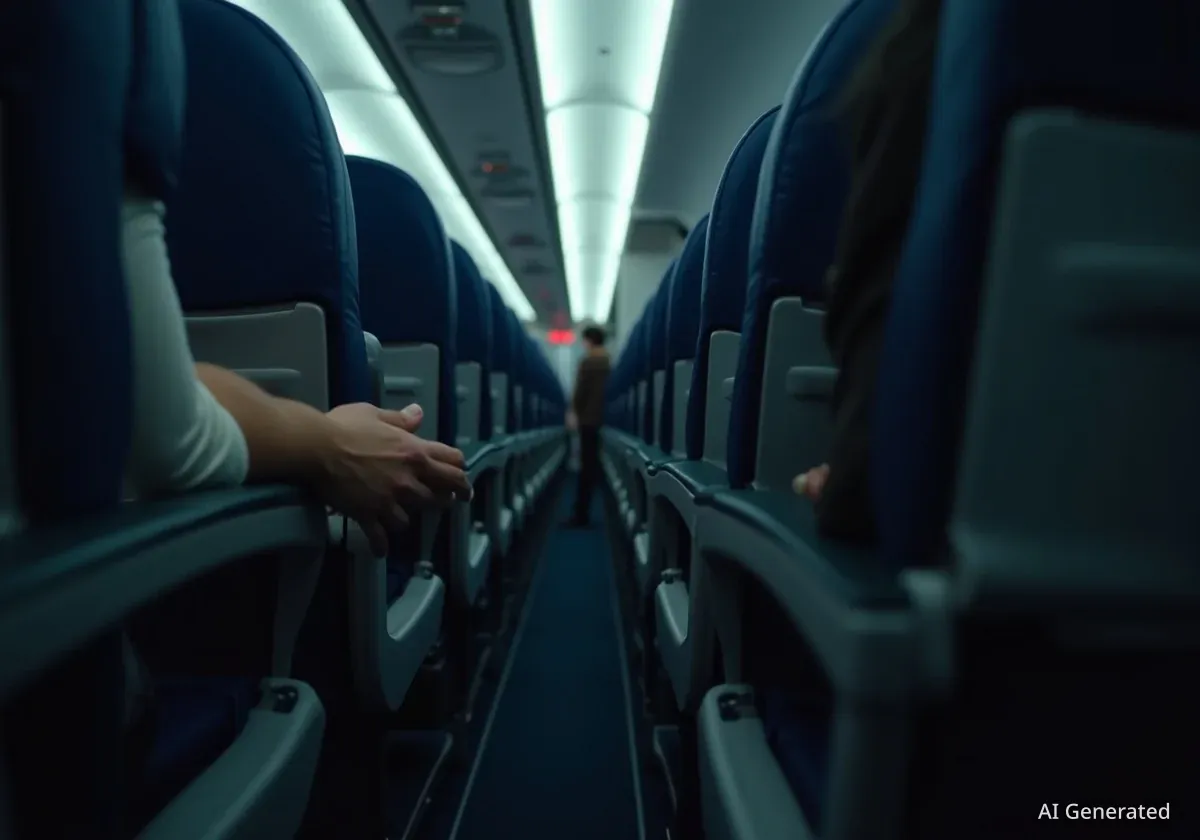
Many travelers describe feeling pressed against windows or armrests, particularly on fully booked flights. These experiences often lead to feelings of being trapped or even short of breath. The issue highlights a growing tension between airline efforts to maximize capacity and passenger expectations for basic comfort.
One widely discussed incident involved a passenger on a cross-country flight. This individual reported being crushed against the side of the plane after a middle-seat passenger fell asleep and leaned into their space. Attempts to regain personal space were unsuccessful, eventually requiring assistance from flight attendants.
"No one should be pressed, leaned on or crowded out of their seat."
Jacqueline Whitmore, etiquette expert and former flight attendant
Fact Check
Some airlines, like United and American, require passengers to fit in their assigned seat with both armrests fully down. If a passenger cannot meet this requirement, they may need to purchase an additional seat or rebook on a different flight with more space.
Social Media Amplifies Passenger Voices
Online forums and video platforms have become a primary outlet for travelers to share their experiences. Viral videos often show passengers struggling with limited space, igniting debates about personal responsibility and airline policies.
These discussions sometimes lead to heated exchanges. Some commenters argue that criticism should not target larger passengers, advocating for privacy and respect. Others defend the right of passengers to speak out when they feel their paid-for space is compromised.
The conversation underscores a broader societal shift where personal experiences, especially negative ones, are quickly shared and debated publicly. This digital trend puts pressure on airlines to address passenger concerns more directly.
Background on Seating
Over the past few decades, airplane seat pitch (the distance between a point on one seat and the same point on the seat in front of it) has generally decreased. This reduction allows airlines to fit more rows of seats into cabins, increasing passenger capacity per flight.
Airline Policies and Solutions
Airlines do have policies in place for passengers who require more space. United Airlines and American Airlines, for example, recommend that passengers needing extra room book an additional seat or upgrade to a wider premium cabin. If extra seats are not available, rebooking on another flight is an option.
These policies also state that passengers must be able to sit within their own seats with armrests fully lowered. Addressing seating needs in advance is crucial, as same-day accommodations are often limited on full flights.
- Book in Advance: Consider booking an extra seat if personal space is a significant concern.
- Upgrade Options: Explore premium cabin upgrades for wider seats and more legroom.
- Speak Up Early: Address any seating issues with flight attendants during boarding.
Expert Advice on In-Flight Etiquette
Etiquette experts advise travelers to handle space issues calmly and thoughtfully. Jacqueline Whitmore, a Florida-based etiquette expert and former flight attendant, emphasizes the importance of awareness due to shrinking seat sizes.
Whitmore suggests that suffering in silence is not the solution when personal boundaries are crossed. Instead, passengers should communicate their concerns appropriately. This proactive approach can help resolve issues before they escalate.
Simple solutions suggested by online commenters include lowering the armrest between seats. If this does not resolve the issue, asking a flight attendant about a possible seat change or upgrade is the next step.
The ongoing debate reflects a fundamental challenge in modern air travel: balancing passenger comfort with operational efficiency. As flights continue to fill, the conversation around seat size and personal space will likely remain a prominent topic for travelers.
Airlines face increasing scrutiny as passengers demand more comfortable and respectful travel experiences. The future of air travel may depend on finding sustainable solutions that address these growing concerns without significantly impacting affordability.