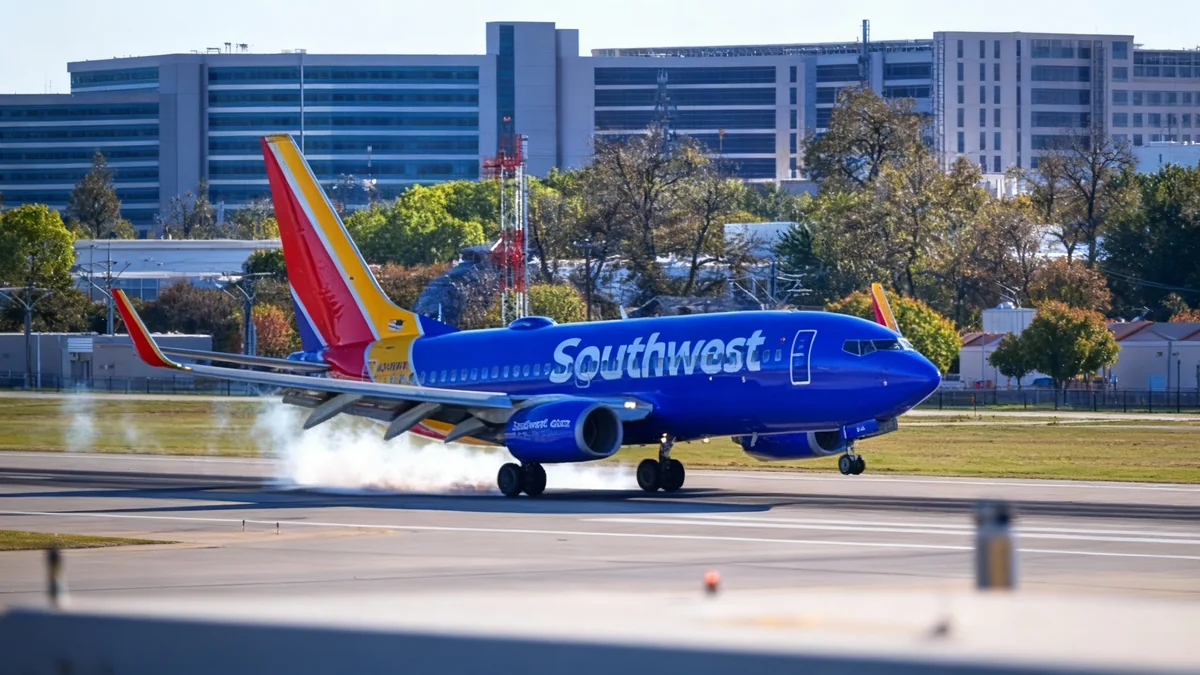
Southwest Airlines will not pay an $11 million fine that was part of a larger settlement related to its operational meltdown in December 2022. This decision by the US Department of Transportation (DOT) comes as part of a $140 million settlement over the widespread flight disruptions that affected over two million passengers during the busy holiday travel season.
Key Takeaways
- Southwest Airlines avoids an $11 million fine.
- The waiver is part of a $140 million settlement for the 2022 holiday travel chaos.
- The airline committed to investing over $1 billion in operational improvements.
- The 2022 meltdown stranded more than 2 million passengers.
Details of the Settlement and Waiver
The original settlement, agreed upon in December 2023, required Southwest to pay a $35 million cash fine over three years. Additionally, the airline committed to providing $90 million in travel vouchers. These vouchers, valued at $75 or more, were for passengers who experienced delays of at least three hours reaching their final destinations due to airline-caused issues or cancellations.
The DOT's written order specifically cited Southwest's commitment to invest more than $1 billion in its operations. This investment aims to improve performance and reliability following the 2022 incident. This significant financial pledge played a key role in the decision to waive the remaining $11 million of the fine, which was originally due by the end of January.
Fast Facts on Southwest's 2022 Meltdown
- Impacted Passengers: Over 2 million
- Settlement Value: $140 million
- Cash Fine: $35 million (initially)
- Travel Vouchers: $90 million
- Operational Investment: Over $1 billion
Background of the 2022 Holiday Chaos
The December 2022 meltdown severely disrupted travel plans for millions of Americans. A combination of severe winter weather and Southwest's outdated operational systems led to widespread cancellations and delays. The airline struggled to recover, facing criticism from passengers, regulators, and government officials.
The chaos highlighted significant issues within Southwest's scheduling and crew management systems. Many pilots and flight attendants were left stranded without clear instructions, exacerbating the problems. The incident became a major point of discussion regarding airline accountability and passenger rights.
"The decision to waive the remaining fine acknowledges Southwest's substantial commitment to prevent future disruptions through significant infrastructure investments," a DOT spokesperson stated, emphasizing the focus on long-term operational improvements.
Southwest's Investment in Future Reliability
Since the 2022 incident, Southwest has publicly committed to upgrading its technology and operational infrastructure. The $1 billion investment covers a range of improvements, including new de-icing equipment, enhanced crew scheduling software, and better communication tools for employees. These changes are designed to prevent a repeat of the widespread failures experienced during the holiday period.
The airline has faced pressure to modernize its systems, which some critics argued were not robust enough to handle severe weather events or large-scale operational challenges. This investment represents a direct response to those criticisms and regulatory scrutiny.
Airlines and Regulatory Oversight
The US Department of Transportation regularly monitors airline performance and enforces consumer protection laws. Incidents like Southwest's 2022 meltdown often lead to investigations and financial penalties, aiming to ensure airlines uphold their responsibilities to passengers. The current administration has emphasized holding airlines accountable for disruptions and improving the overall passenger experience.
Impact on Passengers and the Airline Industry
For affected passengers, the $90 million in travel vouchers provides some compensation for the disruptions. These vouchers were distributed to those who met the criteria of being delayed by at least three hours due to airline-caused issues. This move aims to restore some goodwill with customers who endured significant inconvenience.
The larger settlement and the DOT's decision also send a message to the broader airline industry. It underscores the importance of resilient operational systems and robust contingency plans, especially during peak travel periods. Other airlines are likely to review their own systems to avoid similar scenarios and the associated financial and reputational costs.
Southwest's journey to regain full public trust and operational efficiency continues. The waived fine serves as an acknowledgment of the steps taken, but the ultimate success will be measured by improved performance during future challenging travel conditions.