
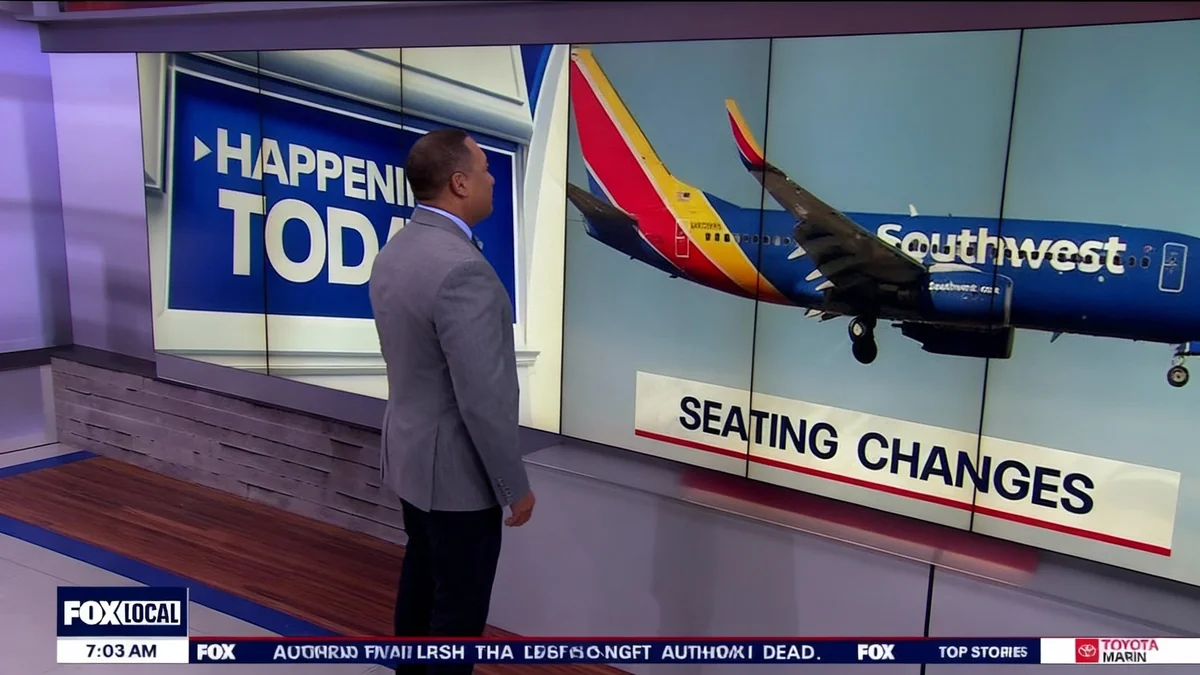
Southwest Airlines has officially ended its long-standing open seating policy, a practice that allowed passengers to choose any available seat upon boarding. As of Tuesday, the airline now assigns seats at the time of booking, marking a significant shift after 50 years of the first-come, first-served system.
This change is part of a broader strategy by Southwest to enhance profitability and respond to evolving customer preferences. The airline first announced these changes last year, preparing travelers for the new system now in effect.
Key Takeaways
- Southwest Airlines has moved from open seating to assigned seats.
- The new policy started on Tuesday, ending a 50-year tradition.
- The airline cites profitability and customer preference as reasons for the change.
- Some travelers express frustration over losing the ability to choose seats.
A Shift in Airline Strategy
For decades, Southwest's open seating model was a defining characteristic, often cited by loyal customers as a primary reason for choosing the airline. Passengers would board and select any unoccupied seat, leading to a unique boarding process that many found appealing.
The decision to move to assigned seating comes after extensive internal discussions and market analysis. Southwest leadership believes this new approach aligns better with modern airline practices and passenger expectations.
Fact Check
- 50 Years: Southwest's open seating policy was in place for half a century.
- Profitability: The airline aims to boost its financial performance with this change.
- Customer Surveys: Some surveys indicated a preference for pre-assigned seats.
Impact on Travelers
The immediate reaction from travelers has been mixed. Many passengers who valued the flexibility of open seating expressed disappointment. Gill Gosal, flying to Long Beach from Oakland's airport on Tuesday, shared his frustration.
"I think it’s terrible, because that’s why people used to fly Southwest," said Gill Gosal. "Now I didn’t choose my seat in time and I have a middle seat."
This sentiment highlights a common concern among travelers who appreciated the ability to secure an aisle or window seat, or to sit with companions without extra fees.
Customer Preferences and Comfort Concerns
Southwest stated that customer surveys played a role in the decision. According to the airline, many customers preferred knowing their seat assignment in advance. This eliminates the rush to board early for a good seat and provides more certainty before arriving at the airport.
However, other travelers voiced concerns about comfort. Cody Gore of Livermore, a frequent Southwest flyer, noted that the open seating system previously allowed him to find seats with more legroom, a crucial factor for taller individuals.
Background
Southwest Airlines has long been known for its distinctive business model, which included open seating, no change fees, and a focus on point-to-point travel. These elements differentiated it from legacy carriers. The shift to assigned seating marks a significant departure from one of its core traditions.
"I’m a little bit bigger of a man, so I need a little bit more room," Gore explained. "Before I could get upfront and have enough legroom, so we’ll see how it goes today." His experience reflects the challenges some passengers might face in adapting to the new system, especially those with specific seating needs.
The Broader Picture of Change
The new seating policy is not an isolated change. Southwest Airlines has been implementing several adjustments to its operations and offerings. These changes are part of a strategic initiative to remain competitive in a dynamic airline industry. The goal is to optimize operations and improve the overall customer experience while also addressing financial targets.
Airlines continuously evaluate their policies to meet market demands and operational efficiencies. The move by Southwest mirrors trends seen across the industry, where personalization and revenue optimization are key drivers. While some long-time customers may need time to adjust, the airline is betting on the long-term benefits of this new approach.
The airline's announcement last year gave passengers time to prepare for this transition. Now, as the policy takes full effect, the airline will monitor passenger feedback and operational performance closely. The success of this change will depend on how well Southwest manages the transition and addresses any new concerns that arise from its passenger base.
Travelers are encouraged to check their booking details for seat assignments and familiarize themselves with the updated boarding procedures before their next Southwest flight.