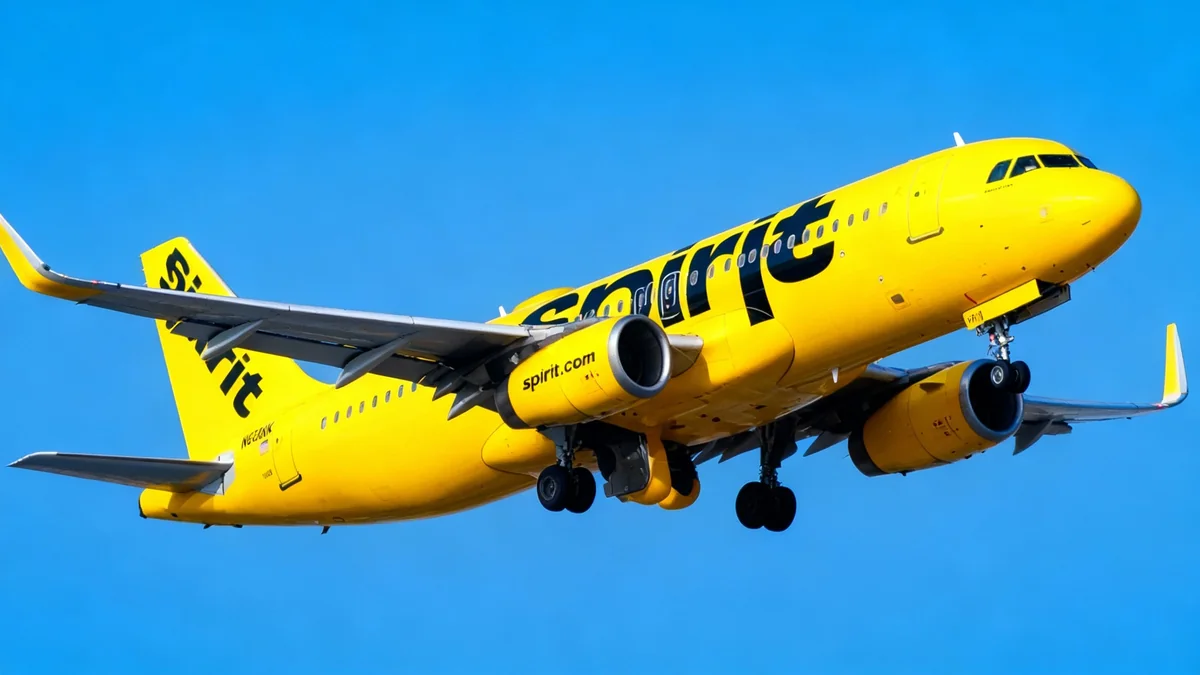
A Spirit Airlines flight from Las Vegas to Philadelphia prompted a major security response on November 28 after a female passenger allegedly made a bomb threat during the journey. The incident led to a temporary halt of all inbound flights at Philadelphia International Airport (PHL) as authorities prepared to meet the aircraft upon its arrival.
Law enforcement, including personnel from the Department of Defense, boarded the plane after it landed and was isolated from the terminal. The passenger was taken into custody, and a thorough search of the aircraft found no explosive device. Normal airport operations resumed shortly after the plane was cleared.
Key Takeaways
- A female passenger on Spirit Airlines flight NK3743 from Las Vegas to Philadelphia made a verbal bomb threat mid-flight.
- The threat triggered a temporary ground stop for all inbound flights at Philadelphia International Airport.
- Law enforcement, including Department of Defense personnel, met the aircraft upon landing and detained the suspect.
- A security sweep confirmed there was no bomb on board, and no injuries were reported.
Incident Unfolds at 30,000 Feet
The disturbance occurred on Spirit Airlines flight NK3743, an Airbus A320 service operating from Harry Reid International Airport in Las Vegas. Approximately two-thirds of the way through the flight, a female passenger reportedly made a verbal threat, claiming there was a bomb on the plane.
Flight attendants immediately responded to the situation. According to witness accounts shared on social media, the crew managed to de-escalate the immediate confrontation and moved the woman to the front galley area of the aircraft. She was kept under supervision there for the remainder of the flight to Philadelphia.
Videos circulating online appear to show parts of the interaction between the crew and the passenger, highlighting the swift actions taken by the flight attendants to maintain control within the cabin.
Emergency Response on the Ground
As the aircraft, with registration number N618NK, approached Philadelphia, airport authorities were alerted to the active security situation. In response, the Federal Aviation Administration (FAA) issued a ground stop, temporarily preventing other aircraft from landing at PHL.
What is a Ground Stop?
A ground stop is an air traffic control measure that halts aircraft from taking off from or landing at a specific airport, typically due to weather, congestion, or a security incident. This allows authorities to manage the situation on the ground without additional air traffic complicating the response.
Upon landing, the flight did not proceed to its assigned gate. Instead, it was directed to a remote area of the airfield. Passengers were initially not informed about the specific nature of the threat. The captain later announced that personnel from the Department of Defense would be boarding the aircraft to conduct interviews.
Philadelphia Police officers also responded to the scene. Once law enforcement boarded, the female passenger was taken into custody without further incident. After a comprehensive search of the plane yielded no explosive devices, the aircraft was deemed safe.
Operational Delays and Aftermath
The security incident caused significant delays. Flight NK3743, normally scheduled to arrive at 3:59 PM, landed at 6:35 PM, nearly three hours behind schedule. After being cleared by authorities, the plane was eventually moved to gate E11.
Impact on Schedule
- Flight Arrival: Nearly 3 hours late.
- Turnaround Time: Extended by 30-40 minutes.
- Next Flight: The same aircraft operated a delayed service from Philadelphia to Miami.
The aircraft was scheduled to continue service as flight NK735 to Miami. The typical turnaround time for this connection is just over an hour. However, due to the investigation, the turnaround on November 28 was extended to approximately one hour and forty minutes, causing a further delay for the next group of passengers.
Airport officials confirmed that a bomb threat on a specific aircraft was the cause of the temporary disruption. They stated that normal operations resumed once the plane was cleared. No injuries were reported among passengers or crew.
A Pattern of Security Scares
This event is the latest in a series of security incidents involving bomb threats on domestic flights this year. Spirit Airlines has experienced other unrelated scares in recent months.
In June, a man in Michigan allegedly called in a bomb threat against a Spirit flight after he missed his plane. In July, a 16-year-old was detained at Fort Lauderdale–Hollywood International Airport after stating he had a bomb in his pocket before a flight. His parents later claimed it was a poor attempt at a joke, but the teen still faced charges.
These incidents highlight the serious consequences of making threats against aircraft. Federal law imposes severe penalties for conveying false information and threats, which can include substantial fines and lengthy prison sentences. Every threat is treated as credible until proven otherwise, triggering extensive and costly security protocols that disrupt travel for hundreds of people.