
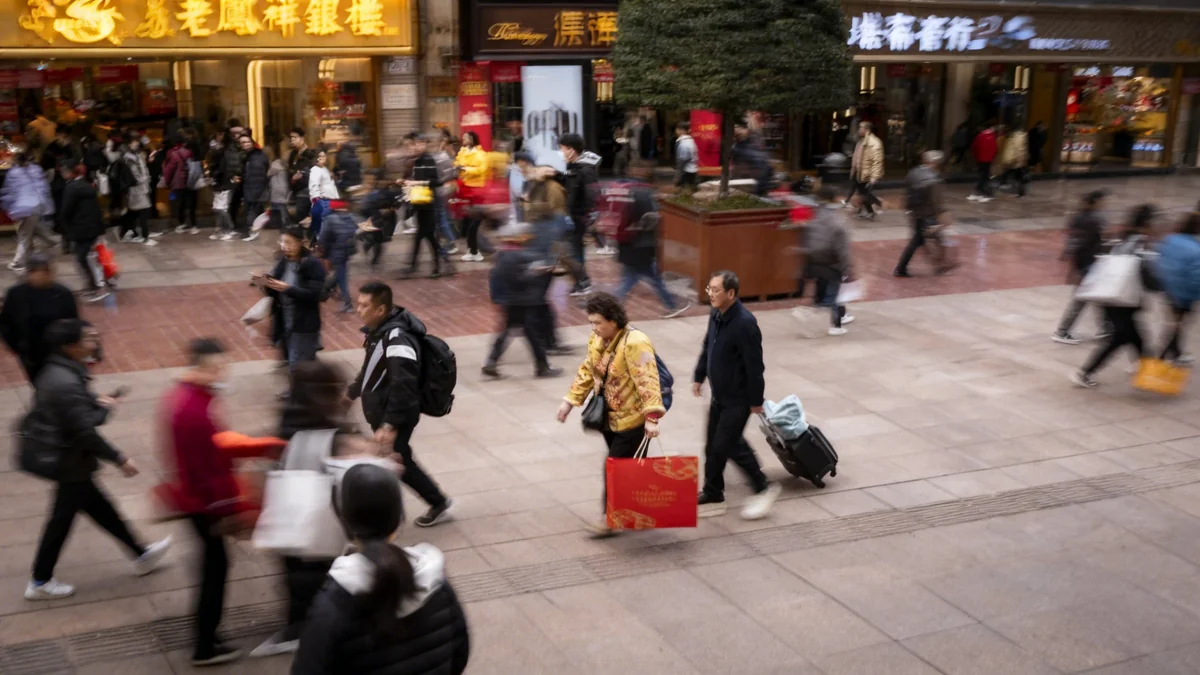
China's domestic tourism sector experienced a significant rebound during the recent Lunar New Year holiday, setting new records for both spending and trips taken. This surge indicates a notable improvement in consumer confidence following government efforts to stimulate demand.
The nine-day holiday period, which concluded on Monday, saw domestic tourism spending climb to 803.5 billion yuan ($117 billion). This figure represents a substantial increase of 126.5 billion yuan compared to the previous year, according to a statement released by China's Ministry of Culture and Tourism on Tuesday.
Key Takeaways
- Domestic tourism spending hit 803.5 billion yuan ($117 billion).
- Spending increased by 126.5 billion yuan from last year.
- The official holiday was one day longer this year.
- The number of domestic trips reached 474 million.
- This marks a 19% increase over 2019 pre-pandemic levels.
Record-Breaking Holiday Travel
The extended holiday period played a role in the increased figures. This year's official break was one day longer than the previous year, providing more opportunities for travel and leisure activities across the country.
Beyond financial metrics, the number of domestic trips also reached an unprecedented level. Travelers made approximately 474 million trips within China during the holiday. This marks a significant 19% increase when compared to the pre-pandemic levels of 2019, highlighting a strong return to travel habits.
Tourism Facts
- Total domestic tourism spending: 803.5 billion yuan
- Increase from last year: 126.5 billion yuan
- Total domestic trips: 474 million
- Increase over 2019: 19%
Government Initiatives and Consumer Sentiment
The record-breaking numbers come as the Chinese government has actively worked to boost consumer demand. These efforts appear to be yielding positive results, with the tourism sector showing strong signs of recovery and growth.
Improved consumer sentiment is a crucial factor in these statistics. After a period of cautious spending, individuals are now more willing to allocate resources towards travel and leisure experiences, contributing to the economic upswing.
Economic Impact and Future Outlook
The significant increase in tourism spending provides a positive indicator for China's broader economy. A robust domestic tourism market can stimulate various related industries, including hospitality, transportation, and retail.
Economists often view consumer spending during major holidays as a barometer for economic health. The strong performance over Lunar New Year suggests a potential for sustained economic recovery and growth in the coming months.
"The rebound in domestic tourism is a clear signal of strengthening consumer confidence," a spokesperson for the Ministry of Culture and Tourism stated, emphasizing the positive outlook for the sector.
Background on Lunar New Year
The Lunar New Year, also known as the Spring Festival, is China's most important traditional holiday. It is a time for family reunions, celebrations, and often, extensive travel. Millions of people journey across the country to visit relatives or embark on leisure trips.
The holiday period typically sees a massive movement of people, making it a critical period for the tourism and transportation sectors. Its economic performance is closely watched by analysts.
Regional Performance and Popular Destinations
While specific regional data is still being compiled, early reports suggest that major cities and popular tourist attractions across China experienced high visitor numbers. Areas known for cultural heritage, natural landscapes, and modern entertainment hubs were particularly busy.
The demand for diverse travel experiences, from scenic getaways to urban explorations, contributed to the overall increase in trips and spending. This widespread engagement across different types of destinations underscores the breadth of the tourism recovery.
Challenges and Opportunities
Despite the positive figures, the tourism sector still faces ongoing challenges. These include adapting to evolving consumer preferences and ensuring sustainable growth. However, the recent performance highlights significant opportunities for further development and innovation within the industry.
Operators are likely to continue focusing on enhancing traveler experiences, offering diverse packages, and leveraging digital platforms to meet the growing demand. The government's continued support for consumer spending will also play a vital role in maintaining this upward trajectory.
- Adaptation: Tourism businesses must adapt to changing traveler needs.
- Innovation: New services and experiences can attract more visitors.
- Sustainability: Ensuring long-term growth without overstraining resources is key.
The record-breaking Lunar New Year holiday signals a strong comeback for China's domestic tourism, offering a hopeful outlook for the country's economic landscape as consumer confidence continues to build.