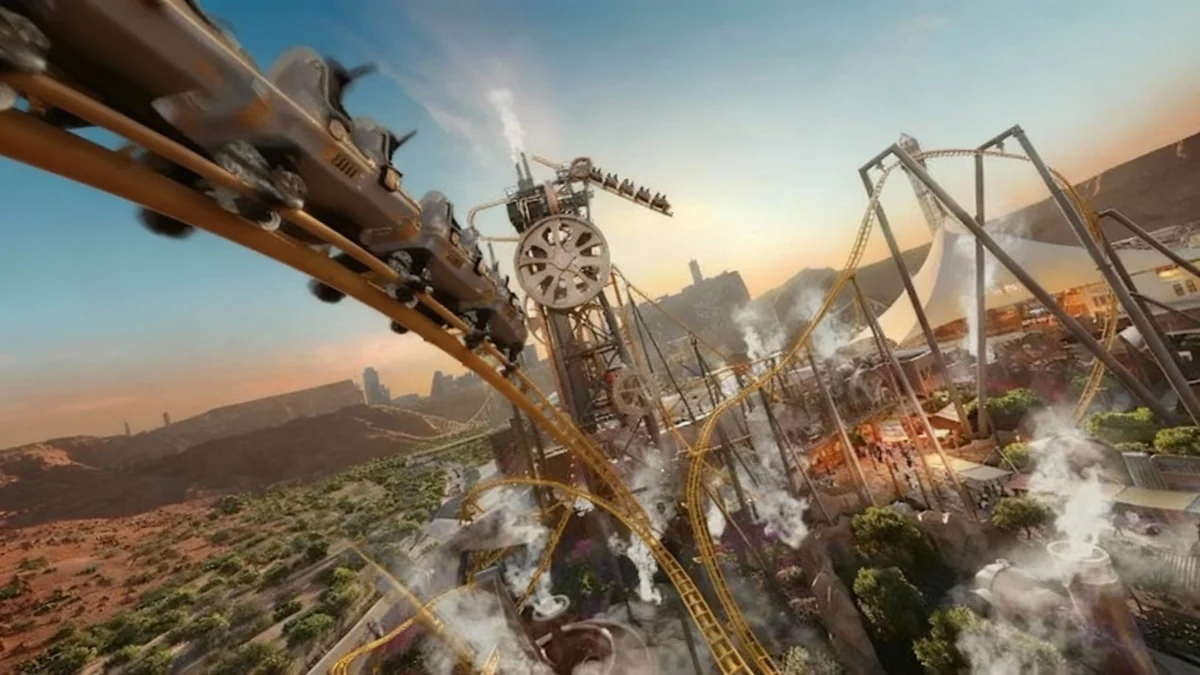
Six Flags Qiddiya City has opened its gates in Saudi Arabia, marking a significant milestone for the kingdom's ambitious economic diversification plans. The new theme park, a $1 billion investment, is the first Six Flags park outside North America and features the world's tallest and fastest rollercoaster, Falcon's Flight.
This opening represents a crucial step forward for Saudi Arabia's Public Investment Fund (PIF) and its broader Qiddiya gigaproject, which aims to transform a desert mountain cliff near Riyadh into a major entertainment and sports hub.
Key Takeaways
- Six Flags Qiddiya City is the first Six Flags park outside North America.
- The park features Falcon's Flight, the world's tallest and fastest rollercoaster.
- It is the first operational part of the larger Qiddiya entertainment complex.
- The project is a key component of Saudi Arabia's economic diversification strategy.
- Officials project significant job creation and GDP contribution from Qiddiya.
A New Era for Saudi Entertainment and Tourism
The successful completion and opening of Six Flags Qiddiya City signals progress for Saudi Arabia's Vision 2030, a comprehensive reform program led by Crown Prince Mohammed bin Salman. This initiative seeks to reduce the kingdom's reliance on oil revenues by investing in new sectors like tourism and entertainment.
The Qiddiya complex, owned by the PIF, is one of five major gigaprojects designed to drive this diversification. These projects aim to attract international tourists and encourage domestic spending within the country.
Fact File: Six Flags Qiddiya City
- Cost: Approximately $1 billion
- Location: Desert mountain cliff near Riyadh, Saudi Arabia
- Key Attraction: Falcon's Flight rollercoaster (world's tallest, fastest, longest)
- Opening Date: New Year's Eve
- Adult Ticket Price: 325 Saudi Riyals ($87)
Overcoming Development Challenges
The Qiddiya project was initially unveiled by King Salman in 2018, with an original first phase opening target of 2022. While the theme park's opening faced some delays, its successful launch provides a tangible achievement for the kingdom.
Saudi Arabia has faced pressure to meet deadlines for its large-scale developments, especially with upcoming major events like Expo 2030 and the 2034 FIFA World Cup. Some PIF-backed gigaprojects, including the futuristic city Neom, have experienced delays and budget overruns, leading to an $8 billion writedown of their value by the end of 2024.
Economic Impact and Job Creation
Officials are optimistic about the economic contributions of Six Flags Qiddiya City and the broader Qiddiya complex. The project's economic model relies heavily on visitor spending, aiming to keep money within the country that might otherwise be spent abroad.
"Qiddiya's economic model is based on visitors' spending," stated Abdullah al-Dawood, managing director of PIF-backed Qiddiya Investment Company. "The project was expected to generate 7,000 jobs and contribute 2.5 billion riyals ($686 million) to the kingdom's GDP this year."
These figures are projected to grow significantly. By 2030, as more components of the Qiddiya complex become operational, the project is forecast to create 85,000 jobs and contribute 44 billion riyals to the GDP.
Visitor Experience and Cultural Relevance
Since its opening on New Year's Eve, thousands of Saudis have visited the new theme park. The adult ticket price is 325 riyals ($87). Visitors have generally praised the experience, highlighting the park's unique approach to attractions.
Omar al-Arabi, a former California resident familiar with US theme parks, visited Six Flags Qiddiya City with his three children. He noted that despite large crowds, most attractions had wait times of only 15 to 20 minutes, with Falcon's Flight being the exception at over an hour.
"What I loved about Six Flags is that they didn’t bother being gimmicky, trying to spend money on buying rights or licenses for [intellectual property] that people know," al-Arabi commented. "Everything they did is from scratch. It’s very culturally relevant. It fits the environment. It fits the culture."
The Qiddiya Vision
Qiddiya is envisioned as a multi-faceted entertainment and sports destination. Beyond the Six Flags theme park, future plans for the site include a Formula 1 racetrack, a World Cup stadium, and a performing arts center. This broad scope aims to create a holistic leisure experience for both residents and international visitors.
The World's Fastest Rollercoaster
At the heart of Six Flags Qiddiya City's appeal is Falcon's Flight. This record-breaking rollercoaster claims titles as the longest, tallest, and fastest in the world. It reaches an astonishing top speed of 155 miles per hour, offering an extreme thrill experience.
The ride is a centerpiece of Steam Town, one of the park's six themed lands. Each land offers distinct attractions and immersive environments, contributing to the park's unique identity.
Broader Implications for Saudi Megaprojects
While the opening of Six Flags Qiddiya City is a positive development, observers continue to monitor the progress of Saudi Arabia's other large-scale projects. The ability to move from conceptual designs to operational reality is a key indicator of success.
Kristin Smith Diwan, a senior resident scholar at the Washington-based Arab Gulf States Institute, noted, "Saudi officials will be encouraged by its completion, especially with the negative scrutiny towards other super ambitious projects. It’s important to demonstrate they can get from computer-generated images to reality."
She added a cautionary perspective, stating, "Still, an amusement park is one thing. A futuristic city is another. Six Flags’ opening is unlikely to allay global skepticism towards Neom." The successful execution of projects like Qiddiya will be critical in shaping the international perception of Saudi Arabia's ambitious development agenda.