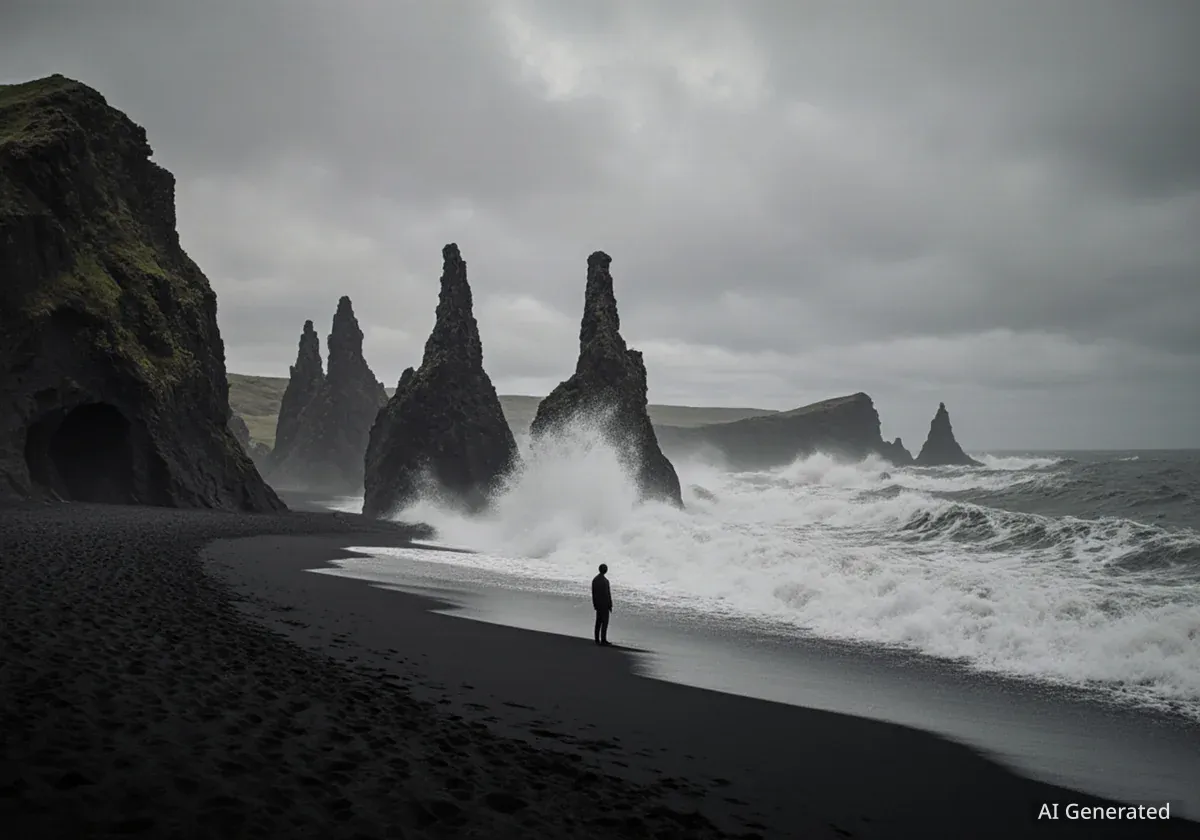
Iceland's iconic Reynisfjara black sand beach has undergone significant changes this winter due to severe erosion. Strong storms and unusual wind patterns have reshaped the coastline, making parts of the popular tourist destination almost unrecognizable. Visitors planning a trip should be aware of reduced access to certain areas, including famous caves and basalt columns.
Key Takeaways
- Reynisfjara Beach suffered extensive erosion this winter.
- A major landslide occurred beneath Reynisfjall mountain.
- Unusual easterly winds are a primary cause of sand displacement.
- Access to popular caves and basalt columns is now restricted.
- Experts hope for sand return with shifting wind patterns.
Dramatic Changes to a Famous Landscape
Reynisfjara Beach, known globally for its dramatic black volcanic sand, towering basalt columns, and powerful Atlantic waves, is a key attraction in Iceland. However, recent months of intense winter storms have significantly altered its appearance. Areas once easily accessible to tourists are now damaged or closed for safety reasons.
Many travelers visiting the beach now will see a different landscape from the widely shared photographs. The changes are particularly noticeable along the shoreline, where much of the soft black sand has been washed away.
Fast Fact
Reynisfjara Beach is located at the base of Reynisfjall mountain, facing the North Atlantic Ocean. It is famous for its jet-black sand and the Reynisdrangar sea stacks.
Impact of Severe Winter Storms
Reports indicate that large sections of Reynisfjara have eroded following a winter of strong easterly winds. A significant collapse occurred beneath Reynisfjall, leading authorities to cordon off certain areas to ensure visitor safety. The once wide stretches of black sand have shrunk considerably.
Waves now reach further inland than before, and large rocks and boulders cover parts of the beach that were previously smooth sand. Local residents have expressed shock at the rapid transformation, describing it as the worst landslide they have witnessed in this particular area.
"The coastline always changes, but never this fast," a local tour guide told Icelandic media, highlighting the speed of the recent erosion.
Restricted Access to Tourist Spots
The erosion has directly impacted popular visitor experiences. Tourists often enjoy walking close to the impressive basalt columns and exploring the various caves along the shore. A recent landslide, however, has blocked access to some of these well-known spots, limiting where visitors can go.
This means that iconic photo opportunities and exploration routes may no longer be available. Safety remains the top priority for local authorities, prompting these closures.
Understanding the Erosion Causes
Coastal engineers point to unusual wind patterns as the primary factor behind the severe erosion. Sigurður Sigurðarson, a coastal engineer at the Icelandic Road Administration, explained the phenomenon to RUV News.
"There are persistent easterly winds that have been present all winter. Often heavy with very high waves. And it is the easterly winds that carry sand along the south coast to the west," Sigurðsson stated. He contrasted this with the usual pattern, noting, "Usually the prevailing winds are southwesterly, which carries the sand eastward."
Geographical Context
Reynisfjall mountain extends into the sea, acting as a natural barrier. When winds shift to an easterly direction, sand is carried westward and becomes trapped against this barrier. This prevents new sand from replenishing the beach from the east, leading to a shrinking shoreline.
Hope for Natural Restoration
While the current state of Reynisfjara is starkly different, experts believe the changes might not be permanent. There is hope that if wind directions and ocean currents return to their typical patterns, the sand could eventually be redeposited. This natural process would allow the beach to slowly regain its former landscape.
For now, travelers should expect a significantly altered coastline. The dramatic beauty of Reynisfjara remains, but its physical form has been profoundly impacted by the raw power of nature this winter.
Planning Your Visit
Visitors to Iceland's south coast should be prepared for the changed conditions at Reynisfjara. While the beach is still accessible, certain areas will remain off-limits due to safety concerns. It is always wise to heed local warnings and signage.
Despite the erosion, the Reynisdrangar sea stacks still stand tall, and the powerful waves of the North Atlantic continue to crash onto the black sands, offering a unique and powerful natural spectacle.
- Check local advisories before visiting.
- Respect all safety barriers and closures.
- Be aware of dangerous sneaker waves, which are a constant threat at Reynisfjara.
The resilience of natural landscapes means that while changes can be sudden and dramatic, there is often a slow, ongoing process of restoration. The future of Reynisfjara's sand levels will depend on the long-term patterns of winds and ocean currents.