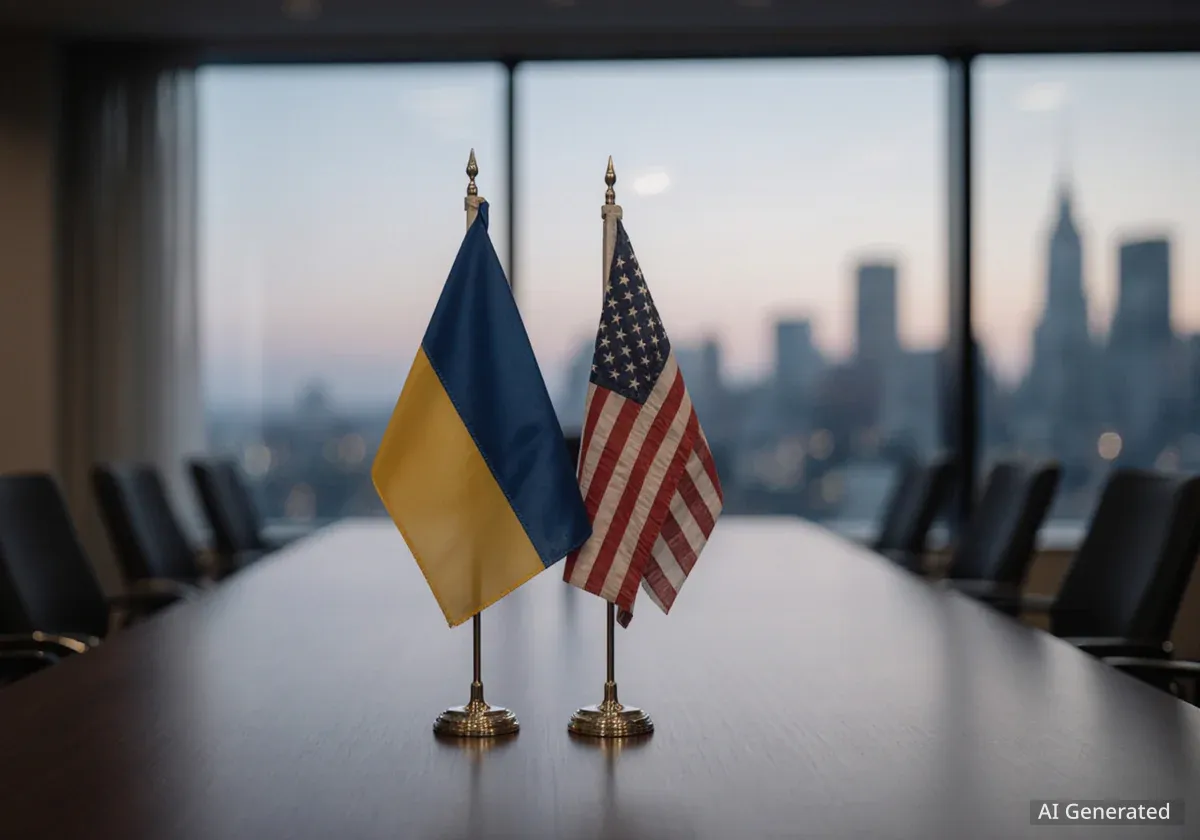
A meeting last August between former President Donald Trump and Ukrainian President Volodymyr Zelenskyy included a discussion about Ukraine's inability to hold elections during the ongoing war with Russia. The conversation highlighted differing perspectives on democratic processes under conditions of martial law.
The exchange occurred during a White House visit where President Zelenskyy explained the legal barriers to conducting a national vote while the country is defending against a full-scale invasion. Ukrainian law explicitly prohibits elections while martial law is in effect.
Key Takeaways
- Former President Trump questioned the Ukrainian law that suspends elections during wartime.
- The discussion happened during a meeting with President Zelenskyy at the White House last August.
- Ukrainian law prohibits national elections while the country is under martial law, which has been active since the February 2022 invasion.
- President Zelenskyy won the last presidential election in Ukraine in a 2019 landslide.
Details of the White House Discussion
During the meeting, President Zelenskyy outlined the constitutional and legal reality facing his country. He explained that with millions of citizens displaced, active combat zones, and the constant threat of aerial attacks, holding a free and fair election is not currently feasible or legally permissible.
In response to the explanation of the legal prohibition, Trump reportedly questioned the premise. According to accounts of the meeting, he asked for clarification on the rule.
“So, you say during the war, you can’t have elections?”
The conversation continued, with Trump reportedly reflecting on the implications of such a law if applied elsewhere. He was quoted as saying, “So, let me just say, three-and-a-half years from now – so you mean, if we happen to be in a war with somebody, no more elections? Oh, that’s good.”
The Legal Context in Ukraine
The foundation for postponing elections is rooted in Ukrainian law. When Russia launched its full-scale invasion in February 2022, the Ukrainian government declared martial law. This legal status grants the state extraordinary powers to manage the defense of the nation.
A key provision of the law on the legal regime of martial law directly forbids holding elections for president, parliament, or local government bodies. This measure is intended to ensure national unity and focus all state resources on defense, while also acknowledging the practical impossibility of guaranteeing a safe and equitable voting process for all citizens.
Why Elections Are Suspended
The suspension of elections under martial law is a standard provision in many democracies during existential crises. The primary reasons include:
- Voter Safety: Polling stations could become targets for attack.
- Disenfranchisement: Millions of Ukrainians are internally displaced or are refugees abroad, making voter registration and access to polls nearly impossible.
- Inaccurate Voter Rolls: It is difficult to maintain accurate voter lists with large population movements and occupied territories.
- Freedom of Campaigning: Wartime restrictions on movement and public gatherings prevent a fair campaign environment.
Ukraine's Last Democratic Vote
Ukraine’s most recent presidential election was held in 2019. In that contest, Volodymyr Zelenskyy, then a political newcomer, secured a landslide victory with over 73% of the vote in the second round. The election was widely recognized by international observers as free and fair, reinforcing the country's democratic credentials prior to the full-scale invasion.
Parliamentary elections were also held later that year, further solidifying the democratic mandate of the current government. Had the war not occurred, a presidential election would have been scheduled for 2024.
International Perspectives on Wartime Elections
The question of holding elections during a major conflict is not unique to Ukraine. Historically, nations have taken different approaches. The United States, for example, held a presidential election in 1864 during the Civil War and again in 1944 during World War II. However, these conflicts did not involve foreign occupation of domestic territory on the same scale as what Ukraine currently faces.
Global Precedents
The United Kingdom, under Prime Minister Winston Churchill, postponed its general election during World War II. The election scheduled for 1940 was not held until after the victory in Europe in 1945. This decision was made by a national unity government to maintain focus on the war effort.
Many international legal and democratic experts support Ukraine's position. They argue that proceeding with an election under the current circumstances could undermine its legitimacy and create more instability. The priority, according to this view, is the preservation of the state itself, which is a prerequisite for any future democratic process.
The discussion between Trump and Zelenskyy underscores a fundamental debate about the balance between maintaining democratic cycles and the practical realities of national survival. While the suspension of elections is a significant measure, Ukrainian officials maintain it is a necessary, temporary step dictated by law and the ongoing state of war.