
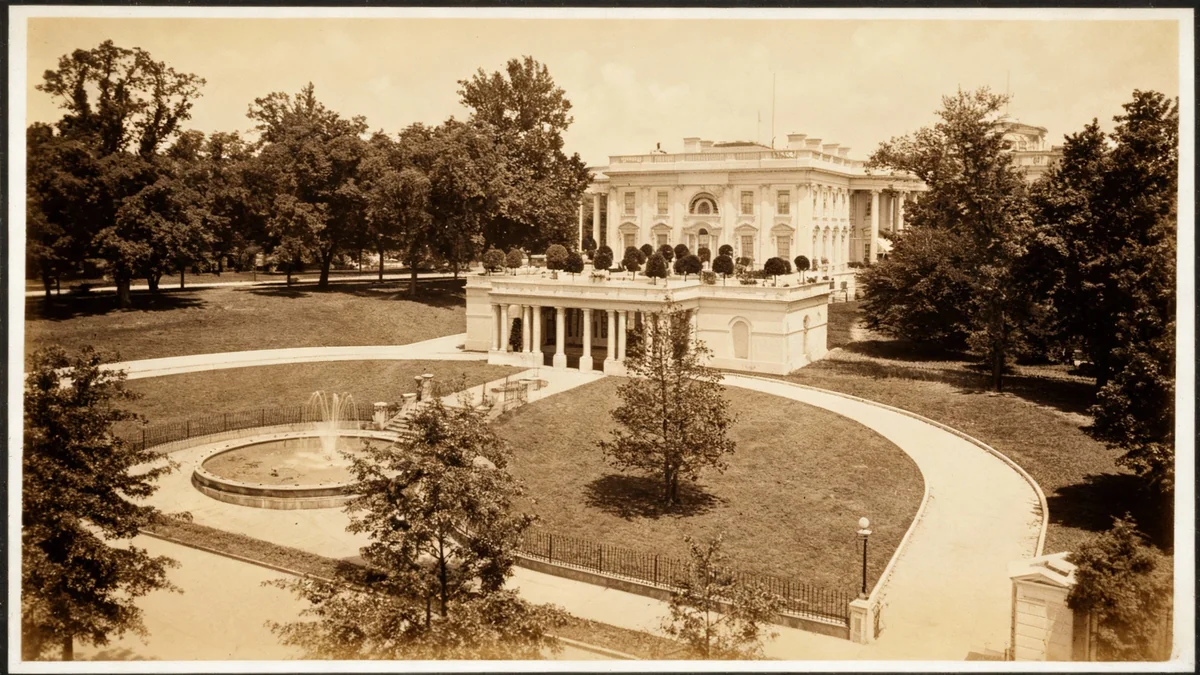
The East Wing of the White House, a section of the historic complex known for housing the First Lady's office and a presidential bunker, has been completely demolished. The demolition clears the way for a new, larger ballroom, a project estimated to cost $300 million and cover 90,000 square feet. This action has raised concerns among historians and preservationists, sparking debate over the future of the nation's most iconic residence.
Key Takeaways
- The White House East Wing has been fully demolished for a new ballroom.
- The new ballroom is projected to cost $300 million and span 90,000 square feet.
- Historians and preservation groups have voiced strong concerns about the demolition.
- The White House is exempt from standard federal preservation review processes.
- Funding for the project comes from donations, including from major tech companies.
A New Vision for White House Entertaining
The decision to demolish the East Wing stems from a long-held desire for a larger space to host official functions. The existing East Room, previously the largest meeting area, can accommodate only about 200 guests. The proposed new ballroom aims to significantly increase this capacity, with plans suggesting it could hold anywhere from 650 to 1,350 people, depending on the final design.
This expansion project has seen its budget increase by 50% since its initial announcement. Funding is primarily sourced from donations. These contributions come from individuals and foundations known to support the current administration, as well as a variety of companies with federal government interests. Major tech firms like Amazon, Apple, Google, Meta, Microsoft, Palantir, and Lockheed Martin are among the notable donors.
Project Scope
- Cost: $300 million
- Size: 90,000 square feet
- Capacity: 650 to 1,350 guests (variable)
- Funding: Private donations
Legal Exemptions and Preservation Concerns
The White House, along with the US Capitol and the US Supreme Court building, holds a unique legal status. Section 107 of the National Historic Preservation Act exempts these three federal buildings from the review process typically required for renovations. This means that while other federal agencies must examine the impact of their changes, the White House does not legally need to do so.
However, past administrations have voluntarily submitted their renovation plans to the National Capital Planning Commission (NCPC) for oversight. This administration has not yet taken that step. Will Scharf, chair of the NCPC and an aide involved in the project, has argued that planning approval is necessary only for new construction, not for demolition. This interpretation suggests that tearing down the East Wing did not require NCPC oversight.
"We acknowledge the utility of a larger meeting space at the White House, but we are deeply concerned that the massing and height of the proposed new construction will overwhelm the White House itself—it is 55,000 sq. ft—and may also permanently disrupt the carefully balanced classical design of the White House with its two smaller, and lower, East and West Wings."
— Carol Quillen, President and CEO, National Trust for Historic Preservation
A History of Change and Expansion
The White House complex has undergone numerous transformations throughout its history. Presidents have repeatedly expanded, renovated, and restored the building. The modern configuration, with the West Wing serving as the primary office space, emerged from a renovation led by Theodore Roosevelt.
East Wing History
The East Wing, originally constructed in 1902, was later expanded by Franklin Delano Roosevelt. It became a significant social gathering space and housed important facilities. These included the "family theatre" where President John F. Kennedy watched films, the First Lady's office, and the Presidential Emergency Operations Center bunker, designed for crisis management.
Kate Anderson Brower, author of The Residence: Inside the Private World of the White House, highlighted the East Wing's significance, particularly for First Ladies. "I certainly had a lot of reverence for [The East Wing] because it was the first lady’s domain. It’s the only place she has to really call her own," Brower stated in an interview.
Outcry from Preservation Advocates
The demolition has drawn strong criticism from organizations dedicated to preserving historic structures. The DC Preservation League, an advocate for historic buildings in Washington, D.C., issued a statement calling the demolition a "collective loss" and a "serious affront to United States history and architectural heritage."
The organization emphasized that the White House has connected generations and that demolition without public input disrupts this continuity. They urged for advocacy, policy changes, and oversight to protect the architectural integrity of the White House for future generations.
Preservation Efforts
The White House Historical Association, established in 1966 with support from First Lady Jacqueline Kennedy, has taken steps to document the East Wing before its removal. They conducted a comprehensive digital scanning project and extensive photography to create a detailed historical record. Artifacts from the East Wing have also been preserved and stored.
Previous Alterations and Future Plans
This project is not the first alteration to the White House complex during the current administration. Previous changes included transforming the Rose Garden into a patio area and adding golden trim and other decorative details to the Oval Office. The new ballroom is expected to be completed before the end of the current presidential term in January 2029.
The ongoing debate highlights the tension between modern functional requirements for the presidency and the preservation of a building deeply embedded in American history and national identity.