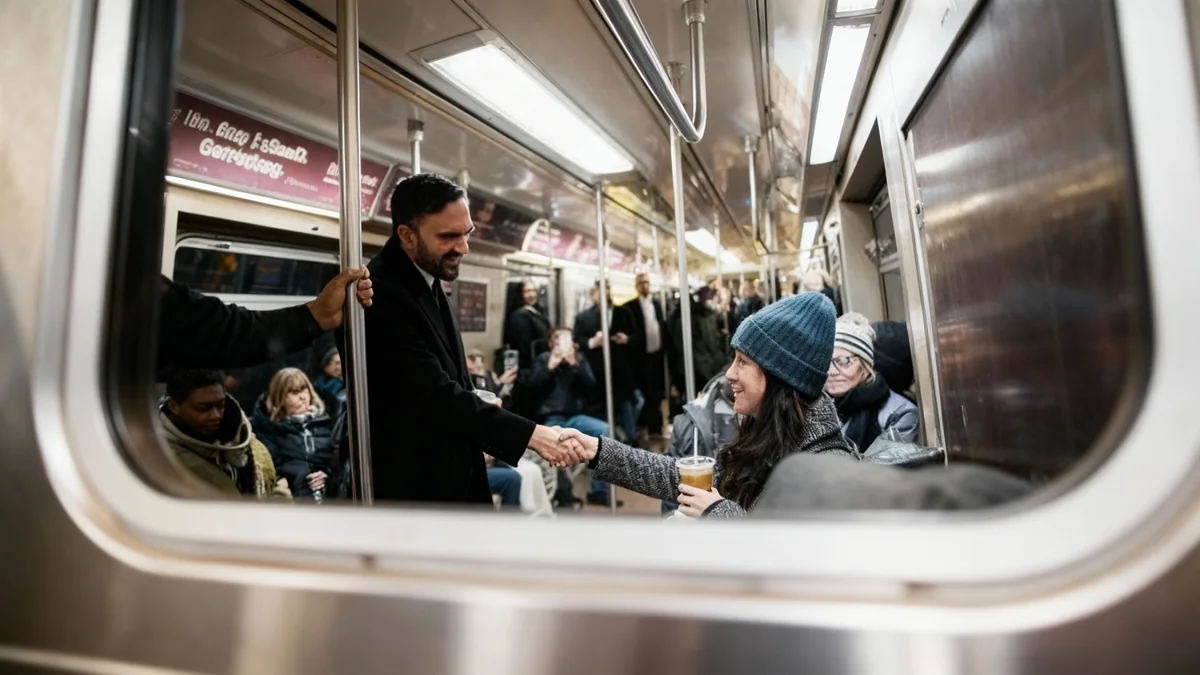
Zohran Mamdani, New York City's newly inaugurated mayor, started his first full day in office with a familiar subway ride from his Queens apartment. The 34-year-old democratic socialist, whose election marked a significant moment for the progressive movement, faced immediate scrutiny over his initial actions and policy decisions.
Key Takeaways
- Mayor Mamdani began his first full day with a public subway commute from Queens.
- He revoked several executive orders from the previous administration, including two related to Israel.
- Mamdani announced the creation of a new 'mass engagement' office.
- His early actions reflect a focus on affordable housing and community representation.
A Symbolic Start: The Subway Commute
On Friday morning, Mayor Mamdani left his one-bedroom apartment in Queens, where he lives with his wife. He traveled to City Hall via the subway, a journey documented by a photo and video crew. This public commute mirrored a pledge from his inaugural speech to ensure his government reflects the lives of its citizens.
During his ride on a Manhattan-bound train, Mamdani greeted passengers and took selfies. He also used the time to review his briefing materials. When two French tourists seemed confused by the attention, he introduced himself as the new mayor, using a copy of the New York Daily News featuring his image as proof.
Did You Know?
Several New York City mayors, including Eric Adams, Bill de Blasio, and Michael Bloomberg, have used the subway for public appearances, often to highlight specific political points or connect with voters.
Early Policy Decisions and Immediate Backlash
Upon arriving at City Hall, Mamdani's first official actions quickly gained attention. One of his initial moves involved revoking a series of executive orders issued by his predecessor, Eric Adams, late in his term. This included two orders specifically related to Israel.
One revoked order had adopted a definition of antisemitism that encompassed certain criticisms of Israel. The other barred city agencies and employees from boycotting or divesting from the country. These revocations drew sharp criticism from some Jewish groups and the Israeli government, which posted allegations on social media accusing Mamdani of fueling antisemitism.
"We have an opportunity where New Yorkers are allowing themselves to believe in the possibility of city government once again. That is not a belief that will sustain itself in the absence of action."
— Mayor Zohran Mamdani
Addressing Concerns on Antisemitism
When asked by a journalist about the revoked orders, Mamdani read from prepared remarks. He stated his administration would be "relentless in its effort to combat hate and division." He also confirmed that the Mayor’s Office to Combat Antisemitism would remain in place.
Context on Executive Orders
Executive orders allow a mayor to issue directives that have the force of law without needing legislative approval. Revoking such orders is a common practice for new administrations seeking to set their own policy agenda.
Focus on Affordable Housing and Community Engagement
Mamdani's campaign largely centered on making rent more affordable for New Yorkers. Following his inauguration, he visited a Brooklyn apartment building lobby. There, he pledged the city would escalate a legal battle against an allegedly negligent landlord, receiving cheers from the tenants' union.
In another key announcement, Mayor Mamdani created a new "mass engagement" office. He explained this office would continue the work of his campaign's field operations. The goal is to involve more New Yorkers in the political process, fostering broader participation in city government.
Looking Ahead: Residence and Sustained Action
Beyond policy and public appearances, Mamdani also has a personal move on his schedule. He plans to relocate to Gracie Mansion, the mayor’s official residence in the Upper East Side. This move will happen before his Queens apartment lease expires later this month.
Surrounded by supporters and onlookers during his first day, Mamdani acknowledged the significance of the moment. He emphasized that the renewed belief in city government among New Yorkers requires sustained action to endure.
- Mamdani’s inauguration saw ecstatic supporters gather in Manhattan.
- His victory is seen as a watershed moment for the progressive movement.
- He faces the task of running the nation’s largest city.
- The mayor's early actions highlight his administration's priorities.