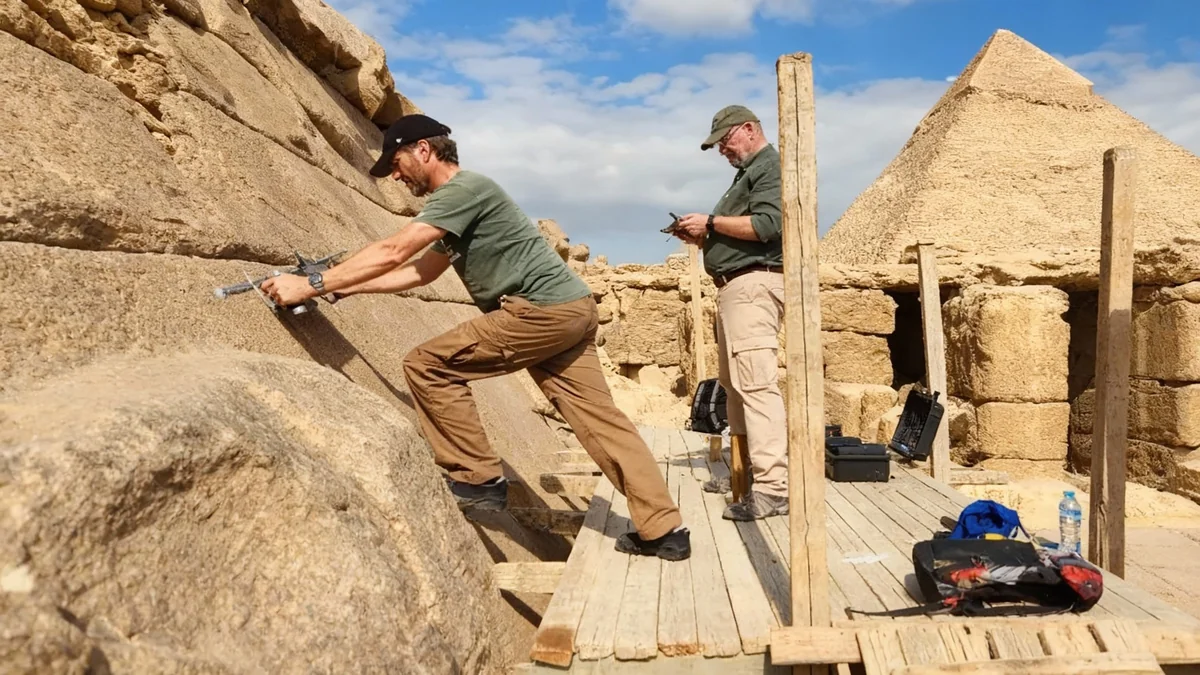
Archaeologists working at Pompeii have uncovered a remarkably preserved Roman construction site, offering new insights into the advanced building techniques of the ancient empire. This discovery, frozen in time by the eruption of Mount Vesuvius in 79 AD, finally explains how structures like the Colosseum and Pantheon have stood for over two millennia.
The site provides an unprecedented look at the materials and methods used by Roman builders, revealing a sophisticated approach that allowed their concrete to be incredibly durable and even self-repairing.
Key Takeaways
- A Roman construction site was found preserved in Pompeii.
- The discovery explains the strength of ancient Roman concrete.
- Romans used a 'hot mixing' technique for their concrete.
- Their concrete had self-healing properties, reducing cracks.
- The site showed organized material storage and efficient work methods.
Unveiling the 'Hot Mixing' Method
The excavation revealed that Roman builders used a technique called "hot mixing." This process involved combining quicklime, which is limestone heated to remove moisture, directly with water. They then added volcanic rock and ash from the Somma-Vesuvius region. This mixture created a chemical reaction that generated significant heat internally.
This internal heating was crucial. It allowed the concrete to set quickly and develop exceptional strength. Researchers have long wondered about the resilience of Roman structures, and this discovery provides a clear answer.
Did You Know?
The Roman Empire began industrializing concrete production during the first century BC and AD. This innovation fundamentally changed construction possibilities across their vast territories.
The Secret of Self-Healing Concrete
What truly set Roman concrete apart was its ability to repair itself over time. The lime and volcanic glass within the material continued to react long after application. This ongoing chemical process gradually filled any small gaps or cracks that formed, strengthening the overall structure.
This self-healing capability significantly reduced cracking and enhanced durability. It also allowed the concrete to harden effectively even underwater. This property was vital for constructing harbors and breakwaters, which were critical for the Roman navy and trade routes.
"Modern concretes generally lack intrinsic self-healing capability, which is increasingly important as we seek longer-lasting, lower-maintenance infrastructure," stated Admir Masic, an MIT professor of civil engineering who led the study. "So while the ancient process itself is not a direct replacement for modern standards, the principles revealed can inform the design of next-generation durable, low-carbon concretes."
Organized Work and Efficient Practices
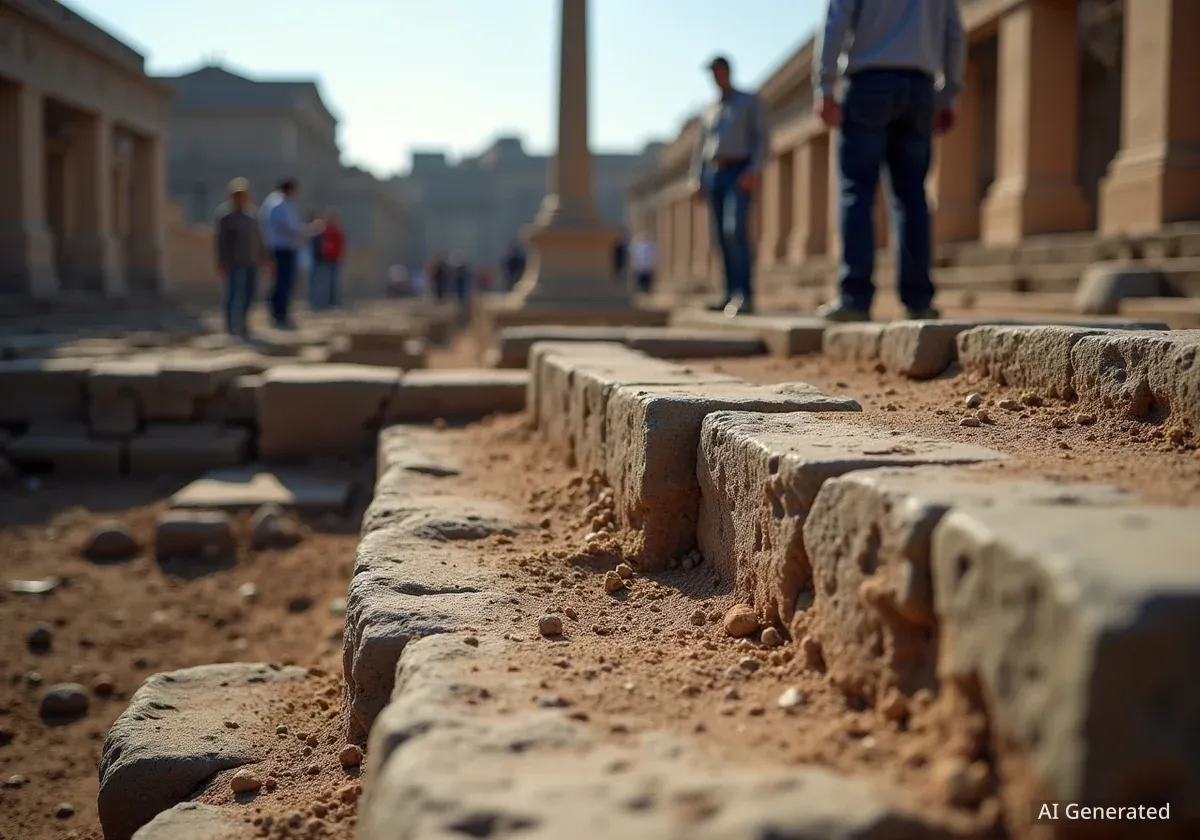
The excavation of Domus 1 at Pompeii demonstrated the remarkable organization and efficiency of Roman construction workers. Building materials were meticulously sorted and stored. Different rooms within the site housed specific types of materials.
For example, the atrium likely contained pre-mixed dry lime and pozzolanic sand, ready for mortar production. A separate chamber housed tiles and stone. Workers added water to the dry components at a fountain pool located elsewhere in the complex.
Historical Context
Pompeii, an ancient Roman city near modern-day Naples, was buried under volcanic ash and pumice in the eruption of Mount Vesuvius in 79 AD. The ash preserved the city and its inhabitants in remarkable detail, providing invaluable archaeological insights into Roman life.
Tools and Techniques in Action
Broken amphorae served as vessels for transporting the prepared mortar. Craftsmen then applied this mortar using trowels. They also checked alignment with plumb lines, showing a precise approach to construction.
Analysis of mortar samples revealed consistent preparation from the same pre-mixed materials. However, some samples showed elevated calcium levels. This suggests additional lime was sometimes incorporated to enhance workability or to strengthen repair and finishing layers. This adaptability highlights the practical knowledge of the Roman builders.
Modern Relevance of Ancient Wisdom
The principles behind Roman concrete offer valuable lessons for today's construction industry. As Professor Masic noted, understanding these ancient methods could help develop more durable and low-carbon concretes for modern infrastructure. This could lead to buildings that last longer and require less maintenance.
The experience of studying the site was described as profoundly immersive by Professor Masic. "Studying it truly felt as if I had travelled back in time and was standing beside the workers as they mixed and placed their concrete," he shared.
- Durability: Roman concrete's longevity is a benchmark for modern materials.
- Sustainability: The natural self-healing reduces the need for frequent repairs.
- Innovation: Ancient techniques inspire new material science research.
This discovery at Pompeii not only solves an ancient mystery but also opens new avenues for innovation in contemporary engineering, bridging thousands of years of architectural knowledge.