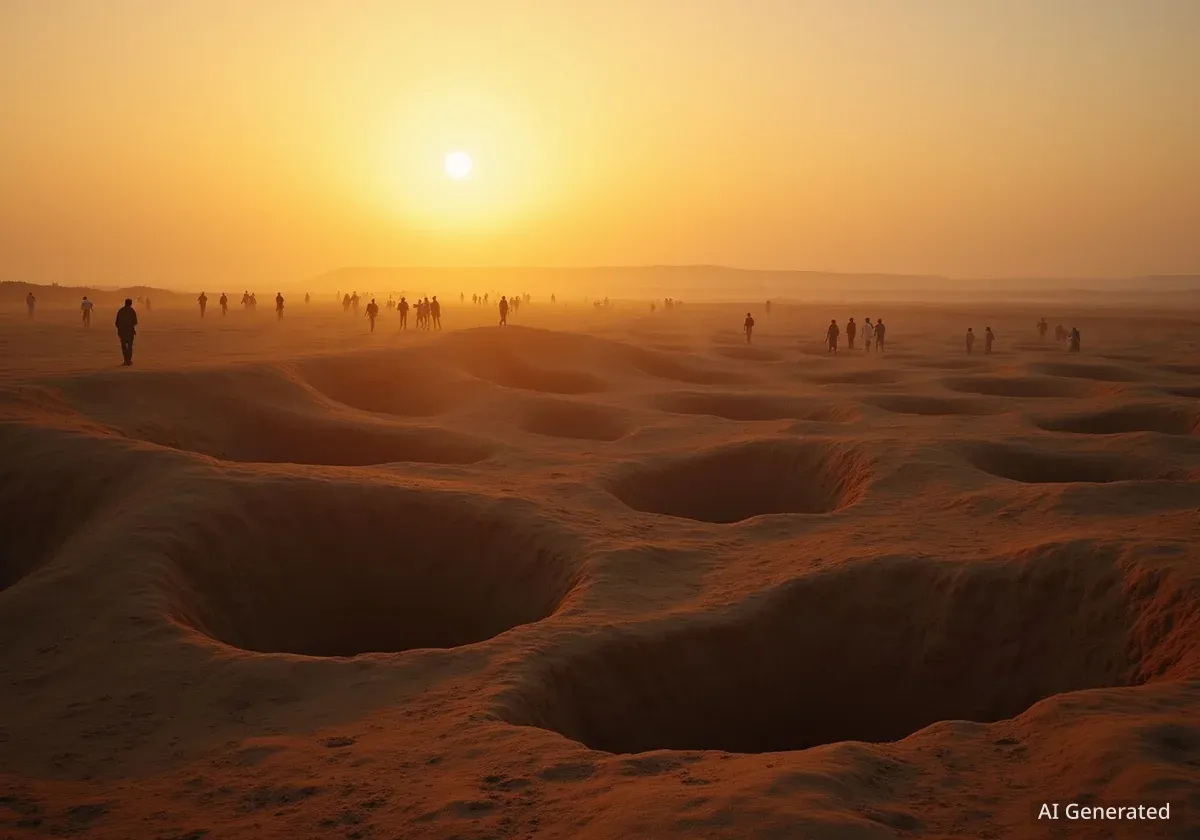
Archaeologists have confirmed that a series of deep pits found near Stonehenge in Wiltshire, UK, were created by humans over 4,000 years ago. These pits, some reaching five meters deep, form a large circular structure near the Durrington Walls and Woodhenge sites, located about two miles northeast of Stonehenge.
The discovery, first made in 2020, represents a significant insight into Neolithic society in Britain. Researchers believe these features constitute the largest known prehistoric structure in the country.
Key Takeaways
- Deep pits near Stonehenge confirmed as human-made, dating back over 4,000 years.
- The circular arrangement is considered Britain's largest known prehistoric structure.
- Pits may have formed a sacred boundary linked to ceremonial activities.
- Advanced geophysical techniques and environmental DNA analysis were crucial for the findings.
Uncovering a Monumental Neolithic Landscape
The pits are set at regular intervals, each measuring ten meters in diameter and more than five meters deep. This precise arrangement suggests a deliberate, organized effort by the people of the Neolithic period.
A recent paper, titled 'The Perils of Pits,' published in the journal Internet Archaeology, details the extensive research that led to these conclusions. The findings confirm that these colossal holes were not natural formations but the result of human labor.
“These features were not simply dug and abandoned; they were part of a structured, monumental landscape that speaks to the complexity and sophistication of Neolithic society,” stated Vincent Gaffney, who led the research team from the School of Archaeological and Forensic Sciences at the University of Bradford.
Fact File
- Location: Near Durrington Walls and Woodhenge, Wiltshire, UK.
- Age: Over 4,000 years old (Neolithic period).
- Dimensions: Pits are 10 meters in diameter and over 5 meters deep.
- Significance: Largest known prehistoric structure in Britain.
Purpose and Cultural Significance
The researchers propose that the circle of pits may have served as a sacred boundary. This boundary could have been connected to ceremonial activities at Durrington Walls, aligning with cosmological beliefs prevalent in the Stonehenge landscape.
Gaffney suggested that the people who dug these pits might have been trying to connect with the underworld. This indicates a profound spiritual dimension to their monumental construction efforts.
The sheer scale of the structure highlights the advanced organizational capabilities of Neolithic communities. It demonstrates their ability to plan and motivate large groups of people for religious purposes.
Advanced Research Techniques
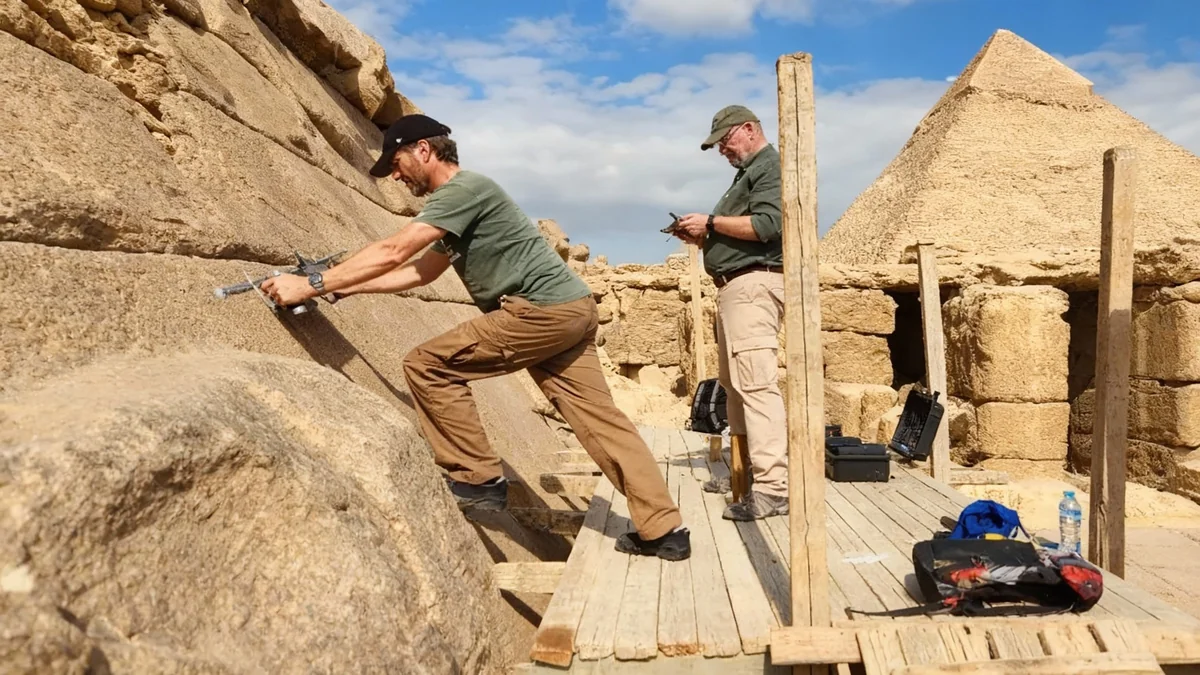
Exploring these massive pits without extensive and costly excavation presented a challenge. The research team employed a novel strategy using multiple types of geophysical equipment to determine the exact size and shape of the pits.
According to Gaffney, no single technology could answer all the questions surrounding the discovery. This led to a multi-faceted approach involving experts from various institutions, including the universities of St Andrews, Warwick, and Birmingham.
Background on Stonehenge
Stonehenge is a prehistoric monument in Wiltshire, England, consisting of a ring of standing stones. It is believed to have been constructed between 3000 BC and 2000 BC. The site is part of a larger complex of monuments, including henges, burial mounds, and other earthworks, making it a UNESCO World Heritage site.
Scientific Methods Reveal Ancient Secrets
The team utilized borehole coring to recover animal and plant DNA from the soil. This technique allows for detailed environmental analysis without disturbing the entire site.
Further advanced methods included sediment analysis, geochemistry, and optically stimulated luminescence dating. The latter helps determine when soil or sediment was last exposed to sunlight, providing precise dates for the pits' creation.
Environmental DNA (sedaDNA) analysis also played a crucial role. This cutting-edge technique helps reconstruct the ancient environment and the activities that took place around these colossal features.
- Geophysics: Used to map the pits without extensive digging.
- Borehole Coring: Collected soil samples for DNA and sediment analysis.
- Optically Stimulated Luminescence Dating: Pinpointed the age of the pits.
- Environmental DNA (sedaDNA): Revealed details about ancient flora and fauna.
The ongoing research continues to shed light on the sophisticated engineering and spiritual beliefs of the people who inhabited this region over four millennia ago. These discoveries deepen our understanding of the broader Stonehenge landscape and its enduring mysteries.