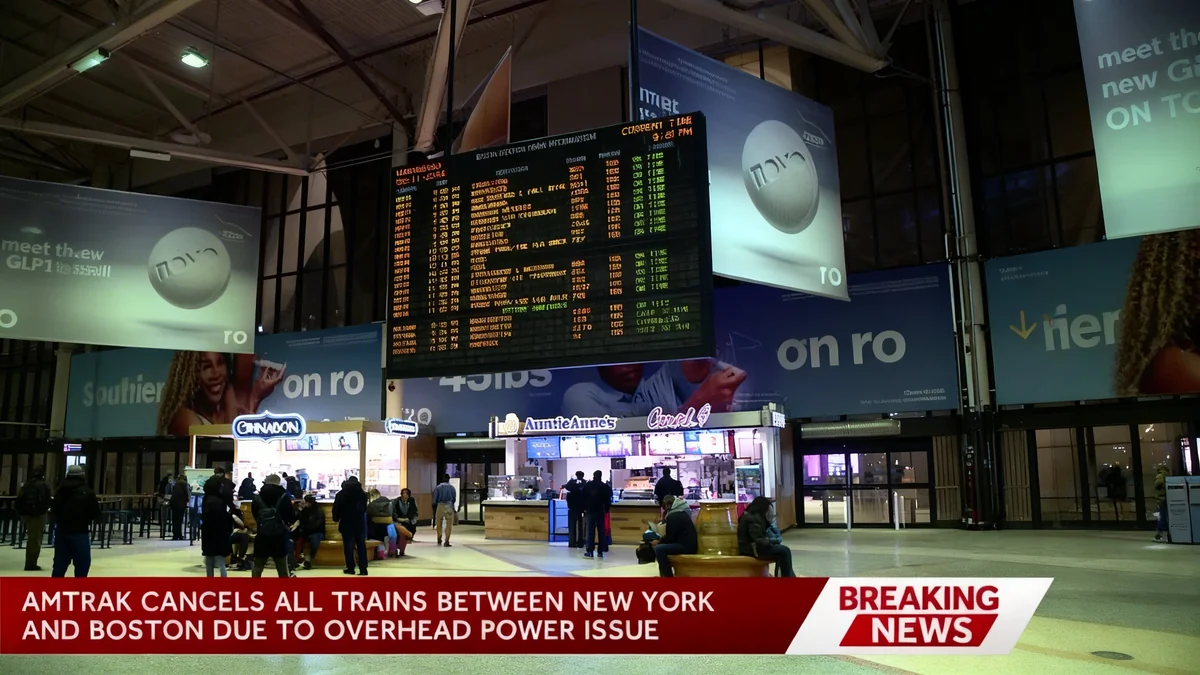
Amtrak train service between New York and Boston has fully resumed operations early Thursday morning. This follows a significant power outage that led to the cancellation of all trains on Wednesday, causing widespread travel disruptions for passengers.
The railroad company confirmed the restoration of service, but advised travelers to expect potential residual delays as the system returns to its regular schedule. Crews worked through the night to address the overhead power issue that initially halted operations.
Key Takeaways
- Amtrak service between New York and Boston is back online.
- The disruption was due to a loss of overhead power.
- Passengers should anticipate minor delays as operations normalize.
- Metro-North honored Amtrak tickets on Wednesday for certain routes.
Service Restoration and Anticipated Delays
Amtrak made the announcement regarding the resumption of service early Thursday. The company communicated the update through social media channels, thanking passengers for their understanding. While trains are running again, the immediate aftermath of such an outage often means that schedules take time to stabilize.
Travelers planning trips between these major Northeast cities should monitor Amtrak's official channels for the most current information. Checking specific train statuses before heading to the station remains advisable.
Quick Fact
The Northeast Corridor, which includes the New York-Boston route, is one of Amtrak's busiest lines, serving millions of passengers annually.
Wednesday's Cancellations and Passenger Impact
The power problem emerged on Wednesday, leading to a complete halt of Amtrak trains connecting New York and Boston. The initial announcement provided no specific timeline for when service would be restored, leaving many travelers in limbo. Amtrak advised affected passengers that they could rebook their tickets for a later date or request a full refund.
The sudden cancellation created immediate challenges for commuters and long-distance travelers alike. Many rely on Amtrak for essential travel along the Northeast Corridor.
"Residual delays are anticipated as we return to regular operations. We appreciate your patience and understanding," Amtrak stated in a public announcement.
Alternative Travel Options on Wednesday
During the service interruption on Wednesday, passengers traveling specifically between New Haven and New York had an alternative. Metro-North's New Haven Line honored Amtrak tickets. This allowed some travelers to reach Grand Central Station in New York, mitigating part of the impact for those on that particular segment of the route.
The collaboration between Amtrak and Metro-North provided a crucial lifeline for a segment of the affected passengers, highlighting the importance of inter-agency cooperation during transit emergencies.
Understanding Overhead Power Systems
Overhead power, also known as catenary, is critical for electric trains like those operating on the Northeast Corridor. This system supplies electricity to the trains through overhead lines, allowing them to run without onboard diesel engines. A disruption in this power supply means trains cannot operate.
Maintenance and rapid repair of these systems are essential for maintaining a reliable rail network. Failures can lead to widespread service interruptions, as seen in this recent incident.
About the Northeast Corridor
The Northeast Corridor (NEC) extends approximately 457 miles from Boston to Washington D.C. It is the busiest passenger rail line in North America, with both Amtrak and various commuter rail services utilizing its tracks. The infrastructure is complex, involving multiple power systems and a high volume of traffic.
Looking Ahead: Ensuring Reliability
While service has resumed, incidents like this underscore the constant need for robust infrastructure maintenance and emergency response protocols. For a corridor as vital as the New York to Boston route, ensuring minimal downtime is a priority.
Amtrak continues to work on improving the resilience of its network. This includes upgrades to power systems and tracks. These efforts aim to prevent similar disruptions in the future and enhance overall service reliability for travelers.
- Check Amtrak's official website for real-time updates.
- Consider flexible travel plans when possible during potential recovery periods.
- Utilize Amtrak's refund or rebooking options if travel plans are severely impacted.
The return to service is welcome news for thousands of travelers. However, the incident serves as a reminder of the delicate balance involved in managing a complex, high-traffic rail system.