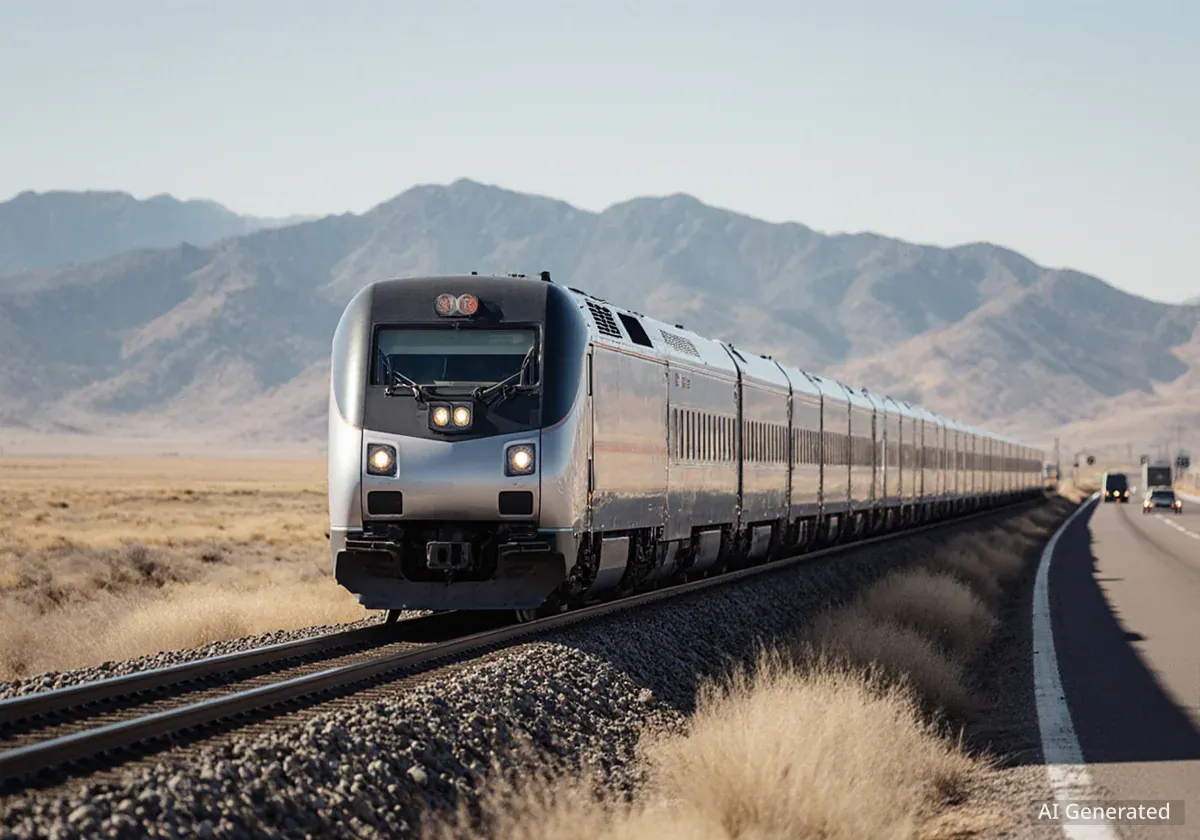
Colorado residents now have the chance to help name a new passenger train service. This train aims to reduce traffic congestion on Interstate 25, connecting cities from Pueblo to Fort Collins. The Front Range Passenger Rail District recently announced four potential names, and the public can vote for their favorite until March 23.
The new rail service is planned to begin operations in 2029. It represents a significant step towards expanding transportation options across the state's Front Range corridor.
Key Takeaways
- Public voting is open for the new Colorado passenger train name.
- The train service will connect cities from Pueblo to Fort Collins, starting in 2029.
- Four names are finalists: Colorado Connector, Colorado Ranger, Front Range Express Destinations, and RangeLink.
- The project aims to reduce I-25 congestion and offer an affordable travel option.
Four Names Compete for Public Vote
The Front Range Passenger Rail District has narrowed down the naming choices to four finalists. These names are now open for public selection. The options presented are Colorado Connector, often shortened to “CoCo,” Colorado Ranger, Front Range Express Destinations, known as “FRED,” and RangeLink.
Residents have a direct opportunity to influence the identity of this future transportation system. Voting concludes on March 23. This public involvement highlights the community-focused approach of the project.
Voting Details
- Voting Period: Open until March 23
- Finalist Names: Colorado Connector ("CoCo"), Colorado Ranger, Front Range Express Destinations ("FRED"), RangeLink
Connecting Colorado Communities
The planned Front Range Passenger Rail will serve a broad stretch of Colorado. It will include stations in major cities and growing communities along the I-25 corridor. The route spans from Fort Collins in the north to Trinidad in the south.
Specific station stops are planned for Fort Collins, Loveland, Longmont, Boulder, Louisville, Broomfield, Westminster, Denver, Littleton, Douglas County, Colorado Springs, Pueblo, and Trinidad. This extensive network aims to provide a viable alternative to car travel for thousands of residents and visitors.
"The vision is simple: reduce congestion on Interstate 25 and provide a safe, affordable transportation option that reflects how Coloradans live and travel today," stated Sal Pace, General Manager of the Front Range Passenger Rail District.
Reducing Traffic and Pollution
One of the primary goals of the new passenger rail service is to significantly reduce traffic on Interstate 25. The highway is known for its heavy congestion, especially during peak travel times. Offering a rail option could alleviate some of this pressure.
Beyond traffic reduction, the project also seeks to decrease pollution. Public transportation, particularly rail, generally produces fewer emissions per passenger mile compared to individual car travel. This aligns with broader environmental sustainability goals for the state.
Project Background
The Front Range Passenger Rail Initiative is a multi-agency effort. It involves partnerships with Union Pacific Railroad, BNSF Railway, Amtrak, and the Regional Transportation District (RTD). This collaboration is crucial for developing and operating the new service.
The initiative has been in planning for several years, addressing the growing need for efficient and sustainable transportation in one of Colorado's most populated corridors.
Governor Polis Emphasizes Benefits
Colorado Governor Jared Polis has voiced strong support for the passenger rail project. He highlighted the anticipated benefits for both residents and the state's economy.
"Front Range Passenger Rail will connect communities across the Front Range, increase transportation options for Coloradans and visitors, reduce traffic and pollution, and save us time and money," Governor Polis said. He also emphasized the importance of public participation in naming the train, noting that Coloradans have long desired more transportation choices.
A Future for Colorado Travel
The launch of the Front Range Passenger Rail in 2029 marks a significant milestone for Colorado's infrastructure. It is expected to transform how people travel within the state. The train service aims to make journeys quicker, more convenient, and more environmentally friendly.
This initiative represents a forward-thinking approach to urban and regional planning. It addresses modern challenges like population growth and environmental impact. The chosen name will become an integral part of this new chapter in Colorado's transportation history.
- Expected Launch: 2029
- Partners: Union Pacific Railroad, BNSF Railway, Amtrak, Regional Transportation District (RTD)
- Key Benefits: Reduced I-25 congestion, increased transportation options, lower pollution, time and cost savings.
The public's choice in naming the train will give it a distinct identity. This identity will resonate with the communities it serves for many years to come. The project is a testament to Colorado's commitment to improving its infrastructure and quality of life for its citizens.