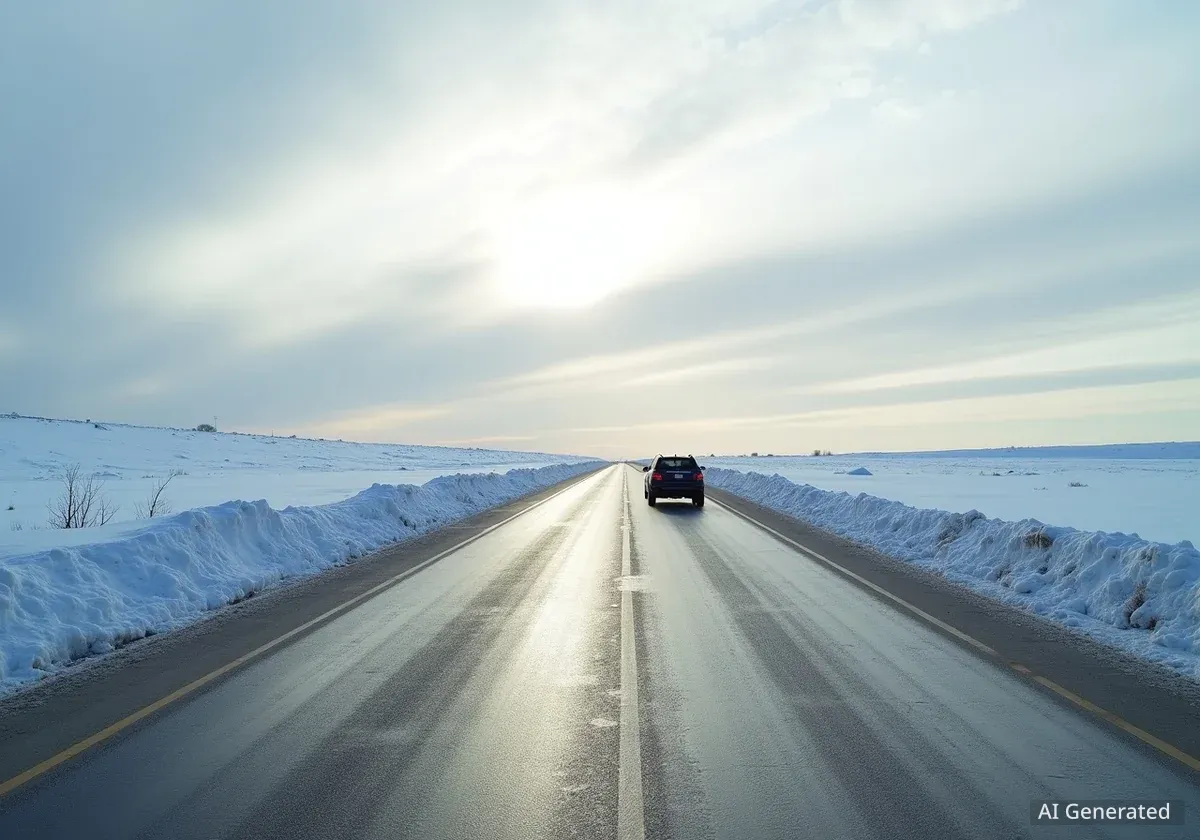
Travelers in eastern North Dakota can resume their journeys as key highways, including a major section of Interstate 29, have reopened. The North Dakota Department of Transportation confirmed the reopening early this morning following extensive closures caused by severe winter weather conditions that brought the region to a standstill.
The closures, which lasted for a significant period, affected I-29 between Fargo and the South Dakota border, as well as state highways ND-11 and ND-13. Crews worked through challenging conditions to clear the roads and ensure they were safe for public use.
Key Takeaways
- Interstate 29 between Fargo and the South Dakota border is now fully open to traffic.
- North Dakota Highways 11 and 13 have also been cleared and reopened.
- The closures were a direct result of a powerful winter storm that created hazardous driving conditions.
- Officials urge motorists to remain cautious as lingering icy spots may still exist.
Crews Clear Crucial Transportation Arteries
The North Dakota Department of Transportation (NDDOT) announced the reopening of the vital travel routes on the morning of November 26. The decision came after a period of intense snow removal and road treatment operations. The winter storm had deposited significant amounts of snow and created near-zero visibility due to high winds, making travel impossible.
Interstate 29 is a primary north-south corridor for both commercial and passenger vehicles in the region. Its closure created significant disruptions, impacting supply chains and holiday travel plans for thousands of people. The reopening restores a critical link between North Dakota's largest city and its southern border.
State highways 11 and 13 serve as important local and regional connectors, providing access to numerous rural communities. Their closure effectively isolated some towns, and their reopening is a welcome relief for residents and local businesses.
The Impact of the Storm
The winter storm system moved through the Upper Midwest, bringing with it heavy snowfall, sustained winds exceeding 40 mph, and dangerously low wind chills. This combination created widespread blizzard conditions, leading transportation officials in several states to issue no-travel advisories and implement road closures to prevent accidents and protect emergency responders.
The Reopening Process
Getting a major interstate back in service after a significant weather event is a complex operation. NDDOT deployed a fleet of snowplows, salt trucks, and graders to tackle the accumulated snow and ice. Priority was given to clearing the main travel lanes of I-29 before moving to on-ramps, off-ramps, and the affected state highways.
Safety patrols were conducted to ensure the roadway was free of stranded vehicles and that visibility had improved to safe levels. The process involved round-the-clock work from maintenance crews who battled drifting snow and frigid temperatures.
"Our teams worked tirelessly in very difficult conditions to get these essential routes open again," an NDDOT official stated. "While the roads are now passable, we are strongly advising drivers to exercise caution. Reduce your speed, increase following distance, and be aware of the potential for black ice, especially on bridges and overpasses."
Advice for Travelers
Even with the highways reopened, authorities are urging motorists to remain vigilant. The aftermath of a major winter storm can leave behind unpredictable road conditions. Drivers are advised to check the latest road status on the NDDOT travel map before departing.
Winter Driving Safety Checklist
- Check your vehicle: Ensure your tires are properly inflated, your fluid levels are full, and your battery is in good condition.
- Pack an emergency kit: Include blankets, water, snacks, a flashlight, a first-aid kit, and a phone charger.
- Slow down: Posted speed limits are for ideal conditions. Reduce your speed significantly on snowy or icy roads.
- Leave space: Increase the distance between your vehicle and the one in front of you to at least 8-10 seconds.
- Stay informed: Monitor weather forecasts and official travel advisories.
The reopening of these highways is a positive development, but the winter season is just beginning. This event serves as a critical reminder for all drivers in the region to be prepared for sudden changes in weather and to prioritize safety above all else.
Economic and Community Impact
The temporary shutdown of I-29 had a noticeable effect on the flow of goods. The interstate is a key route for freight trucks carrying everything from agricultural products to consumer goods. Each hour a major highway is closed represents a significant economic cost due to delayed shipments and lost productivity.
For local communities along the closed routes, the impact was more immediate. Residents faced challenges getting to work, appointments, or accessing essential services. The reopening allows daily life and commerce to begin returning to normal. As travelers now get back on the road, local businesses like gas stations and restaurants that rely on highway traffic can expect to see a return of customers.
Officials continue to monitor the weather systems and are prepared to take necessary action should another storm threaten the region. For now, the focus is on maintaining the cleared roads and ensuring the continued safety of the traveling public.