
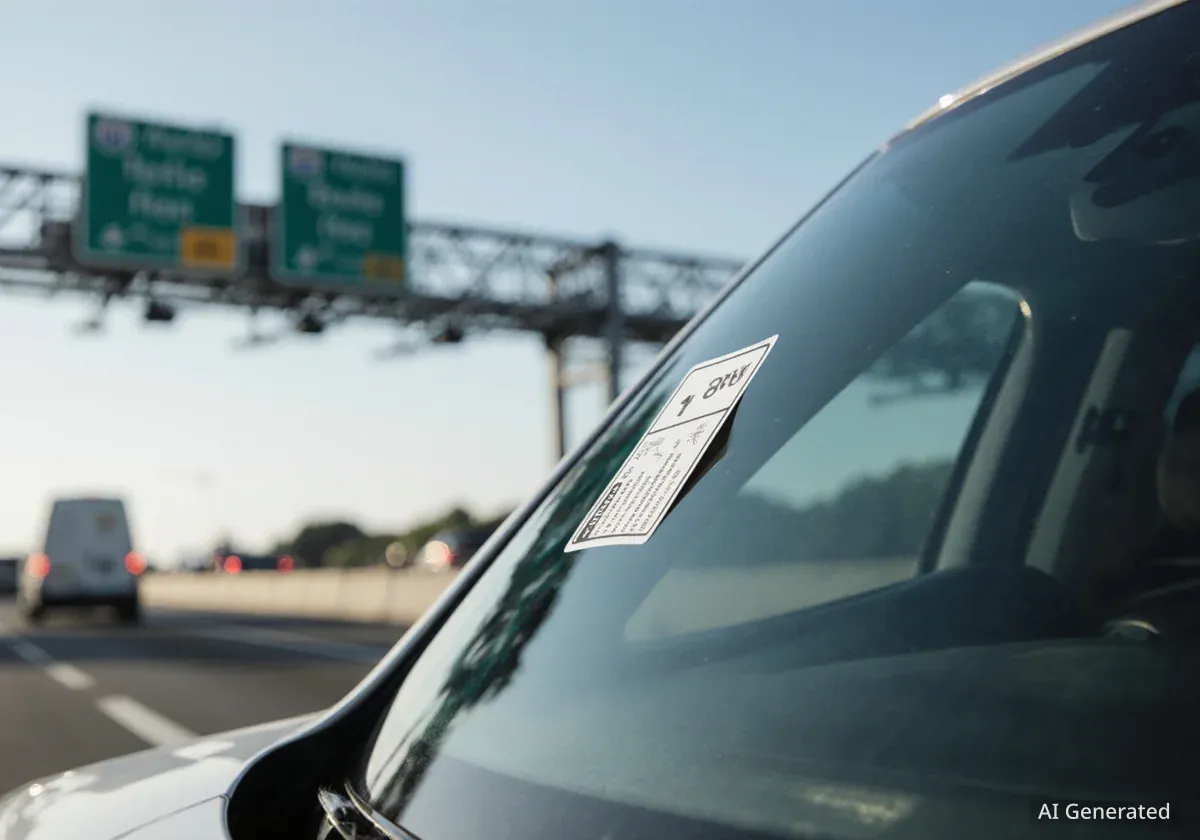
The New Jersey Turnpike Authority is exploring a significant shift in its toll collection system. Officials plan to introduce sticker tags as a potential replacement for the traditional E-ZPass transponders. This initiative aims to streamline operations and reduce substantial maintenance costs associated with battery-powered devices.
A pilot program will first test these new sticker tags in vehicles operated by the Turnpike Authority. If successful, the technology could become widely available to drivers across New Jersey, potentially changing how millions pay tolls.
Key Takeaways
- New Jersey Turnpike Authority to test sticker tags.
- Sticker tags do not require batteries, unlike current transponders.
- Potential savings of millions in replacement costs.
- Pilot program will use Authority vehicles first.
- Future availability for all New Jersey drivers.
Transitioning from Traditional Transponders
The current E-ZPass transponders rely on internal batteries for operation. These batteries have a limited lifespan, typically requiring replacement every 10 years. This regular maintenance cycle presents a significant logistical and financial challenge for the Turnpike Authority.
The proposed sticker tags offer a key advantage: they do not contain batteries. This fundamental difference could eliminate the need for periodic replacements, leading to long-term cost savings and improved convenience for drivers.
Did You Know?
In 2022, the New Jersey Turnpike Authority spent nearly $8 million replacing almost one million E-ZPass transponders due to battery failures.
Addressing High Replacement Costs
The financial burden of maintaining the existing transponder system is considerable. According to Kris Kolluri, Executive Director of the New Jersey Turnpike Authority, the cost of replacing transponders with worn-out batteries is a major concern. Drivers often face inconvenience when their transponders fail, requiring them to contact the E-ZPass office for resolution.
"The transponders have to be changed out every 10 years or so, the battery goes out, and if you happen to drive something, you have to call the E-ZPass office, try to get it resolved," Kolluri stated.
The shift to sticker tags directly addresses this issue by removing the battery component. This change promises a more durable and maintenance-free solution for toll collection.
The Pilot Program and Future Rollout
The initial phase of this transition involves a pilot program. The New Jersey Turnpike Authority will equip its own vehicles with the new sticker tags. This controlled environment allows officials to assess the performance and reliability of the technology under real-world conditions.
Successful completion of the pilot program is crucial. It will determine whether the sticker tags are robust enough for widespread public use. If the tests yield positive results, the Authority plans to make these stickers available to all New Jersey drivers.
Background on E-ZPass
E-ZPass is an electronic toll collection system used on most tolled roads, bridges, and tunnels in the northeastern United States. It allows drivers to pay tolls electronically as they pass through designated toll lanes, reducing congestion and speeding up travel times. The system uses radio-frequency identification (RFID) technology to read transponders mounted inside vehicles.
Benefits for Drivers and the Authority
For drivers, the adoption of sticker tags could mean less hassle. They would no longer need to worry about replacing a dead transponder battery or dealing with potential toll collection errors caused by faulty devices. The stickers are also likely to be smaller and less obtrusive than the current transponders.
For the New Jersey Turnpike Authority, the benefits extend beyond cost savings. A more reliable system means fewer customer service inquiries related to transponder issues. This could improve operational efficiency and enhance public satisfaction with the toll collection process.
"The transponders have to be changed out every 10 years or so, the battery goes out, and if you happen to drive something, you have to call the E-ZPass office, try to get it resolved," said NJTA Executive Director Kris Kolluri.
Technological Advancement in Toll Collection
The move to sticker tags represents an evolution in electronic toll collection technology. While transponders have served their purpose for many years, advancements allow for simpler, more cost-effective solutions.
The passive nature of sticker tags, which draw power from the RFID reader at the toll plaza, makes them inherently more durable and less prone to failure than active, battery-powered devices. This technology is already in use in other regions and has proven effective.
- Reduced Maintenance: No batteries mean no battery replacements.
- Cost Savings: Millions saved annually on transponder purchases.
- Improved Convenience: Fewer issues for drivers with non-functioning devices.
- Environmental Impact: Less electronic waste from discarded batteries.
The potential widespread adoption of E-ZPass sticker tags in New Jersey could set a precedent for other toll authorities. It highlights a trend towards simpler, more sustainable, and economically efficient infrastructure solutions.
The outcome of the pilot program will be closely watched. If successful, New Jersey drivers can anticipate a smoother, more reliable tolling experience in the near future, free from the concerns of a dying E-ZPass battery.