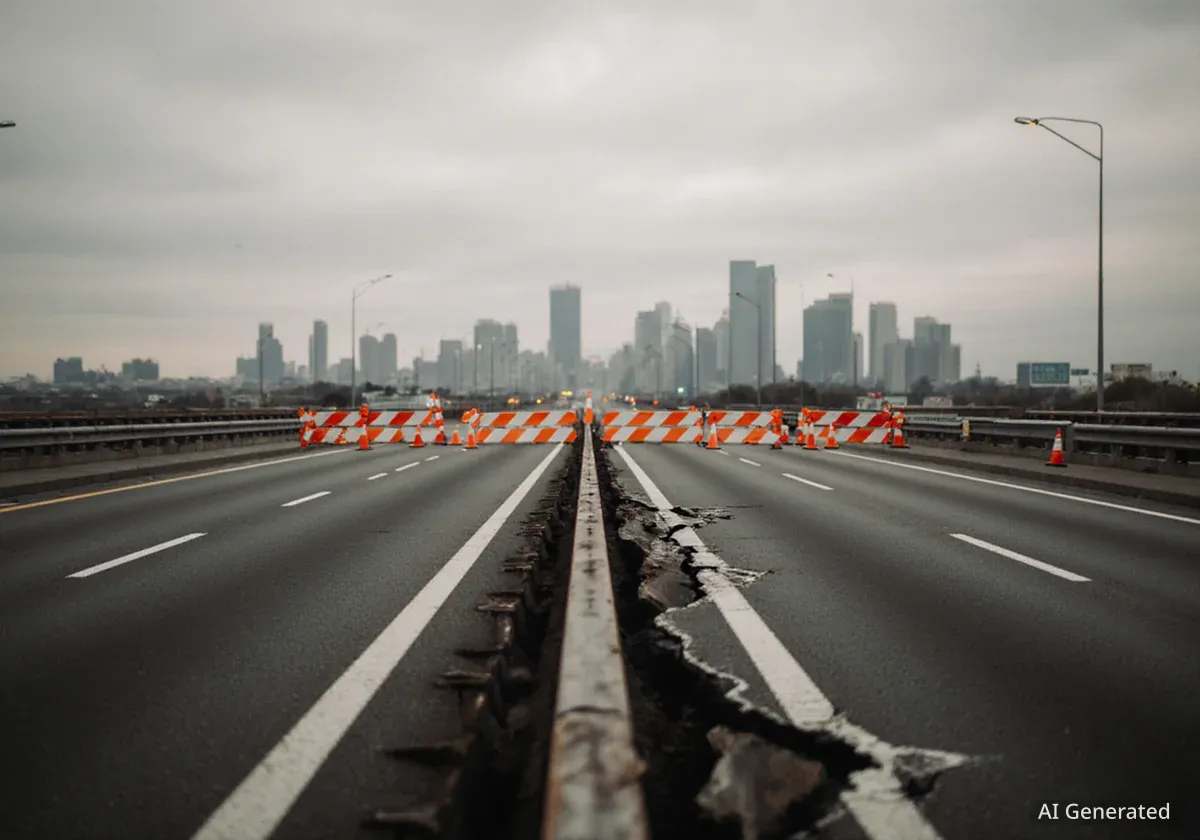
All northbound lanes of State Route 99 at the First Avenue South bridge in Seattle are closed for three days. Emergency repairs are underway after inspectors found cracks in the bridge's steel deck. Drivers should expect significant delays and plan alternative routes.
Key Takeaways
- Northbound SR 99 at First Avenue South bridge is closed.
- Closure began March 9 at 5 a.m. and is expected to last until March 11 at 8 p.m.
- Emergency repairs are addressing cracks in the steel deck.
- Further, long-term repairs are planned for April.
- Drivers face major traffic disruptions into Seattle from the south.
Emergency Closure Details
The Washington State Department of Transportation (WSDOT) initiated the emergency closure on Saturday, March 9, at 5 a.m. This action followed the discovery of cracks in the bridge's steel deck grates on February 18. The closure affects all northbound lanes on SR 99 at the First Avenue South bridge.
Crews are working to weld reinforcements and install steel plates over the cracked areas. This is a temporary fix designed to restore safe vehicle access. WSDOT expects to reopen the northbound lanes by Monday, March 11, at 8 p.m.
Bridge Facts
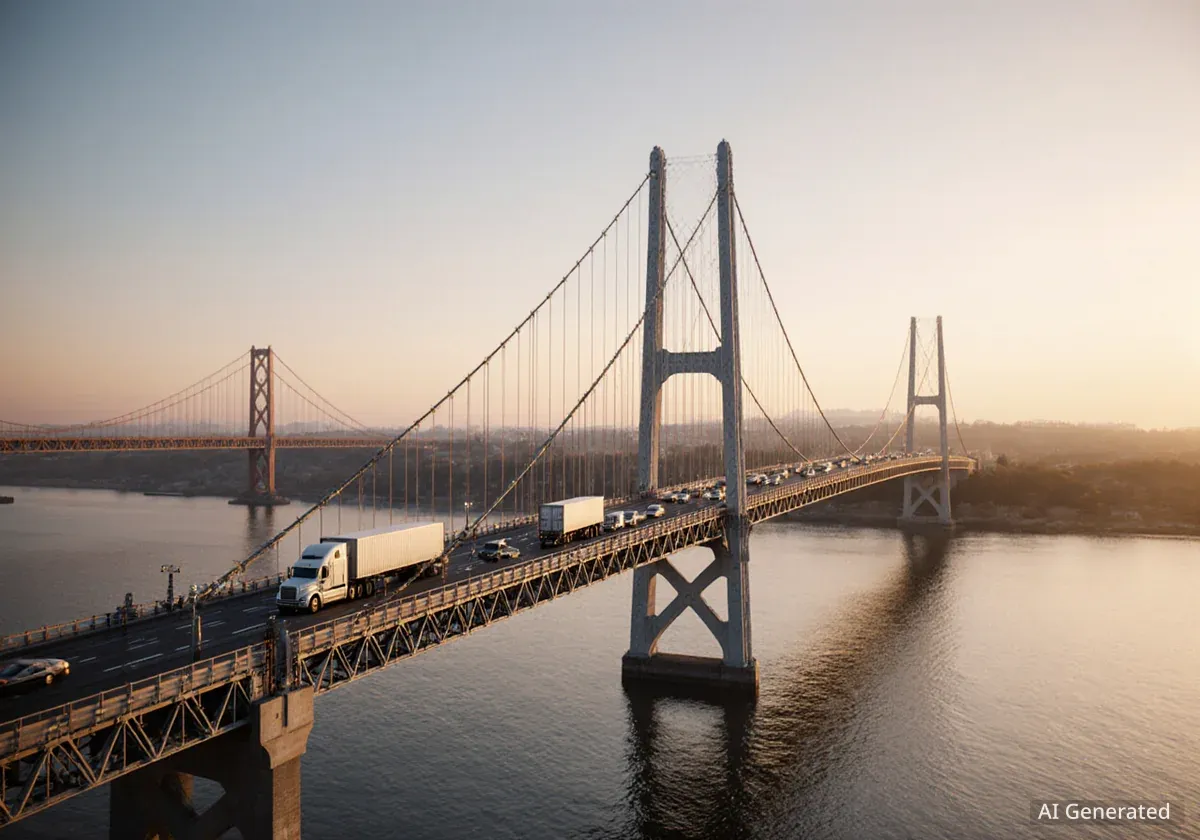
- The First Avenue South bridge is a double-leaf bascule drawbridge.
- It allows marine traffic to pass by lifting its two halves.
- The bridge is part of a statewide system operating beyond its intended service life.
Impact on Commuters
Commuters traveling into Seattle from the south on Monday should anticipate significantly longer travel times. Traffic is being diverted off the northbound lanes at the Cloverdale/South Park exit. WSDOT urges drivers to use alternate routes or consider public transportation during this period.
"Drivers headed into Seattle from the south on Monday should plan for longer travel times due to the closure," a WSDOT spokesperson stated.
The 25 mph speed limit will remain in effect on the bridge even after it reopens. This reduced speed will be maintained until a second phase of more permanent repairs is completed.
Ongoing Infrastructure Challenges
This emergency work adds to a series of other road closures and construction projects across the region. The left two lanes of northbound Interstate 5 remain closed over the Ship Canal Bridge as part of the Revive I-5 project. Additionally, Interstate 405 will experience full closures in both directions in Bothell over the next two weekends for ramp removal work.
Background Information
The First Avenue South bridge has undergone various repairs over the years. The last significant work occurred in 2020, when crews replaced 14 deck panels. These repairs have cumulatively added weight to the moveable section of the bridge, which opens for marine traffic.
Long-Term Repair Plans
Inspectors have identified nine steel grate panels that require full replacement. The manufacturing of these new panels is projected to take approximately six weeks. WSDOT anticipates the replacement work to begin in mid-to-late April.
For these longer-term repairs, WSDOT is considering either full weekend or overnight closures to minimize disruption. This phase will also necessitate a full northbound closure of the bridge. The agency aims to complete this second phase before the 2026 FIFA World Cup, which is expected to bring hundreds of thousands of visitors to the Puget Sound region in June.
Once the nine panels are replaced, the lanes will reopen, and normal speed limits can resume. WSDOT plans to provide an updated timeline for the second phase of repairs in early April, before that work commences.
Future Bridge Replacement
Beyond these immediate and upcoming repairs, a full replacement of the northbound bridge deck is scheduled for 2027. This major undertaking will require extensive coordination with the U.S. Coast Guard and other regional partners. The bridge's age and the ongoing need for repairs highlight the broader challenge of maintaining aging infrastructure across the state.
Washington Governor Bob Ferguson has proposed a $2.1 billion investment in transportation preservation. This includes $1.1 billion specifically allocated for bridges, underscoring the critical need for funding to address the state's aging infrastructure.