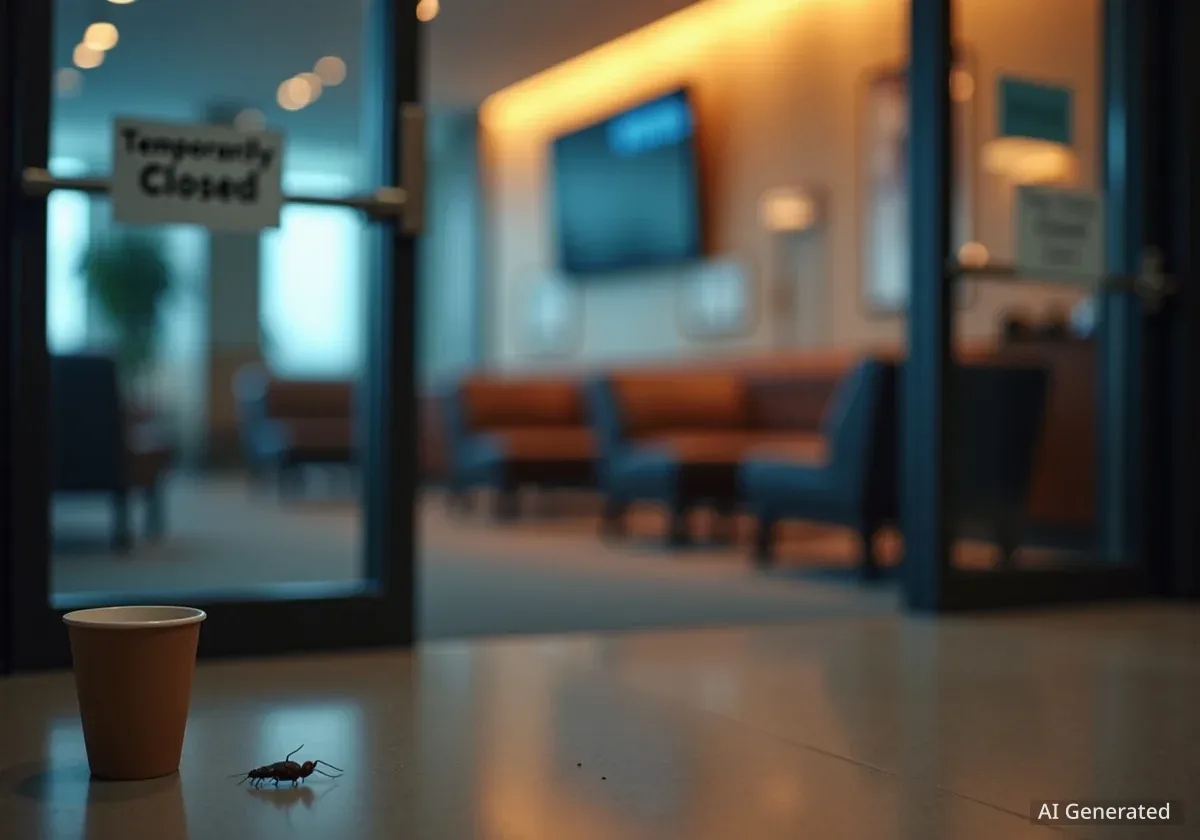
The United Club Lounge at Philadelphia International Airport (PHL) has been temporarily shut down following a health inspection that identified a fly infestation and other issues. City inspectors visited the lounge on Monday, October 1, 2025, marking their third visit to the location this year. United Airlines confirmed it is actively working to resolve the problems to reopen the facility.
Key Takeaways
- United Club Lounge at PHL temporarily closed due to health violations.
- Issues include a fly infestation and other health shortcomings.
- City inspectors conducted their third visit to the lounge this year.
- United Airlines is working to address the identified problems.
Health Department Findings at PHL Lounge
Philadelphia city health inspectors issued a temporary closure order for the United Club Lounge. The decision came after an inspection on Monday, October 1, 2025, revealed significant health code violations. A primary concern was the presence of a fly infestation within the lounge area. This issue can pose risks to public health and negatively impact the experience of travelers.
Beyond the fly problem, inspectors noted other "shortcomings." The specific details of these additional violations have not been fully disclosed. However, such shortcomings typically relate to general sanitation, food handling practices, or facility maintenance that do not meet regulatory standards.
Fact Check
- Date of Closure: October 1, 2025
- Location: United Club Lounge, Philadelphia International Airport (PHL)
- Primary Violation: Fly infestation
- Number of Inspections in 2025: 3 (including this one)
Airline Response and Remedial Actions
United Airlines acknowledged the temporary closure and the reasons behind it. A spokesperson for the airline confirmed that the company is taking immediate steps to address all issues identified by the health department. The airline stated it is working to resolve the fly infestation and rectify the other identified "shortcomings."
"We are working diligently to address the concerns raised by the city inspectors, including the fly infestation and other shortcomings," a United Airlines representative stated. "Our priority is to ensure a clean and safe environment for our guests, and we are committed to reopening the lounge as soon as all issues are fully resolved and approved by the health department."
The airline's response indicates a commitment to compliance. It also suggests an understanding of the importance of maintaining high standards in its facilities, especially those serving the public at a major international airport. The process of addressing such violations often involves deep cleaning, pest control measures, and staff retraining on hygiene protocols.
Previous Inspections and Ongoing Oversight
This recent inspection was not the first time city health officials visited the United Club Lounge this year. It marked the third inspection in 2025 for the facility. The frequency of visits suggests a pattern of oversight, potentially indicating prior concerns or a routine schedule for high-traffic establishments.
Background on Airport Lounges
Airport lounges provide a premium experience for travelers, offering amenities like comfortable seating, complimentary food and beverages, Wi-Fi, and quieter environments away from the main terminal. Health and safety standards are critical for these facilities due to the high volume of diverse travelers they serve and the food services they often provide. Regulatory bodies conduct regular inspections to ensure these standards are met.
Regular health inspections are a standard practice for food service establishments and public facilities, including airport lounges. These inspections aim to protect consumers from potential health hazards. When violations are found, health departments typically issue corrective orders and may impose temporary closures until the problems are fixed and re-inspected.
The Philadelphia Department of Public Health is responsible for ensuring that all food establishments and public facilities within the city, including those at the airport, adhere to strict health and safety regulations. Their role is crucial in safeguarding the well-being of residents and travelers.
Impact on Travelers and Future Operations
The temporary closure directly affects United Airlines passengers who rely on the lounge for amenities before their flights. These travelers will need to find alternative places to wait or access services within the airport terminal until the lounge reopens. While inconvenient, such closures are necessary to ensure health standards are met.
The timeline for reopening the United Club Lounge has not been announced. It depends on how quickly United Airlines can implement the necessary changes and pass a follow-up inspection by the city health department. Once the issues are fully resolved and approved, the lounge will resume its operations, offering services to its members and eligible passengers.
This incident highlights the importance of continuous vigilance in maintaining hygiene and operational standards in public facilities. Airlines and airport concessionaires must ensure their premises are consistently clean and safe for all patrons.
Ensuring Passenger Well-being
Aviation facilities, including lounges, are subject to various regulations. These regulations cover not only operational safety but also health and hygiene. The goal is to provide a secure and comfortable environment for millions of passengers who pass through airports each year. This closure serves as a reminder of the critical role health inspections play in upholding these standards.
Passengers often expect a high level of cleanliness and service from airport lounges. Failures in these areas can lead to significant dissatisfaction and potential health risks. Therefore, prompt and thorough action by United Airlines is essential for restoring confidence and ensuring future compliance.
The city's health department will likely conduct a detailed re-inspection once United Airlines reports that all corrective actions have been completed. This re-inspection will verify that the lounge meets all health code requirements before it is allowed to reopen its doors to the public.