
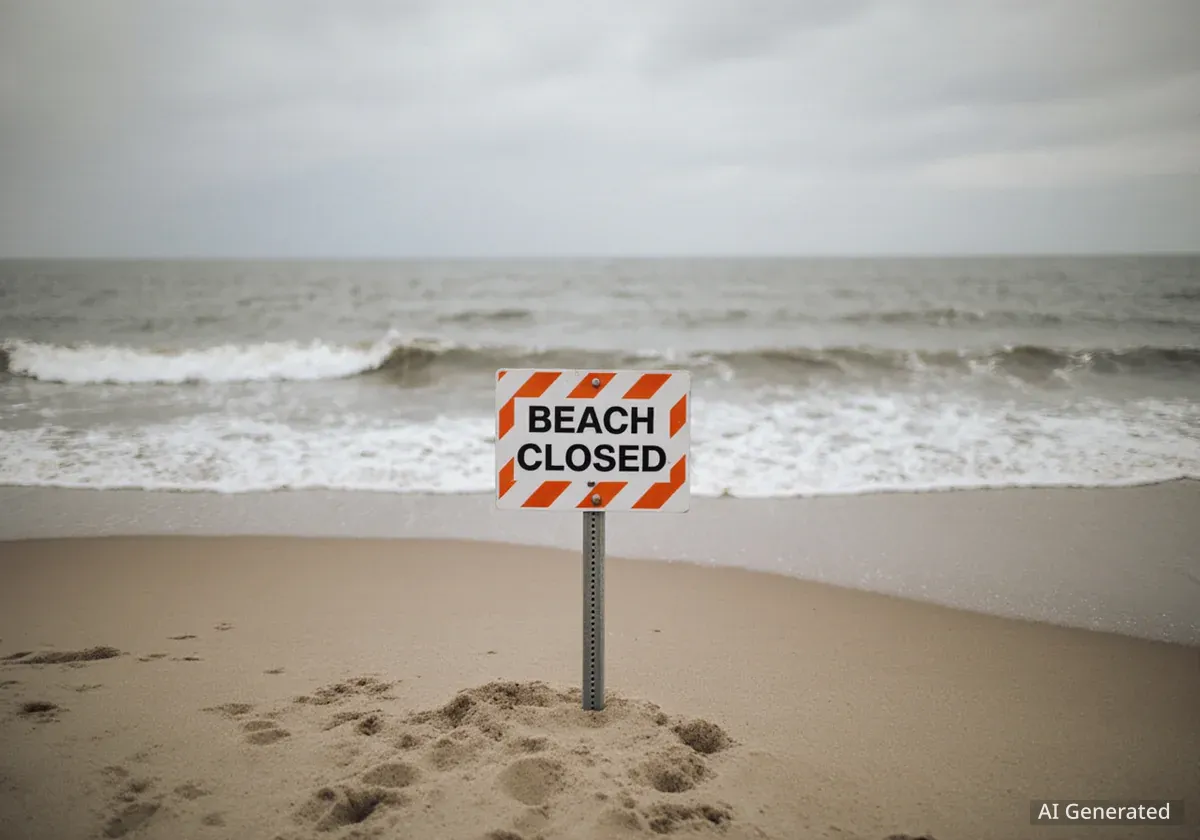
Dozens of beaches along Australia's eastern New South Wales (NSW) coastline have closed following four confirmed shark attacks since Sunday. The closures come amidst Australia's busy summer holiday period, with authorities urging swimmers to use public pools instead of ocean beaches.
Key Takeaways
- Four shark attacks occurred on NSW coast since Sunday.
- Beaches near Sydney and Port Macquarie are closed.
- Heavy rainfall is linked to increased shark activity.
- Experts advise waiting 24-72 hours after rain to swim.
Multiple Incidents Across the Coast
The latest incident occurred on Tuesday near Port Macquarie, approximately 400 kilometers north of Sydney. A 39-year-old surfer sustained a shark bite at Point Plomer. Fortunately, the victim escaped serious injury. Following this, beaches around Port Macquarie were immediately closed.
The government-run Shark Smart App indicated numerous recent shark sightings in the area. This prompted local authorities to act swiftly, prioritizing public safety.
Shark Attack Timeline
- Sunday: 12-year-old seriously injured in eastern Sydney.
- Monday: 27-year-old in critical condition at Manly Beach, Sydney.
- Monday: Surfer's board bitten at Dee Why Beach, northern Sydney.
- Tuesday: 39-year-old surfer bitten near Port Macquarie.
Sydney Beaches Also Affected
Sydney's Northern Beaches Council announced the closure of its beaches for at least 48 hours. This decision followed a severe attack on Monday night at Manly. A 27-year-old man was left in critical condition after a shark bite.
Earlier on Monday, a young surfer at Dee Why beach, also in northern Sydney, had a close call. A shark bit a significant chunk out of his surfboard, though the surfer was unharmed.
The series of events began on Sunday. A 12-year-old child suffered serious injuries from a shark while swimming at a beach in eastern Sydney.
"If you’re thinking about going for a swim, think of going to a local pool because at this stage, we’re advising that beaches are unsafe," said Steven Pearce, the chief executive of Surf Life Saving New South Wales.
Rainy Conditions and Shark Behavior
Experts suggest recent heavy rains around Sydney have created conditions that attract sharks closer to coastal areas. Australia is currently experiencing its summer holidays, leading to increased beach visitor numbers.
Why Rain Affects Shark Activity
Heavy rainfall can lead to several factors that increase shark presence near beaches:
- Brackish Water: Reduced visibility makes it harder for both humans and sharks to see.
- Sewage Run-off: Rainwater can carry sewage into the ocean, attracting baitfish.
- Baitfish Attraction: An increase in baitfish draws larger predatory sharks.
Chris Pepin-Neff, an academic specializing in shark behavior, highlighted these environmental factors. He explained that brackish water, a mix of fresh and saltwater, significantly reduces visibility. This makes it difficult for sharks to distinguish between prey and humans.
Expert Advice for Swimmers
Mr. Pepin-Neff also noted that sewage run-off, often carried by rainwater, can draw in baitfish. This influx of smaller fish then attracts larger sharks to the coastal areas.
He provided specific recommendations for beachgoers. "Stay out of Sydney Harbour and the beach after a rainstorm. Wait 72 hours after a storm to swim in the harbour and be mindful of swimming or surfing at ocean beaches for 24 hours after a large downpour," Pepin-Neff advised.
These guidelines aim to minimize risks during periods when sharks are more likely to be found close to shore. Authorities continue to monitor the situation and will provide updates on beach reopenings as conditions change.
Safety Measures and Public Awareness
Local councils and Surf Life Saving NSW are working to ensure public safety. They are using the Shark Smart App to track sightings and communicate closures. Public announcements are also being made through various channels.
The current situation serves as a critical reminder for residents and tourists alike to remain vigilant. Paying attention to warning signs and expert advice is essential when enjoying Australia's popular coastlines.
Authorities emphasize that while shark attacks are relatively rare, taking precautions during high-risk periods is crucial. The closures remain in effect until further notice, allowing time for conditions to stabilize and for patrols to ensure safety.