
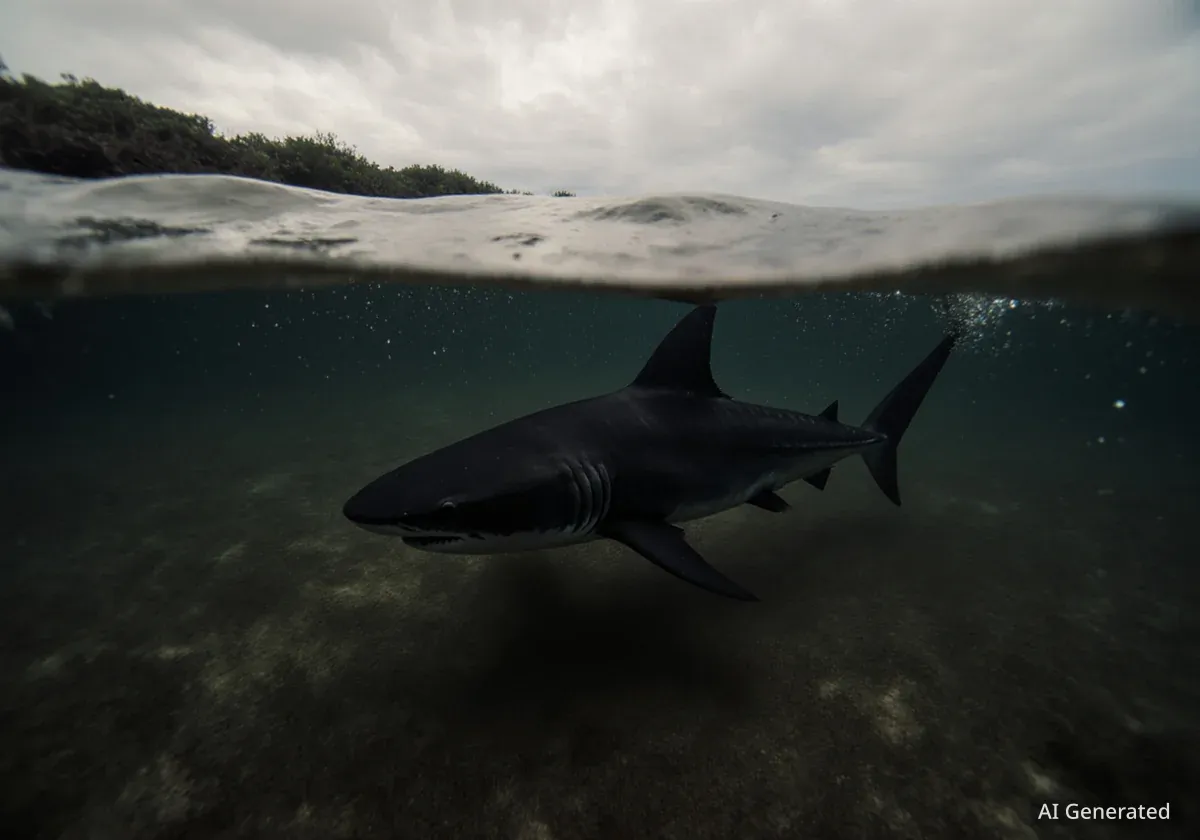
Australia's east coast has experienced an unusual surge in shark encounters, with four incidents reported within 48 hours in mid-January. Three of these incidents occurred within a 15-kilometer stretch near Sydney, alarming residents and prompting beach closures. Experts are analyzing environmental factors and human behaviors that may contribute to this increase.
Key Takeaways
- Four shark incidents occurred in 48 hours on Australia's east coast in January.
- Heavy rainfall and subsequent freshwater runoff are linked to bull shark activity.
- Shark encounters have increased over 30 years, but fatalities remain rare.
- Experts do not support shark culls as an effective safety measure.
- Awareness of environmental conditions and a pragmatic view of the ocean are crucial.
Unprecedented Cluster of Shark Incidents
The recent series of shark encounters has drawn significant attention. On January 18, a 12-year-old boy suffered critical injuries while swimming in Sydney Harbour and later died. The following day, an 11-year-old's surfboard was bitten at Dee Why beach, and hours later, a man was attacked at Manly, requiring hospitalization for critical injuries.
A fourth incident occurred on January 20, approximately 300 kilometers north of Sydney, where a surfer sustained a chest wound after a shark bit his board. Chris Pepin-Neff, an associate professor of public policy at the University of Sydney and a shark researcher, described this cluster as the closest in both proximity and time he has witnessed in two decades of research.
Fast Fact
Sydney recorded 127mm of rainfall in 24 hours just before the recent shark incidents, its wettest January day in 38 years.
Environmental Factors Drive Bull Shark Activity
Experts suggest that specific environmental conditions played a significant role in the recent Sydney incidents, which are believed to have involved bull sharks. Heavy rainfall preceding the attacks is a key factor. The city experienced its wettest January day in 38 years, with 127mm of rain falling within 24 hours.
Rebecca Olive, a senior research fellow at RMIT University, explained that these conditions create a "perfect storm" for bull sharks. She noted that bull sharks thrive in warm, brackish water, unlike most other shark species. They are often found in river mouths and estuaries. The freshwater runoff from the land after heavy rains created an ideal environment for them.
"Bull sharks thrive in warm, brackish water, which most other sharks flee," Rebecca Olive stated. "They love river mouths and estuaries, so the freshwater that flooded off the land following the recent rain events was perfect for them."
The freshwater runoff likely carried sewage and nutrients into the sea. This influx of nutrients can attract bait fish, which in turn draws in sharks. Pepin-Neff referred to this as a "biodiversity explosion," where low salinity freshwater brings bait fish and bull sharks to the nearshore areas, increasing the likelihood of encounters.
Are Shark Incidents Truly Increasing?
Official statistics show a gradual increase in shark bite incidents in Australia over the past 30 years. In the 1990s, there were typically 8 to 10 incidents per year. This number rose to yearly averages in the mid-20s from the 2010s onwards. However, experts caution against interpreting this as increased shark aggression.
Instead, the higher numbers likely reflect improved data collection and several human factors. Australia's coastal population has grown, and more people are participating in water sports. Thicker wetsuits allow individuals to stay in the ocean for longer periods, increasing their exposure.
Context on Shark Incidents
While the total number of shark encounters is higher, the rate of incidents has not increased proportionally to the rise in people using the ocean. This suggests that individual risk remains low.
Pepin-Neff highlighted that while the total number of encounters is higher, the rate of shark bites does not increase at the rate it should given the greater proportion of people in the water. Olive echoed this, emphasizing that incidents and attacks are relatively uncommon, and fatalities are even less frequent, considering the vast number of people who use the ocean daily.
The perception of increased danger may also stem from greater visibility and reporting. Better reporting systems, the widespread use of drone footage, and significant media attention on shark encounters can make incidents seem more prevalent. Pepin-Neff also noted that imprecise language, conflating sightings, encounters, and bites under the term "attack," can heighten fear and distort public understanding of the actual risk.
Effectiveness of Shark Culls Debated
Following the recent incidents, calls for shark culls have intensified. Typically, culls involve using nets or baited drumlines to catch and kill sharks near popular beaches. However, experts strongly oppose these measures.
Rebecca Olive stated her strong opposition to culling sharks, arguing that it creates an "illusion of safety" rather than genuine protection. Pepin-Neff further stressed that scientific research does not support shark culls as an effective method for reducing the danger of attacks.
"It just doesn't work," Pepin-Neff commented on shark culls. "It makes politicians feel better, and it makes activists feel better, and it makes nobody in the water any safer."
Experts explain that the variable in shark encounters is often the attractant drawing them to an area, not the sharks themselves. Killing sharks in one location will not prevent others from moving into that area if the attractants remain. Therefore, addressing environmental factors is more crucial than attempting to eliminate sharks.
Minimizing Risk and Rethinking Ocean Relationship
Both Olive and Pepin-Neff advise individuals to be more aware of the factors that increase the likelihood of a shark encounter. This includes avoiding swimming or surfing after heavy rainfall, especially near river mouths and estuaries. Local councils could also consider creating more shark enclosures for safer swimming areas.
More broadly, beachgoers need to adopt a pragmatic attitude towards the ocean, recognizing it as a wild environment. Pepin-Neff compared this to how Australians navigate the bush, emphasizing the need to apply similar caution to marine environments.
This perspective requires a fundamental shift in how humans view both the ocean and sharks. The idea that the ocean is always safe and sharks are always dangerous is a misconception. The ocean is never entirely safe, and sharks are not inherently dangerous in every situation. Experts argue that humans are often "in the way, not on the menu," highlighting that most encounters are not predatory in nature.