American Airlines Chief Operating Officer David Seymour stated this week that the airline's technology systems performed as intended during a recent period of significant flight cancellations. He made these remarks on the Airlines Confidential podcast, despite a different view from the airline's CEO and numerous reports from flight attendants.
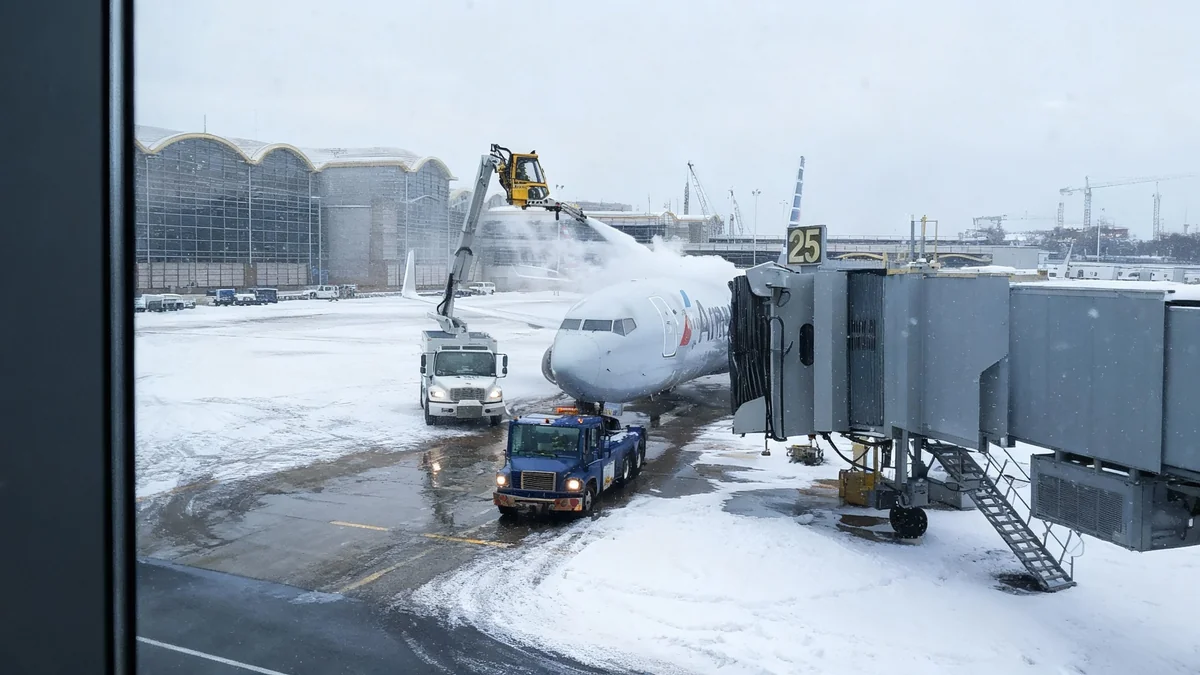
The airline faced nearly 10,000 cancellations, struggling with recovery after a major storm. Seymour maintained that the company did not lose track of its crew members and disputed claims of flight attendants sleeping in airports.
Key Takeaways
- American Airlines COO David Seymour claims the airline's technology worked during a major operational meltdown.
- Seymour denies flight attendants were forced to sleep in airports, despite CEO's statements and employee reports.
- The airline canceled nearly 10,000 flights, taking longer to recover than competitors.
- Flight attendant union officials describe widespread issues, including lack of hotel rooms and scheduling problems.
- Recurring operational issues at American Airlines raise questions about long-term solutions.
COO Defends Airline's Response
During his appearance on the Airlines Confidential podcast, David Seymour, American Airlines' Chief Operating Officer, repeatedly emphasized that the airline's 'technology worked' throughout the widespread disruptions. He asserted that their systems maintained accurate tracking of crew members.
Seymour also addressed reports of flight attendants being stranded without hotel rooms. He stated that while crew members might have experienced longer-than-usual waits for accommodations, he had not seen reports of them sleeping on airport floors. He noted the airline secured 6,000 additional hotel rooms in hub locations in anticipation of cancellations.
"I will tell you that our crew members probably waited for hotel rooms longer than normal under normal irregular ops situation. But over the course of that time, we secured 6,000 additional hotel rooms in our hub locations in advance... I haven’t seen the reports of them sleeping on floors and all that." — David Seymour, American Airlines COO
Operational Impact
- Cancellations: Nearly 10,000 flights canceled.
- Recovery Time: Significantly longer than other airlines.
- Hotel Rooms Secured: 6,000 additional rooms in hub locations.
- Manual Process: Used 1,100 times to secure crew accommodations.
Contradictory Accounts Emerge
Seymour's statements contrast sharply with remarks made by American Airlines CEO Robert Isom and direct accounts from flight attendants. Isom acknowledged that some crew members were without a place to sleep during the storm in his own communications to employees.
Flight attendants themselves reported significant difficulties. Many stated they were forced to sleep in airports because hotel rooms were unavailable. They also described challenges reaching crew scheduling, experiencing long hold times, and being disconnected.
Pilots often have a different experience. They are more likely to pay for rooms out of pocket and seek reimbursement later, a practice less common among flight attendants.
Union Voices Concerns
The President of the New York LaGuardia flight attendant base provided a stark description of the situation. This official highlighted that flight attendants were left without hotels, stranded for hours, and forced to endure unacceptable conditions.
"Flight Attendants were left without hotels, stranded for hours, sleeping in unsafe and unacceptable conditions, unable to reach Crew Scheduling, disconnected after hours on hold, and forced to navigate a collapsing operation with little to no support." — New York LaGuardia Flight Attendant Base President
Historical Context
This is not an isolated incident for American Airlines. Similar situations occurred in 2021 and 2022, where flight attendants were reportedly left sleeping in airports during irregular operations, often due to severe weather. The airline has previously promised to address these issues and ensure proper accommodations for its staff.
Systemic Challenges and Recurring Issues
Union representatives argue that these events are not unforeseen. They characterize irregular operations, winter weather, hotel shortages, staffing issues, and call center overload as predictable problems. Management, they say, has repeatedly failed to plan adequately.
American Airlines has historically focused on improving its operational reliability. However, the airline has often lagged behind competitors in key performance indicators, such as mishandled bags and involuntary passenger bumps.
Questions arise about the airline's willingness to acknowledge and implement meaningful improvements. Without a clear understanding of the underlying failures, critics suggest that apologies alone will not lead to lasting change.
Technology and Infrastructure
Some industry observers point to deeper technological issues within American Airlines. They suggest that the airline's systems, scaled over decades, may be complex and outdated. This complexity could hinder recovery during disruptions.
Other major US airlines have invested heavily in modernizing their IT infrastructure. This includes rewriting core systems to reduce reliance on older mainframe technology. This proactive approach aims to prevent widespread operational failures.
The recurring nature of these meltdowns at American Airlines, despite claims of functional technology, highlights a persistent challenge in ensuring smooth operations for both passengers and crew.