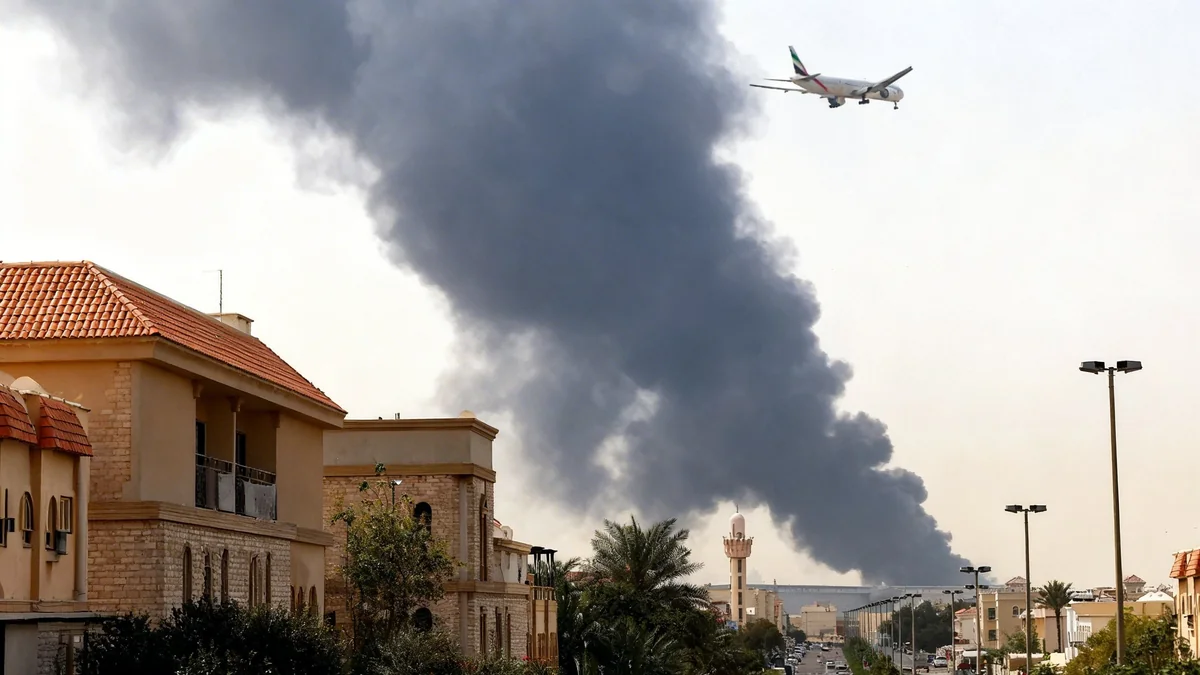

KLM Royal Dutch Airlines has restarted flights to several Middle East destinations, including Tel Aviv and Dubai, despite ongoing security concerns in the region. The airline confirmed its decision to resume services on February 1 to Dubai and February 2 to Tel Aviv. This move follows a temporary suspension due to heightened geopolitical tensions. KLM stated that updated safety assessments allow for these limited operations to proceed.
The resumption highlights a different approach from some other major global carriers. Many airlines continue to avoid the region, extending their suspensions well into 2026. KLM's return indicates a careful re-entry into the market, guided by tightened safety protocols and continuous risk evaluation.
Key Takeaways
- KLM resumed flights to Dubai on February 1 and Tel Aviv on February 2.
- The decision is based on updated safety assessments and intelligence.
- Many competing airlines, including US and European carriers, continue to suspend flights.
- Airspace security, missile threats, and rerouting costs remain significant concerns for the industry.
- KLM emphasizes continuous review of crew safety and airspace risks.
Airlines Diverge on Middle East Operations
Since late 2025, airlines worldwide have frequently adjusted their Middle East flight schedules. This has been a direct response to concerns over airspace security, potential missile activity, and broader regional instability. Major travel hubs like Dubai International Airport and Ben Gurion Airport in Tel Aviv have seen fluctuating international connectivity as carriers reassess operational risks.
While some airlines, like KLM, are cautiously returning, others have chosen to keep their services suspended. This difference in strategy reveals the complex challenges airlines face when navigating ongoing instability across the Middle East.
"KLM always places the safety of passengers and staff first. Choosing safe and optimal routes is a core part of our daily operations."
Flight Details
- Dubai Flights: Resumed February 1
- Tel Aviv Flights: Resumed February 2
- Adjusted Schedules: Flights operate on modified timetables and may change without notice.
- Safety Protocol: Continuous review of crew safety and airspace risk assessments.
Why Many Carriers Remain Cautious
Many American and European airlines, including American Airlines, British Airways, Iberia, and Lufthansa, have extended their suspensions to Tel Aviv, Dubai, and nearby destinations. These carriers frequently cite concerns about missile threats, drone activity, and unpredictable airspace closures. The current wave of suspensions began after renewed fighting in Gaza and broader regional instability.
Airlines are particularly careful when operating near conflict zones. Past incidents involving GPS interference and missile misidentification have reinforced this caution. Even if airports themselves are secure, overflight risks in neighboring countries make route planning difficult. This has led many carriers to prioritize caution over maintaining full connectivity.
Historical Context of Suspensions
The current period of flight suspensions began after renewed conflict in Gaza, coupled with regional protests and broader instability. This situation has led to airspace closures and heightened security alerts, prompting airlines to re-evaluate their operational risks in the Middle East.
Impact on Major Hubs and Rerouting
Dubai, typically one of the world’s busiest and most resilient global aviation hubs, has also felt the effects of this uncertainty. Several airlines suspended services to Dubai not because the city itself faced direct threats, but due to concerns about the surrounding airspace. Long-haul routes that typically pass over Iran, Iraq, or Syria have required significant rerouting.
These detours increase operational costs significantly. They lead to higher fuel consumption and longer crew duty times. For example, Wizz Air reportedly used Larnaca, Cyprus, as a technical stopover multiple times in late January for flights between European cities and Abu Dhabi. This was done to avoid Iraqi and Iranian airspace.
The European Approach and Future Outlook
KLM’s decision to resume flights reflects a broader trend among some European airlines. These carriers are cautiously reintroducing flights to the Middle East on a case-by-case basis. Unlike US carriers, some European airlines may have more flexibility due to their geographical proximity and diverse routing options.
However, even these airlines rely heavily on real-time intelligence and government guidance. Industry analysts emphasize that decisions can change rapidly if regional conditions worsen. This dynamic environment means that operational plans must remain adaptable.
- Passenger Demand: Remains volatile, with many travelers booking refundable tickets or delaying plans.
- Insurance Policies: Travel insurers have updated coverage for conflict zones.
- Route Network Shifts: Prolonged instability could lead airlines to favor southern or western routings, bypassing sensitive airspace.
For now, KLM advises passengers to monitor their flight status closely and remain flexible with travel plans. The airline has stated it will suspend services again if safety conditions deteriorate. Meanwhile, the cautious stance of many rival airlines highlights the fragmented recovery of Middle East aviation connectivity.