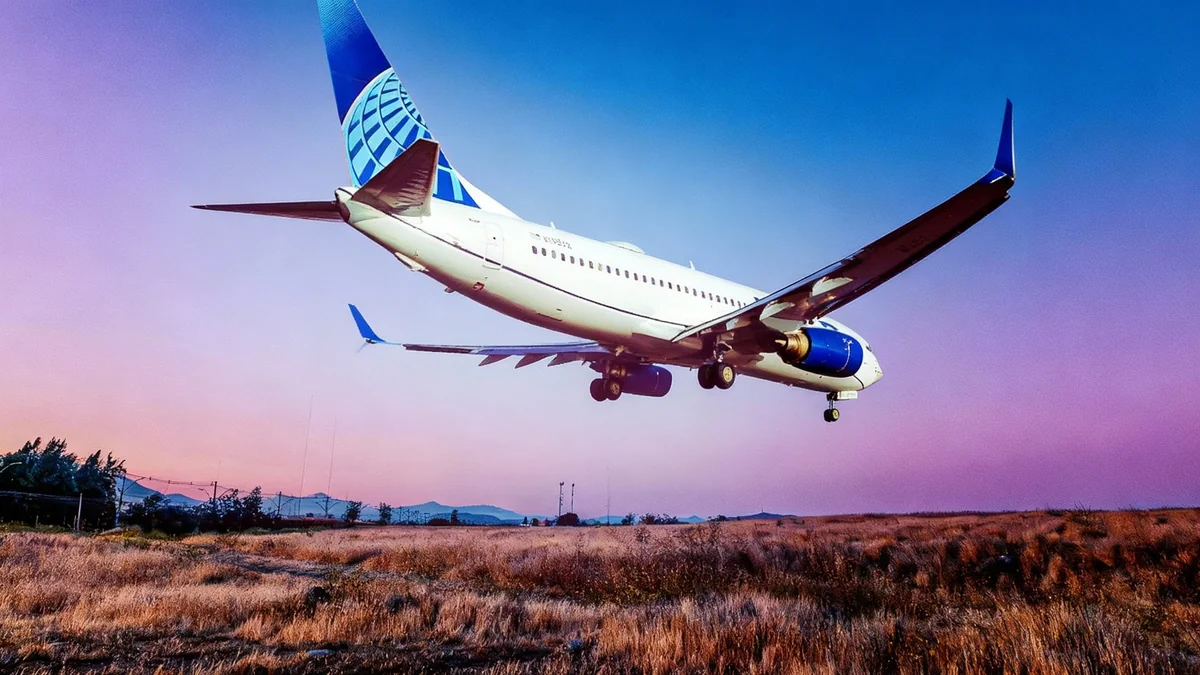
A United Airlines Boeing 737-700 experienced a cabin pressurization failure shortly after takeoff on January 30, 2026. The flight, UA1332, was en route from San Antonio International Airport (SAT) to Chicago O’Hare International Airport (ORD) when the incident occurred. Passengers reported severe pain and temporary hearing loss before the aircraft diverted and made an emergency landing at George Bush Intercontinental Airport (IAH) in Houston.
Key Takeaways
- United Airlines Flight UA1332 experienced cabin depressurization.
- A passenger reported intense pain and temporary hearing loss.
- The aircraft diverted safely to Houston after takeoff.
- Pilots must respond quickly to depressurization by donning oxygen masks and initiating a rapid descent.
Emergency Landing After Takeoff
The incident unfolded approximately 30 seconds after the Boeing 737-700, registered N27724, departed San Antonio. Passengers onboard described a sudden and intense shift in cabin conditions. One passenger shared their experience online, detailing "brain-searing pain" and the sensation of their eardrums nearing rupture. This individual also claimed temporary hearing loss, which had not fully recovered days later.
Flight attendants were alerted to the issue after passengers signaled distress. An announcement was then made confirming the loss of cabin pressure. The flight crew promptly initiated a diversion to Houston, where the aircraft landed safely.
Incident Details
- Date: January 30, 2026
- Airline: United Airlines
- Aircraft: Boeing 737-700 (N27724)
- Flight Number: UA1332
- Route: San Antonio (SAT) to Chicago (ORD)
- Diversion Airport: Houston (IAH)
The Critical Role of Cabin Pressurization
Aircraft cabins require pressurization to ensure passenger and crew safety at high altitudes. As planes climb, the atmospheric pressure outside decreases significantly. Without a pressurized cabin, the human body cannot take in enough oxygen, leading to a condition known as hypoxic hypoxia.
Hypoxia can cause impaired judgment, memory loss, and muscle impairment. If left untreated, it can result in loss of consciousness and, ultimately, death. Modern airliners maintain cabin pressure equivalent to altitudes between 6,000 and 8,000 feet, even when cruising at 35,000 feet. This level allows passengers to breathe normally while also preserving the structural integrity of the aircraft.
"Only after leaning into the aisle and sending a message to the flight attendant with my hands frantically pointing to my head … did the attendant make a message saying we don't have cabin pressure."
— Passenger on Flight UA1332
Pilot Response to Depressurization
Pilots undergo extensive training to handle cabin depressurization emergencies. The first and most critical action for pilots is to immediately don their oxygen masks. This ensures they maintain their Time of Useful Consciousness (TUC), which is only a few seconds at higher altitudes. Delaying this step can lead to impaired judgment, jeopardizing the safety of the aircraft.
Following oxygen mask deployment, pilots initiate a rapid descent to an acceptable altitude, typically 10,000 feet or below. To achieve this quickly, engines are idled, and the aircraft's speed is increased to convert potential energy into kinetic energy. Speed brakes are often deployed, and in some situations, even the landing gear can be lowered to increase drag and accelerate the descent rate.
How Cabin Pressurization Works
Aircraft engines supply air to the air conditioning system, which then pumps it into the cabin in a controlled manner. This creates an artificial environment where the air pressure is higher than the outside atmosphere. This system is crucial for human survival at cruising altitudes.
Passenger Experience and Compensation
After the emergency landing in Houston, United Airlines arranged for passengers to continue their journey to Chicago on a different aircraft. The airline later offered 2,500 MileagePlus points as compensation to the affected passenger who reported health issues. The passenger described this offer as inadequate, citing the severe discomfort and ongoing recovery from the incident.
Cabin depressurization incidents, while rare, highlight the importance of aircraft maintenance and crew training. Airlines continuously monitor and maintain their fleets to prevent such events, which can cause significant distress and potential health risks for those onboard.
Long-Term Effects and Recovery
The passenger's account underscores the potential severity of depressurization events. Even though the aircraft landed safely, the immediate impact on passengers can be profound. Temporary hearing loss and severe pain indicate the body's struggle to adapt to rapid pressure changes. Recovery can take time, even after the emergency is resolved.
- Immediate Pilot Action: Don oxygen masks.
- Emergency Maneuver: Rapid descent to 10,000 feet or below.
- Aircraft Mechanisms: Engines idled, speed brakes deployed, landing gear lowered if necessary.
- Passenger Safety: Oxygen masks automatically deploy if cabin altitude exceeds approximately 14,000 feet.
This incident serves as a reminder of the complex systems that ensure aviation safety and the rigorous procedures crews follow during emergencies. United Airlines has been asked for comment regarding the incident and the passenger's experience.