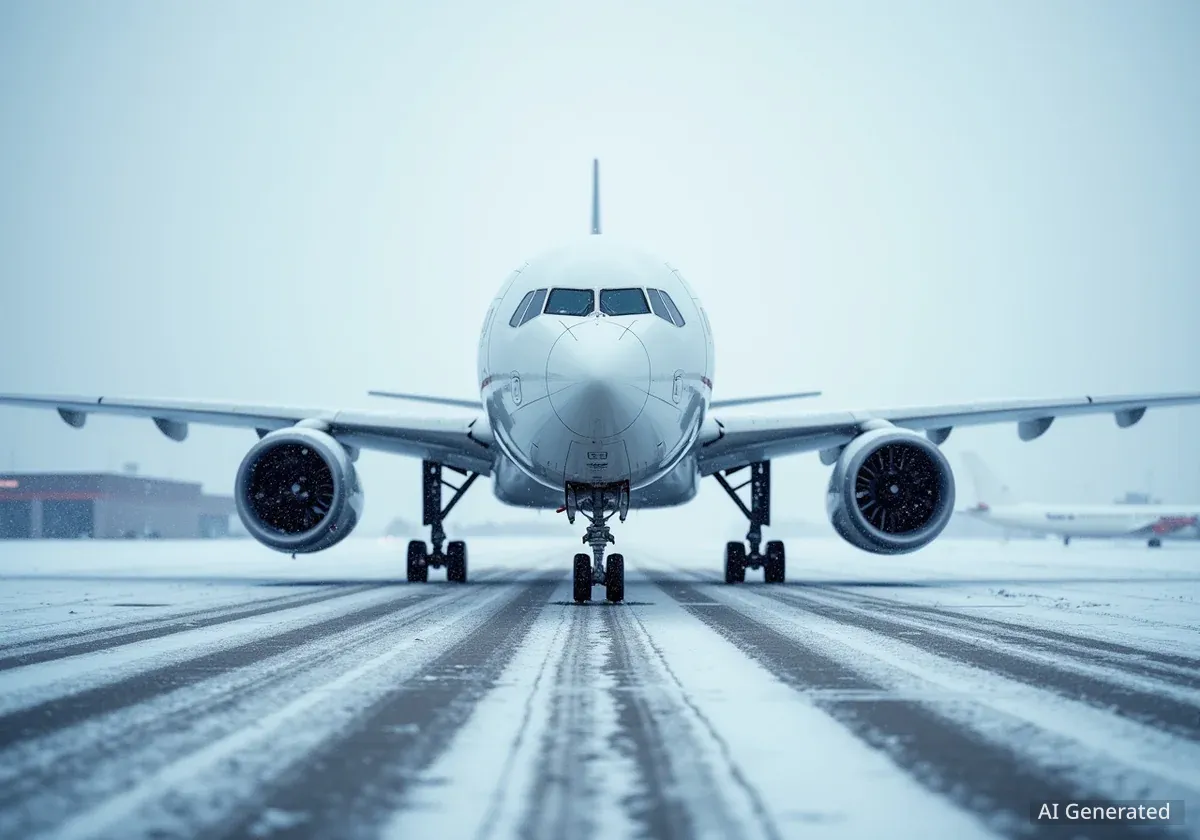
An American Airlines flight carrying approximately 90 passengers veered off a taxiway at Frederick Douglass Greater Rochester International Airport on Thursday, January 15. The incident occurred amidst snowy and freezing conditions after the aircraft had undergone de-icing procedures. No injuries were reported among those on board flight 3057, which was bound for Charlotte.
Key Takeaways
- American Airlines flight 3057 partially left the taxiway at Rochester Airport.
- The incident happened on January 15 in snowy and freezing conditions.
- Around 90 passengers were on board; no injuries were reported.
- Passengers were later rebooked and provided with hotel accommodations.
Incident Details at Rochester Airport
The Boeing 737-800 aircraft was preparing for departure when it moved off the paved surface of the taxiway. This happened after the plane had completed its de-icing process. Airport officials and American Airlines confirmed the sequence of events.
The conditions at Frederick Douglass Greater Rochester International Airport were challenging. Snow and freezing temperatures were present at the time of the incident. These weather factors are under investigation as a potential contributing cause.
Fact Box
- Date: Thursday, January 15
- Flight Number: American Airlines 3057
- Aircraft Type: Boeing 737-800
- Departure Airport: Frederick Douglass Greater Rochester International Airport (ROC)
- Destination: Charlotte, North Carolina
- Passengers On Board: Approximately 90
- Injuries Reported: None
Passenger Safety and Response
Immediately following the incident, airfield operations personnel and airport firefighters responded to the scene. Their quick actions focused on ensuring the safety of all passengers and crew. American Airlines stated that safety is their top priority.
Passengers were safely transported back to the terminal via buses. Once at the terminal, airline team members assisted them with new travel arrangements. Many passengers were provided with hotel rooms for the night. They were rebooked on flights departing the following morning.
“After completing deicing due to the snow and freezing temperatures, American Airlines flight 3057 partially left the paved surface of the taxiway at Rochester, New York (ROC),” American Airlines stated in a public announcement.
Communication and Passenger Experience
While no injuries occurred, some passengers expressed frustration regarding a lack of immediate communication about the situation. This feedback highlights the importance of clear and timely updates during unexpected travel events. The airline apologized to customers for their experience.
The incident caused delays for other flights at the airport. Theresa Crawl, a passenger on a different incoming flight, noted experiencing delays during landing. She wondered why it took longer than usual to reach the terminal after her plane touched down.
Understanding De-Icing
De-icing is a crucial procedure for aircraft operating in cold weather. It involves removing snow, frost, and ice from the aircraft's wings, fuselage, and control surfaces. This process ensures that the plane's aerodynamic properties are not compromised, which is vital for safe takeoff and flight. Specialized fluids are sprayed onto the aircraft to melt existing ice and prevent new ice formation for a limited time.
Ongoing Investigation and Airport Operations
The cause of the incident remains under investigation. Authorities will analyze various factors, including weather conditions, de-icing procedures, and pilot actions. The Federal Aviation Administration (FAA) typically participates in such investigations to determine the root cause and prevent future occurrences.
Airport officials have not yet released information on how long the incident will impact overall airport operations. They also have not specified when the aircraft will be moved from its current position. Such recovery operations can be complex and time-consuming, especially in adverse weather conditions.
The focus remains on understanding what led to the plane veering off the taxiway. This incident underscores the challenges faced by airlines and airports when operating in severe winter weather. It also highlights the robust safety protocols in place to protect passengers even when unexpected events occur.
Impact on Travel Plans
For the 90 passengers on American Airlines flight 3057, the incident meant an unexpected overnight stay and a delay in reaching their destination. While inconvenient, the primary concern was their safety, which was maintained throughout the event. The airline's swift action to provide accommodations and rebook flights aimed to minimize further disruption.
- Passengers received hotel rooms.
- Rebooked on flights for the next morning.
- Airline apologized for the inconvenience.
This event serves as a reminder of the intricate logistics and safety measures involved in air travel, especially when confronting challenging environmental conditions. Investigations will provide more clarity in the coming weeks.