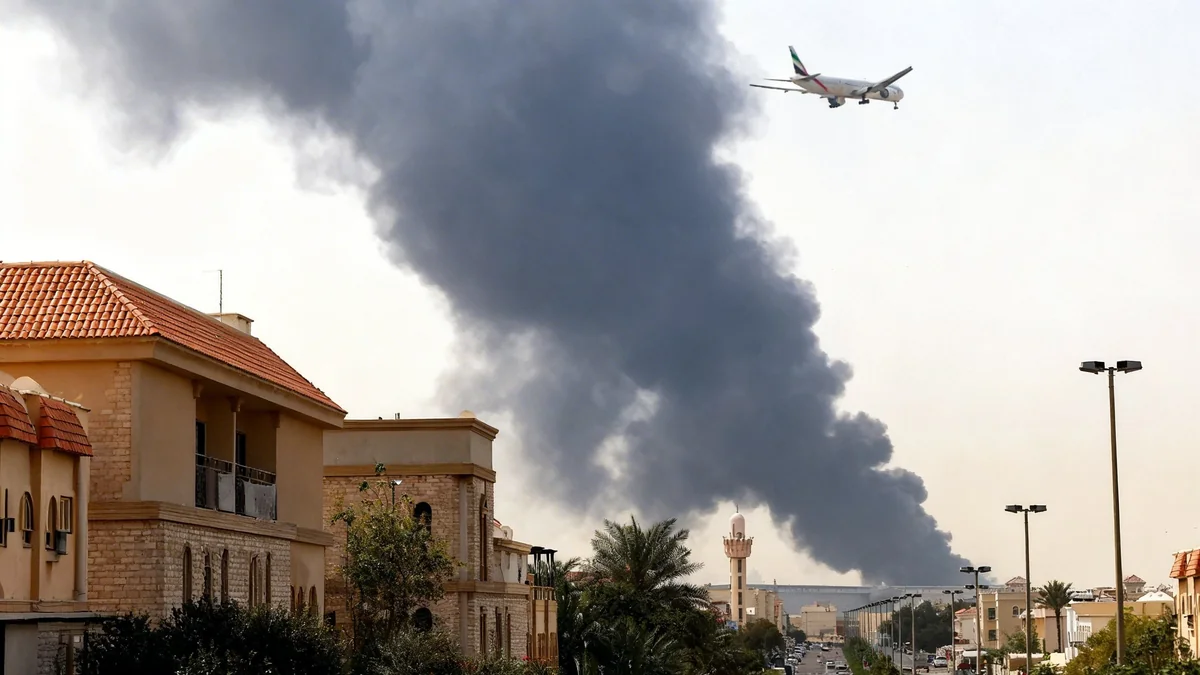
A strong chemical odor originating from a critical air traffic control facility in Virginia triggered a widespread ground stop at three major Washington, D.C. area airports on Friday evening. The incident led to significant flight delays that continued for hours, affecting thousands of travelers across the region.
The Federal Aviation Administration (FAA) confirmed the disruption stemmed from an issue at the Potomac Terminal Radar Approach Control (TRACON) facility in Warrenton. The ground stops impacted Reagan National (DCA), Dulles International (IAD), and Baltimore-Washington International (BWI) airports, causing a ripple effect on air travel along the East Coast.
Key Takeaways
- A ground stop was issued for Reagan National, Dulles, and BWI airports on Friday evening.
- The cause was a chemical smell at the Potomac TRACON facility in Warrenton, Virginia.
- The source of the odor was identified as a faulty building monitor being serviced by a contractor.
- While the ground stop was lifted, delays of up to three hours or more persisted overnight.
- Over 30 FAA employees were evaluated by emergency crews, but none required hospitalization.
Widespread Disruption Across Capital Region
Travelers across the Washington metropolitan area faced unexpected chaos on Friday as flights were abruptly halted. The FAA issued a ground stop for the region's three primary airports shortly before evening, a peak time for air travel. The order meant that flights destined for the affected airports were held at their departure points across the country.
Initially, the FAA projected the stop to last until 7 p.m. While the order was officially lifted around 7:45 p.m., the disruption had already created a significant backlog. At Dulles International Airport, departure delays were reported to be 90 minutes and increasing even before the stop was lifted. Following the resumption of operations, passengers at all three airports were warned of residual delays lasting three hours or more into Saturday morning.
What is a TRACON Facility?
The Potomac TRACON is not an airport control tower. It is a specialized FAA facility that manages airspace for aircraft approaching and departing airports in a specific region. Located roughly 50 miles outside Washington, D.C., it plays a crucial role in sequencing air traffic for a complex and busy corridor, making any disruption to its operations highly impactful.
Investigation Points to Faulty Equipment
The source of the alarming chemical smell was traced to an equipment issue within the Potomac TRACON building. Emergency crews were dispatched to the facility to investigate the odor that had prompted the precautionary shutdown of air traffic control operations.
According to officials, more than 25 units from the Fauquier County Fire Rescue System and Prince William County's hazmat team responded to the scene. Their investigation determined that the smell was coming from a faulty building monitor that was being worked on by an outside contractor at the time. The prompt identification of the source allowed for a focused response and assessment of the situation.
The incident's impact extended beyond the immediate D.C. area. Richmond International Airport, also serviced by the Potomac TRACON, experienced a ground stop. Philadelphia International Airport also reported ground delays due to what the FAA described as "equipment outages."
Focus on Worker Safety
Amid the operational turmoil, the immediate concern at the Warrenton facility was the well-being of the FAA employees. Air traffic control is a high-stress job that requires immense focus, and the introduction of a potential environmental hazard prompted a swift safety response.
Over 30 FAA workers were evaluated on-site by emergency medical personnel as a precautionary measure. Fortunately, authorities confirmed that none of the employees required transport to a hospital. This allowed the facility to begin the process of returning to normal operations once the building was deemed safe.
Lingering Effects on Air Travel
While the ground stop was relatively short-lived, the nature of airline scheduling means that such disruptions have long-lasting effects. The halt created a cascade of delays that rippled through the national air system. Airlines had to scramble to get crews and aircraft back on schedule, a process that takes many hours to resolve.
Travelers were advised to check directly with their airlines for the most up-to-date information on their flight status. The incident serves as a reminder of the complex and interconnected nature of the nation's aviation system, where a localized equipment problem at a single facility can disrupt travel for thousands of people across multiple states.