
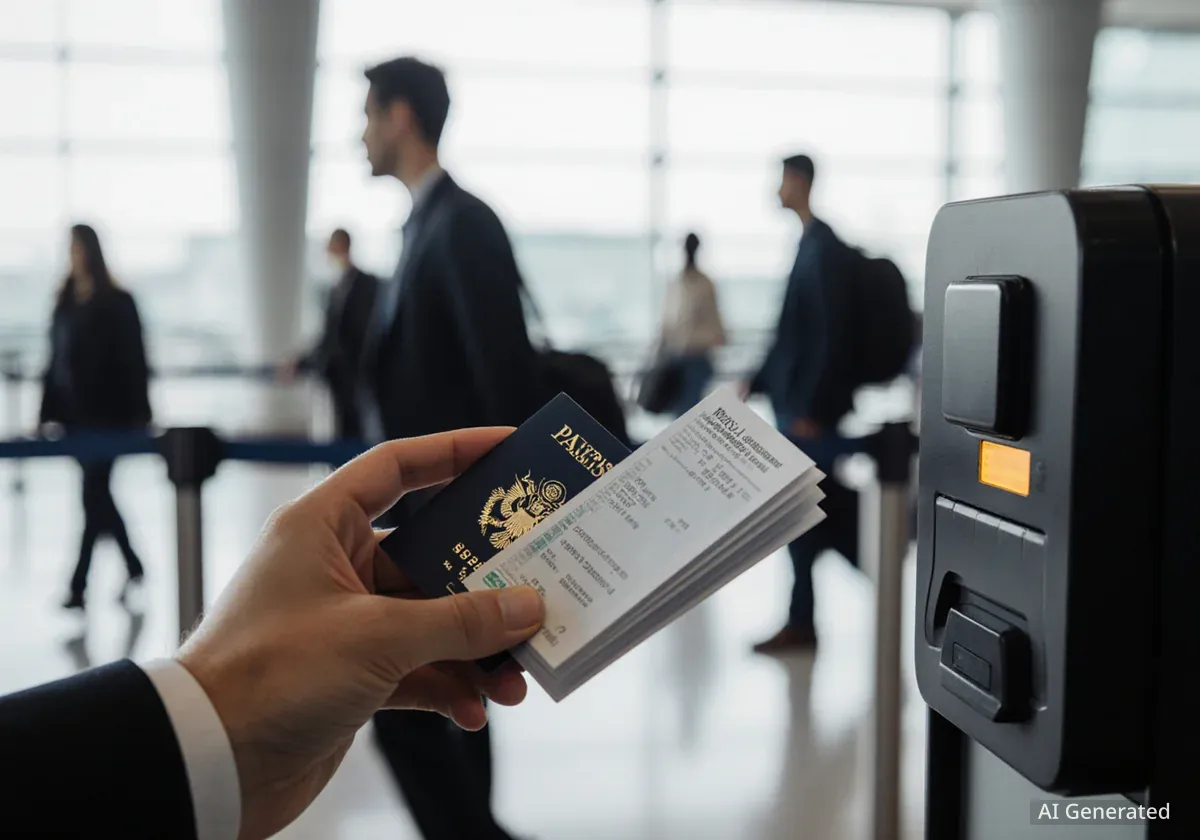
Travelers flying domestically will face a new fee starting February 1 if they do not present a Real ID or another approved form of identification at airport security checkpoints. The Transportation Security Administration (TSA) will begin charging $45 for passengers aged 18 and older who need to use an alternative identity verification system to fly.
This charge introduces a direct financial penalty for non-compliance with the Real ID requirement, which was enacted by Congress in 2005. The fee aims to cover the administrative costs associated with verifying identities through the TSA ConfirmID system.
Key Takeaways
- A $45 fee applies to travelers without a Real ID or other acceptable ID for domestic flights.
- The fee starts February 1, 2025, for those using the TSA ConfirmID system.
- TSA ConfirmID verification is valid for a 10-day travel period; longer trips may incur multiple fees.
- Travelers can pay the fee online in advance to avoid airport delays.
- The Real ID Act, passed in 2005, sets enhanced security standards for state-issued IDs.
The Real ID Requirement and New Fee
The Real ID is a state-issued driver's license or identification card marked with a star, indicating it meets federal security standards. It is designed to prevent fraudulent identification. While the federal government requires a Real ID for domestic flights and entry into certain federal facilities by May 7, 2025, the fee for non-compliance begins much sooner.
John Breyault, vice president of public policy at the National Consumers League, described the fee as significant.
“That’s not nothing,” Breyault said. “If you ever needed a reason to get a Real ID-compliant ID, now’s the time.”
Fact: Real ID Compliance
Approximately 6% of travelers currently do not possess a Real ID or another acceptable form of identification, according to the TSA's December announcement.
How the TSA ConfirmID System Works
Travelers without an acceptable ID will be directed to use the TSA ConfirmID system. This system allows for identity verification, but it comes at a cost of $45 per use. The verification is valid for a 10-day travel period. This means a traveler on a round trip lasting more than 10 days would need to pay the fee twice, totaling $90.
“If you go to Honolulu for two weeks, you may have to pay on the way back, too,” Breyault noted, highlighting the potential for increased costs for longer journeys.
Impact on Travelers and Families
The new fee could disproportionately affect certain groups of travelers. Low- to moderate-income individuals and families with older children may face a heavier burden. For instance, a family of four with two children aged 18 or older, taking a trip longer than 10 days, could pay over $200 in fees.
The TSA does not require identification for children under 18 traveling domestically, even if they are alone. However, individual airlines may have their own ID requirements, so travelers should verify with their carrier.
Background: The Real ID Act
Congress passed the Real ID Act in 2005. This legislation established minimum security standards for state-issued driver’s licenses and ID cards. The act was a direct response to the security concerns that followed the September 11, 2001, terrorist attacks, aiming to enhance the integrity and security of state-issued identification documents.
Preparing for Travel
To avoid delays and additional costs, travelers are strongly advised to obtain a Real ID-compliant identification card well in advance of any planned trips. Alternatively, other acceptable forms of identification include a U.S. passport or passport card.
Sally French, a travel expert at NerdWallet, called the fee an enforcement mechanism.
“It’s a real penalty for travelers who arrive unprepared,” French stated.
The Fee Collection Process
Travelers can complete the ConfirmID process and pay the $45 fee online before arriving at the airport by visiting tsa.gov/ConfirmID. They then need to show their pay.gov receipt, either printed or as a screenshot, along with any government-issued ID to a TSA officer.
While paying on-site is an option, the TSA recommends online payment to prevent potential delays and missed flights. The agency estimates the process can take up to 30 minutes at the airport for those unprepared.
Financial Projections
The TSA projects that the ConfirmID program will be used approximately 10.6 million times over the next five years. This is expected to generate about $476 million in revenue, which will offset the administrative costs of the program.
Why the Fee Changed
Initially, a November report from the TSA estimated an $18 fee for ConfirmID. However, the final fee was set at $45, significantly higher than the initial projection. A TSA spokesperson did not specify the exact reasons for this change but confirmed that the fee structure would be reevaluated every two years to account for evolving conditions and compliance rates.
Adam Stahl, a senior official performing the duties of deputy TSA administrator, explained the rationale in a recent press release. He stated that the fee would ensure “non-compliant travelers, not taxpayers, cover the cost of processing travelers without acceptable IDs.”
Recommendations for Travelers
- Check Your ID: Verify if your current driver's license or state ID is Real ID-compliant. Look for a star symbol.
- Apply Early: If you need a Real ID, apply at your local Department of Motor Vehicles (DMV) well before your travel date. Costs vary by state; for example, a Real ID in New Jersey costs $35.
- Consider Alternatives: A U.S. passport or passport card is also an acceptable form of identification for domestic air travel.
- Pay Online: If you must use ConfirmID, pay the fee online at tsa.gov/ConfirmID before heading to the airport to save time and reduce stress.
Planning ahead is crucial to avoid unexpected fees and potential travel disruptions. The new fee serves as a strong reminder for all domestic air travelers to ensure they have the correct identification.