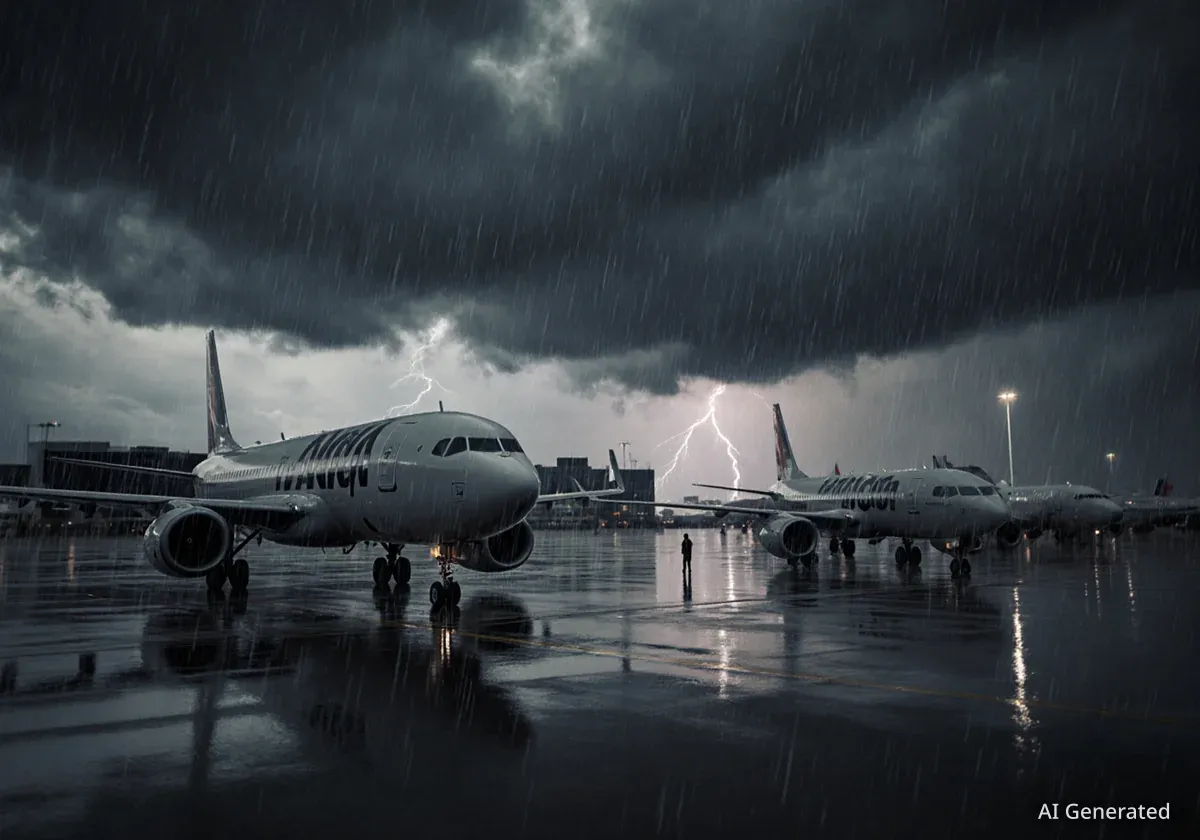
Hartsfield-Jackson Atlanta International Airport experienced significant disruptions Friday night and into Saturday morning due to severe thunderstorms. Multiple aircraft, primarily operated by Delta Air Lines, were stranded on the tarmac for several hours, affecting passenger travel and airline operations.
Key Takeaways
- Severe thunderstorms and hail struck Atlanta Airport Friday evening.
- Over 50 aircraft required inspections, delaying ground operations.
- Continuous lightning prevented ground crews from working safely.
- Air Traffic Control ground delays impacted flight crew duty times.
- Delta Air Lines is working to reset its operations after the disruption.
Thunderstorms Cause Major Ground Delays
The severe weather, which included significant hail, began late Friday. These conditions prompted immediate safety protocols at the Atlanta hub. Ground crews were unable to perform their duties due to continuous lightning in the area. This directly impacted the movement of aircraft.
More than 50 aircraft required inspections following the hailstorm. These inspections are a critical safety measure to ensure no damage occurred during the severe weather event. The necessary checks contributed to the prolonged delays.
Fact Check
- Over 50 aircraft needed inspections after the hailstorm.
- Continuous lightning was a primary factor preventing ground operations.
Impact on Delta Air Lines Operations
Delta Air Lines, which operates a major hub at Hartsfield-Jackson, bore the brunt of the weather's impact. Many of the affected flights were Delta-operated or by its partners. The airline confirmed that its teams are working diligently to normalize operations.
The airline acknowledged the frustration experienced by passengers. Flights were held on the tarmac, waiting for available arrival gates. This situation created extended waits for travelers.
"We apologize to our customers, as we know that a delay on the tarmac waiting for an arrival gate is frustrating. Delta people worked through severe weather challenges in ATL that drove gating constraints overnight. The safety of our customers and crew is our highest priority."
Crew Duty Time Exhaustion
Beyond the physical weather conditions, an Air Traffic Control ground delay program further complicated matters. This program, combined with the extensive delays, led to the exhaustion of flight crews' available duty time. This issue had a ripple effect, impacting flights scheduled for early Saturday morning.
Airline regulations strictly govern the maximum hours flight crews can work. Once these limits are reached, crews must rest, leading to further delays or cancellations. This safety measure is crucial but can exacerbate disruptions during unforeseen events.
Understanding Ground Delays
A ground delay program is implemented by Air Traffic Control when airport capacity is reduced, often due to weather or runway issues. It holds flights at their departure airports to prevent congestion at the destination. While necessary for safety, it can lead to significant cumulative delays across the air travel network.
Passenger Experience and Recovery Efforts
Passengers reported being stuck on planes for several hours. This experience is particularly challenging after a flight, when travelers are eager to disembark. The airline's apology reflects the understanding of passenger discomfort during these events.
Delta teams are focusing on resetting their entire operation. This process involves reassigning aircraft, rescheduling crews, and rebooking passengers. The goal is to minimize further disruptions and get travelers to their destinations as quickly and safely as possible.
Challenges in Airport Recovery
Recovering from a major weather event at a large hub like Atlanta involves complex logistics. It requires coordination between airlines, airport authorities, and air traffic control. The sheer volume of flights and passengers passing through Hartsfield-Jackson makes any disruption significant.
- Aircraft repositioning: Moving planes to clear gates.
- Crew scheduling: Ensuring pilots and flight attendants are within legal duty limits.
- Baggage handling: Reuniting passengers with their luggage.
- Passenger rebooking: Assisting travelers with missed connections.
The situation highlights the vulnerability of air travel to severe weather. Despite advanced forecasting, sudden and intense storms can quickly overwhelm even the most prepared airport systems. Safety remains the top priority during such incidents.