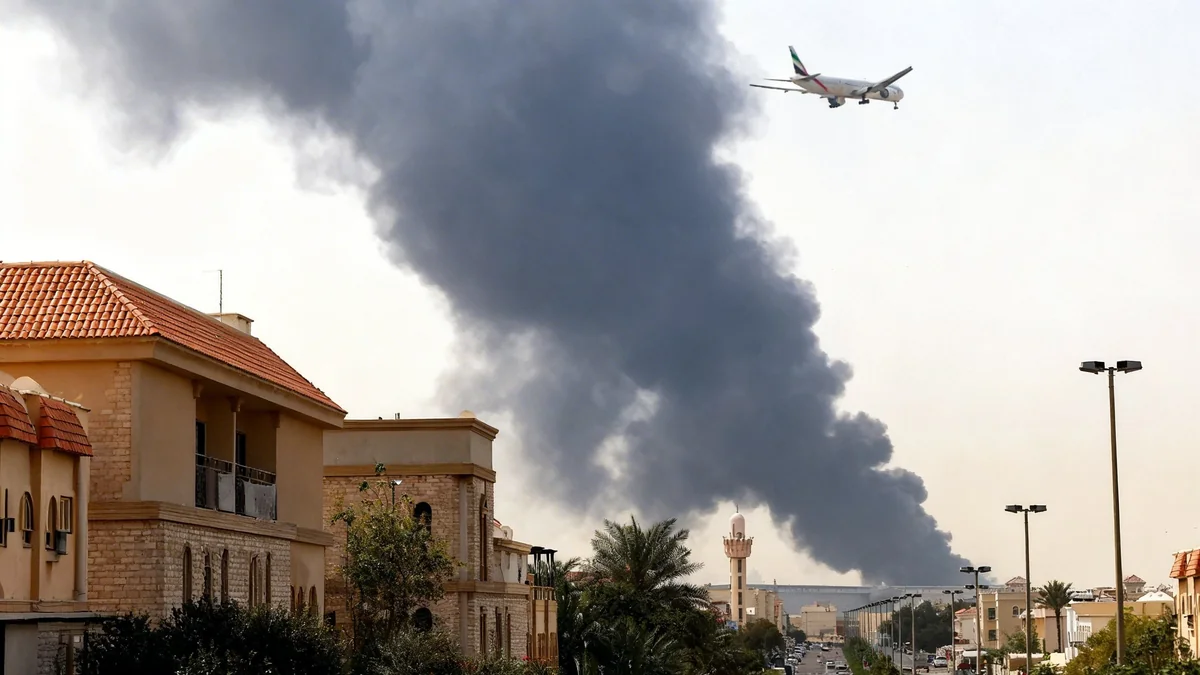
A United Airlines flight bound for Tokyo made an emergency return to Washington Dulles International Airport on Saturday afternoon. The Federal Aviation Administration (FAA) confirmed that the aircraft experienced an engine failure shortly after takeoff. All passengers and crew members are reported safe, with no injuries.
United Airlines Flight 803 departed Dulles around midday. Reports indicated an issue with one of the aircraft's engines during its initial climb. The flight crew immediately initiated emergency procedures.
Key Takeaways
- United Airlines Flight 803 returned to Dulles due to engine failure.
- The incident occurred shortly after takeoff on Saturday.
- All passengers and crew safely landed with no injuries reported.
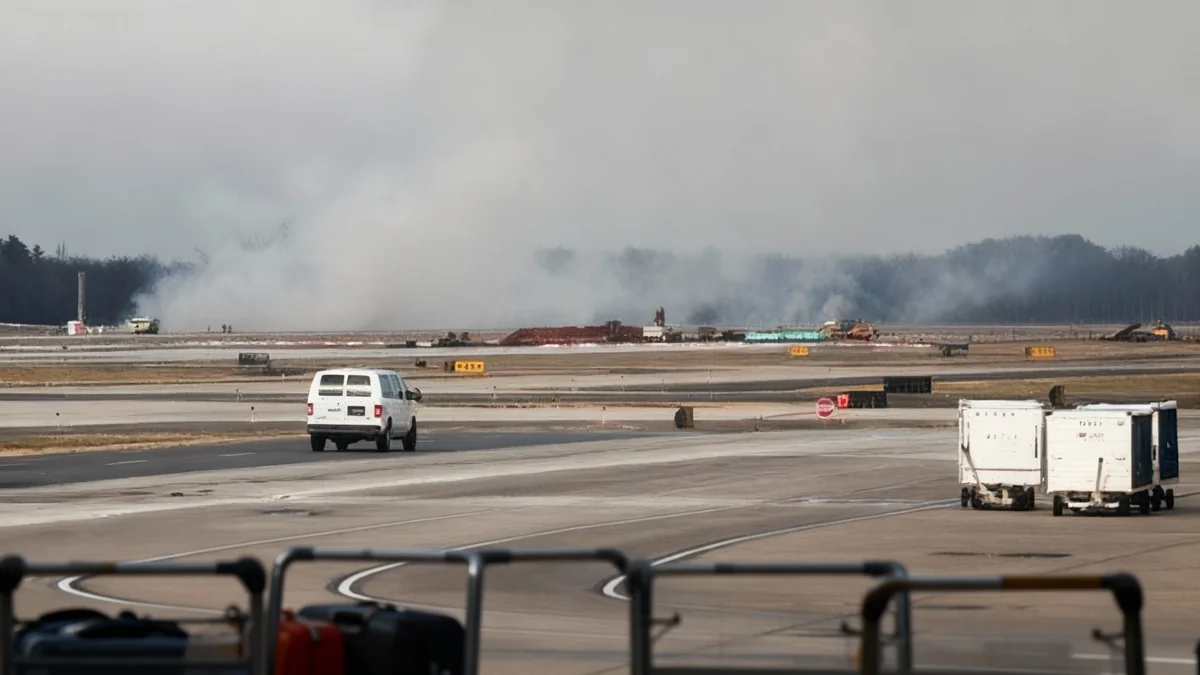
- Emergency crews responded to smoke near the runway.
Flight Path and Safe Landing
The Boeing 777 aircraft circled for a period before making its approach back to Dulles. Air traffic control guided the flight for a safe landing. The landing occurred at approximately 1:20 p.m. local time.
Emergency services, including fire and rescue vehicles, were on standby at the airport. They responded to reports of smoke observed near the runway where the aircraft landed. Photos from the scene showed these emergency vehicles actively engaged.
"The flight crew's quick actions ensured a safe return to the airport," an FAA spokesperson stated. "Our priority is always the safety of passengers and crew."
Incident Details
- Airline: United Airlines
- Flight Number: UA803
- Destination: Tokyo
- Departure Airport: Washington Dulles International Airport (IAD)
- Incident: Engine failure during takeoff
- Outcome: Safe return, no injuries
Emergency Response and Investigation
Upon landing, the aircraft was met by a full complement of emergency personnel. This is standard procedure for any in-flight emergency. These teams ensured the safety of everyone on board and assessed the aircraft.
The FAA will investigate the incident. This investigation will determine the exact cause of the engine failure. Such probes involve examining flight recorders, maintenance records, and interviews with the flight crew.
Aviation Safety Protocols
Modern aircraft are designed with multiple redundancies to handle critical failures like engine issues. Pilots undergo extensive training for emergency procedures, including single-engine operation and emergency landings. Air traffic controllers also play a crucial role in coordinating safe returns to airports during such events.
Passenger Experience and Next Steps
Passengers described a tense but orderly situation on board. Many praised the professionalism of the flight crew. United Airlines is expected to arrange alternative travel for the affected passengers to their destination.
Disruptions like these, while rare, highlight the rigorous safety standards within the aviation industry. Airlines and regulatory bodies work continuously to maintain these high standards.
Impact on Airport Operations
The incident caused minimal disruption to overall airport operations at Dulles. While the runway used for the emergency landing might have seen temporary closures for inspection, the airport continued to function. Other flights were able to depart and arrive on schedule.
- Safety First: Aviation prioritizes safety above all else.
- Crew Training: Pilots train extensively for emergencies.
- Regulatory Oversight: Agencies like the FAA ensure strict compliance.
Further updates will be provided as the investigation progresses. The FAA's findings will be crucial in understanding the precise mechanical issues involved in this event.