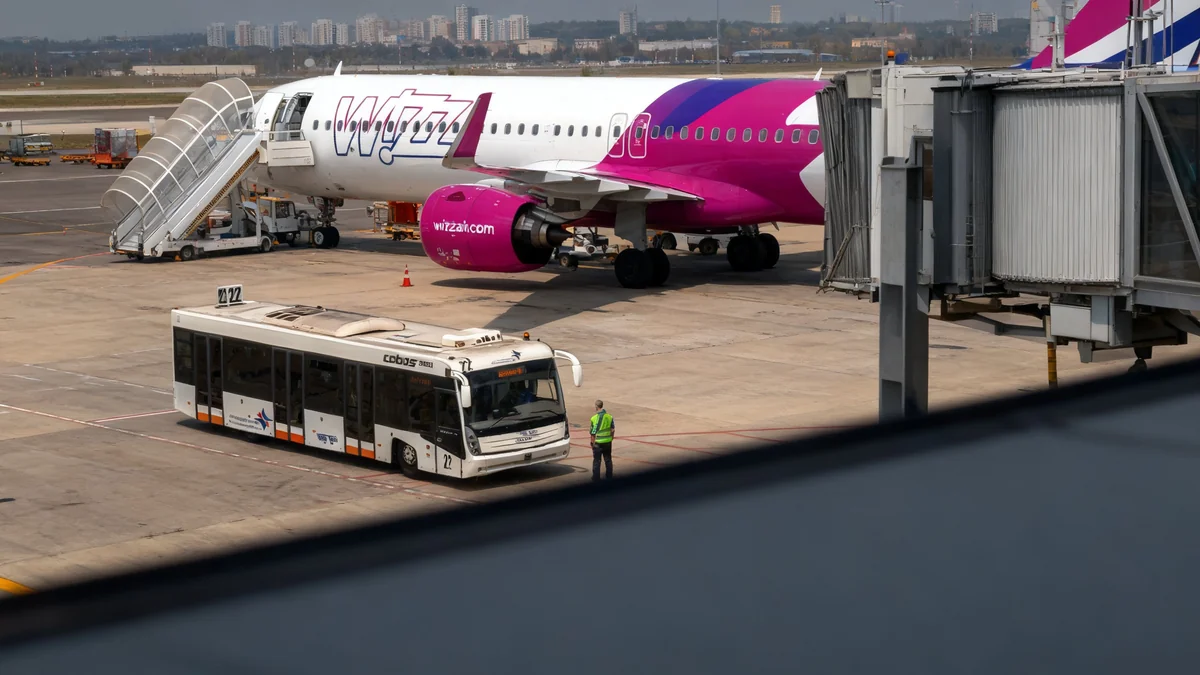
A Wizz Air flight from London Luton to Tel Aviv was escorted by Israeli Air Force fighter jets on Sunday, February 8, 2026. The incident occurred after a passenger's personal Wi-Fi hotspot name was interpreted as a security threat, leading to a rapid military response.
Key Takeaways
- A Wizz Air flight triggered a security alert over a passenger's Wi-Fi hotspot name.
- Israeli Air Force fighter jets escorted the plane to Ben Gurion Airport.
- Security forces thoroughly screened all passengers and luggage upon arrival.
- The incident was a false alarm, stemming from a prank Wi-Fi name set by a child.
- Authorities emphasize strict aviation security protocols, especially in sensitive airspace.
Mid-Air Alarm Triggers Fighter Jet Response
As Wizz Air flight W95301 approached Israeli airspace, an onboard alert quickly escalated. A passenger attempting to use Wi-Fi noticed a hotspot name that, in Hebrew and Arabic, reportedly translated to "terrorist" and included threatening messages. This discovery was immediately reported, prompting a swift reaction from ground control and aviation security personnel.
The Israeli Air Force (IAF) scrambled quick-reaction alert (QRA) jets. These fighter aircraft intercepted and shadowed the Airbus A321neo as it held outside Israeli airspace over the Mediterranean Sea. Such missions are standard procedure to visually confirm the condition of civilian aircraft and provide immediate response capabilities in case of an imminent danger.
Incident Details
- Date: Sunday, February 8, 2026
- Route: London Luton Airport (LTN) to Tel Aviv (TLV)
- Airline: Wizz Air
- Aircraft: Airbus A321neo
- Trigger: Passenger Wi-Fi hotspot named "terrorist" in Arabic and Hebrew.
Safe Landing and Extensive Security Checks
After several minutes of monitoring and direct communication between the Wizz Air flight crew and air traffic control, authorities determined the suspected threat was manageable. The fighter jet escort continued until the aircraft landed safely at Ben Gurion Airport.
Upon arrival, the plane was directed to a remote stand, away from the main terminal gates. Israeli Police and specialized security units, including K-9 explosive detection teams, were immediately deployed to the scene. All passengers disembarked and underwent individual screening. Additionally, all bags were thoroughly examined for any signs of hazardous materials.
"Due to suspicion of suspicious behavior on the plane, security forces acted according to standard procedures for such cases. The incident concluded. The plane landed, and it was found that there was no actual incident."
This statement from airport authorities confirmed that no actual threat was present. The telephone in question belonged to a couple whose son had configured the Wi-Fi hotspot name before the flight. Ultimately, authorities confirmed the absence of explosives or dangerous devices, and the alert was officially lifted.
Israel's Robust Aviation Security Framework
Israel maintains one of the world's most comprehensive aviation security frameworks. This system integrates civil aviation procedures with military readiness. The rapid decision to deploy fighter jets highlights the strict national standards designed to protect against various airborne threats. This is especially critical given the geopolitical tensions in the region.
Aviation Security Protocols
Modern aviation security systems are highly sensitive to perceived irregularities. Incidents involving miscommunication or misunderstandings are uncommon but do occur. The increasing use of mobile devices and digital networks on flights can sometimes trigger security protocols, ranging from false bomb threats to prank messages or incorrectly labeled digital networks. The primary goal for both airlines and authorities in every instance is to reduce risk before it can escalate.
Wider Implications for Travelers and Airlines
This incident serves as a significant reminder for travelers to be mindful of their electronic device settings and onboard conduct. This is not just for etiquette, but also due to serious security implications. While a prank might seem harmless, in an environment where threats are taken seriously by airlines and national defense systems, such actions can prompt unintended and costly reactions.
Consequences for violators can be severe. These may include fines, criminal charges, or even placement on a no-fly list. The episode underscores how sensitive modern aviation systems have become to perceived irregularities. Even something seemingly innocuous like a Wi-Fi hotspot name can trigger a multi-agency security response when placed within the context of air travel.
Collaboration is Key
Collaboration between air carriers and national aviation authorities remains critical. This is particularly true in international airspace and regions with elevated security concerns, such as the Middle East. The Wizz Air event, fortunately, did not result in any injuries, significant delays, or damage. However, it vividly demonstrated how stringent and interconnected global aviation security measures are. It also showed how quickly even a lighthearted act can trigger serious responses in the skies.
This digital joke ultimately became a real-world demonstration of the vigilance and readiness that define modern air travel security. Passengers are encouraged to consider the potential impact of their actions, however minor they may seem, within the highly regulated and security-conscious environment of commercial flights.