
China experienced a massive surge in domestic travel during its eight-day Golden Week holiday, with official data reporting over one billion trips. However, despite the high volume of movement, a pattern of cautious consumer spending has emerged, raising concerns for policymakers amid ongoing economic challenges.
While tourist hotspots across the country were crowded, anecdotal evidence and early data suggest that many travelers prioritized budget-friendly options, reflecting broader concerns about the economic outlook, particularly the persistent slowdown in the property sector.
Key Takeaways
- Over 1 billion domestic trips were recorded during China's Golden Week, indicating a strong desire for travel.
- Consumer spending did not match the high travel volumes, with many tourists adopting frugal habits.
- Economic factors, including a struggling property market and deflationary pressures, are contributing to consumer caution.
- Travelers are increasingly choosing low-cost or free attractions and finding ways to save on accommodation and other expenses.
A Nation on the Move
The Golden Week holiday, which combined the National Day and mid-autumn festival celebrations, saw a significant mobilization of China's population. According to state media and ministry announcements, the country recorded more than 100 million train journeys and an estimated 1 billion trips between different regions. This level of activity demonstrates a strong, pent-up demand for leisure and travel.
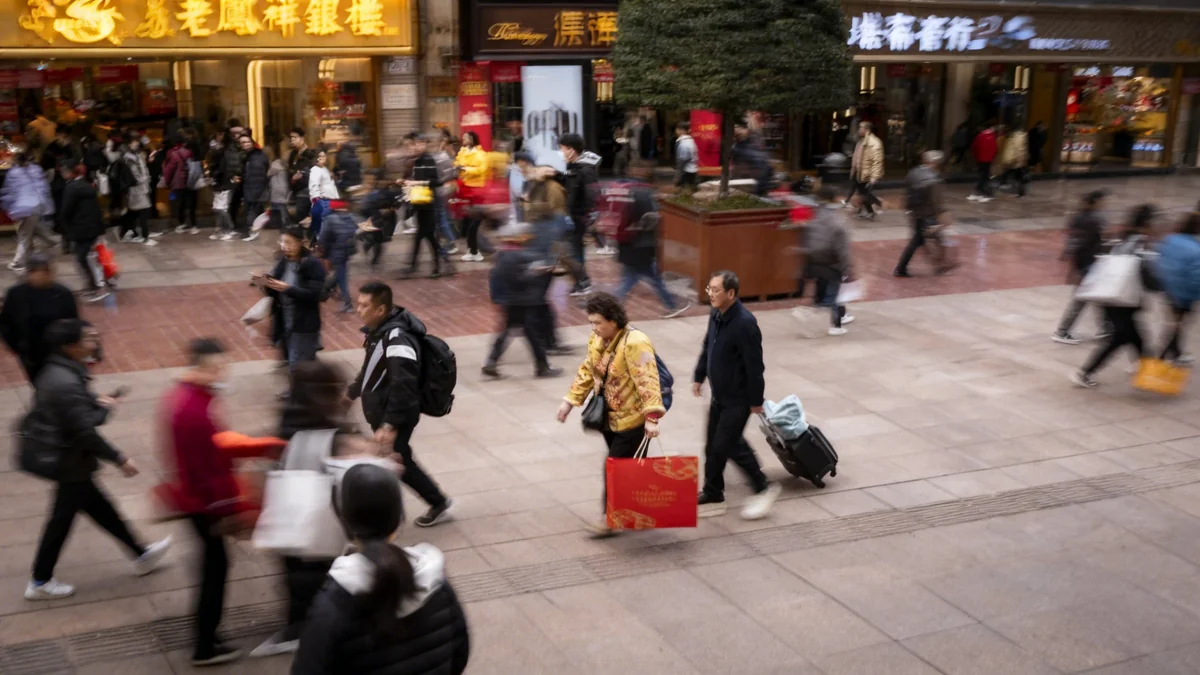
Major tourist destinations, from Shanghai Disneyland to historic sites in Beijing, experienced large crowds throughout the holiday period. The sheer volume of people traveling created an appearance of a robust economic recovery. However, the critical question for economic planners in Beijing is whether this high traffic translated into significant consumer expenditure.
Economic Headwinds
The Chinese government has been actively trying to stimulate domestic consumption. The economy faces several challenges, including deflationary pressures, ongoing trade tensions, and a severe slowdown in the real estate sector, which has historically been a major driver of wealth and consumer confidence.
Spending Habits Reveal Underlying Caution
Despite the bustling tourist scenes, reports from various locations indicated a trend of restrained spending. Many travelers, while eager to take a holiday, made conscious decisions to limit their expenses. This cautious behavior points to a growing pessimism about the long-term economic outlook.
"For consumption overall, the momentum or underlying impulse is not that strong," said Hui Shan, chief China economist at Goldman Sachs. "You see a lot of traffic, but you don’t see a ton of spending."
Budget Strategies in Popular Destinations
In Macau, the world's largest gambling hub which attracted nearly 800,000 visitors, many tourists found creative ways to save money. Chen Xinlong, a 39-year-old farmer from Fujian province, traveled to Macau with his wife but chose to stay in the neighboring mainland city of Zhuhai to take advantage of cheaper hotel rates. "It’s relatively expensive here," he noted.
Another visitor, Li Ao, a former wholesaler now working gig jobs as a delivery driver, slept in Macau's 24-hour casinos to avoid accommodation costs entirely. "You can only spend if you have earned money," he explained, highlighting the financial pressures faced by many ordinary citizens.
Early Spending Data
According to the commerce ministry, retail sales during the first four days of the holiday increased by 3.3% year-on-year. This figure is slightly lower than the 3.4% growth rate recorded in August, suggesting that the holiday travel boom did not significantly accelerate retail spending.
Shifting Consumer Preferences
Analysts have observed a shift in what tourists are looking for in a holiday experience. Kenneth Chow, an analyst at Oliver Wyman, pointed to the rising popularity of "zero cost" activities. These include visiting public parks or cultural landmarks where people can take photos without significant spending.
Shanghai's historic Wukang Mansion, located in the former French Concession, became a hotspot for this trend. Dozens of photographers gathered to offer on-the-spot professional photoshoots to tourists, capitalizing on the desire for social media content without the expense of paid attractions.
Even at major attractions like Shanghai Disneyland, the mood was not one of unrestrained spending. A ticket tout selling entry for slightly below the official Rmb799 ($112) price commented, "Nowadays, nobody has money."
"I think the difference [between] last year and this year is people are starting to become pessimistic," said Imke Wouters, a partner at Oliver Wyman. She noted that while travel sentiment is positive, consumers are "holding back their spending because of less positivity on the long-term outlook."
The Broader Economic Picture
The cautious consumer behavior during Golden Week is a symptom of wider economic issues confronting China. The prolonged slump in the property sector has eroded household wealth and confidence. New home prices have continued to fall this year despite government measures to support the market.
Furthermore, high youth unemployment, which reached 19% in August, adds to the uncertainty. These economic pressures are shaping how people approach discretionary spending, from daily purchases to holiday budgets.
While some pockets of high-end spending exist—a luxury apartment development in Shanghai with units costing up to Rmb85 million recently sold out on its first day—this does not reflect the reality for the majority of consumers. For many, small luxuries like new clothes or dining out are still possible, but major purchases are being postponed.
Looking ahead, economists expect this trend to continue. Ting Lu, chief China economist at Nomura, noted that consumption activities during the holiday underperformed the Labour Day holiday in May and projected that spending would "remain tepid for the remainder of the year." The ultimate recovery of consumer spending in China will likely depend on improvements in the property market and the overall economic climate.