
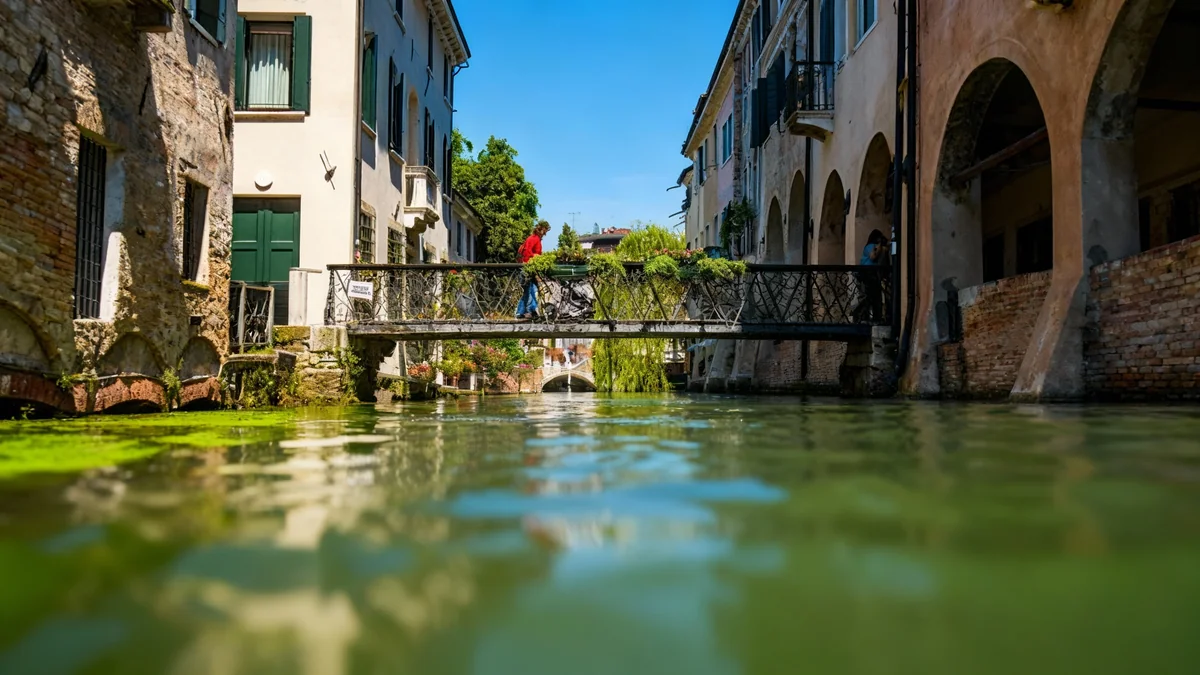
Treviso, a historic city in northern Italy, has earned the prestigious European Green Leaf Award for 2025. This recognition highlights the city's significant commitment to environmental sustainability. Situated just 30 minutes from Venice, Treviso is demonstrating how smaller urban centers can implement effective green policies and improve quality of life for residents.
Key Takeaways
- Treviso received the European Green Leaf Award 2025 for its environmental efforts.
- The city transformed a landfill into a solar park and improved its canal water quality.
- New bike lanes, tree planting, and wastewater infrastructure upgrades are key projects.
- Sustainable practices are also expanding into the Prosecco Hills.
- Treviso offers a model for sustainable urban development, contrasting with Venice's tourism challenges.
Treviso's Path to Green Recognition
Treviso, with a population close to 94,000, has actively pursued a sustainable mission for the past seven years. This dedication led to it becoming the first Italian city to win the European Green Leaf Award. This European Union initiative acknowledges the environmental achievements of smaller towns and cities with populations between 20,000 and 100,000 residents.
The city's efforts impressed the judges across several areas. One notable achievement was the conversion of an abandoned landfill into a functional solar energy park. This project showcases Treviso's innovative approach to land use and renewable energy generation. Furthermore, the city has undertaken a major overhaul of its canal system, which has significantly improved water quality.
Did You Know?
The European Green Leaf Award is given to cities that demonstrate a strong commitment to green growth, focusing on environmental outcomes and citizen involvement. It aims to inspire other cities to follow sustainable paths.
Biodiversity projects also played a crucial role in Treviso's recognition. These initiatives are designed to clean the city's air and enhance its natural ecosystems. The green drive extends beyond the urban core, reaching into the UNESCO-listed Prosecco Hills, where local wine producers are adopting sustainable farming methods to address climate change impacts.
Addressing Urban Challenges with Green Solutions
Treviso's sustainable development provides a clear contrast to its more famous neighbor, Venice. Venice continues to face significant challenges from overtourism, lagoon pollution, and strained infrastructure. While Venice's day-tripper fee generates revenue, it has not substantially reduced tourist numbers, which averaged around 13,000 per day in 2025, compared to 16,676 in 2024.
"We are very proud of our city," stated Alessandro Manera, Treviso's deputy mayor. "It was something of a challenge to show that an Italian city could win this award. The target of the award isn't to be the most lovely, green city in Europe. It's about showing who is improving."
Since initiating its sustainable agenda, Treviso has made substantial progress in various areas. The city has constructed kilometers of new bike lanes. This encourages residents to use bicycles instead of cars, thereby reducing vehicle emissions and improving air quality. Additionally, school programs have been introduced to educate children on recycling and environmental responsibility.
Improving Air and Water Quality
A major focus has been on planting new trees. Treviso has added 6,000 additional trees within its municipality. According to Deputy Mayor Manera, trees are essential for improving air quality, especially because Treviso is located within the Po Valley, a natural basin that can trap pollutants.
Another critical project involves modernizing Treviso's wastewater infrastructure. Initially, only 27% of the city's population was connected to the aging system. "We're already at 64% and by year 10 we would like to finish at 80%," Manera explained. "It's really a green revolution because all that organic wastewater was going in our rivers." This transformation is vital for a city often called "little Venice" due to its extensive waterways.
Treviso's Waterways
Treviso's 2,100-year-old center is crisscrossed by canals, with the Sile River being central to its origins and development. These waterways, along with massive walls, protected the city in the 16th Century. Today, water quality remains a key focus for the city's identity and sustainability.
Ilaria Barbon, a tour guide with Treviso Tours, emphasized the importance of water. "This is a city where the canals are the protagonists," she said. "Today the quality of the water is very good. We have a lot of fountains, some of them are famous, like Dei Tre Visi or the Delle Tette." The city promotes water bottle refills using an app called Free Aqua, and local administrations are providing aluminum bottles to schoolchildren, aiming for "plastic zero."
Sustainable Energy and Local Delights
The city's water resources have historically powered local industry. Ancient water mills, once used for grain in the 16th Century, are now being revived. One mill currently generates electricity for Treviso's central fish market. While a single mill cannot power the entire city, this initiative demonstrates local renewable energy efforts.
A larger, €25 million (£21.7 million) project is underway to convert all of the city's public lighting to LED technology. Manera estimates this project, expected to be completed within six to seven months, will result in a 70% energy saving for Treviso. This aligns with the broader goal of reducing the city's carbon footprint.
Exploring Treviso's Culinary Heritage
The commitment to sustainable living extends beyond infrastructure to local culture and tourism. Tour guide Annalisa De Martin encourages visitors to explore Treviso by bicycle, offering tours along canals, river paths, and the surrounding countryside. These tours often incorporate the city's rich food scene.
According to legend, Treviso is the birthplace of tiramisù. This coffee-soaked dessert, whose name translates to "pick me up," was reportedly created in the 1800s. "I always finish my tours with a slice of tiramisù," De Martin shared. The dessert is a staple on most restaurant menus in the city.
- Tiramisù: A famous coffee-flavored Italian dessert, believed to originate in Treviso.
- Radicchio: A type of red chicory, a regional specialty used in various dishes from risottos to pasta sauces.
- Prosecco: The region's sparkling wine, produced in the nearby UNESCO-listed hills.
Treviso is also famous for its radicchio, a slightly bitter red chicory often paired with cheese. The "Radicchio Road" offers tours through fields and farms, allowing visitors to experience its production firsthand. "Radicchio is used in so many ways here," De Martin explained, listing its uses in risottos, roasted dishes, pasta sauces, and even chutneys for cheese. There's even a radicchio cake called fregolotta, and a radicchio tiramisù was once made during the annual Tiramisù World Cup.
Sustainability in the Prosecco Hills
The region's famous Prosecco Hills, a UNESCO World Heritage site, also reflect the balance between tradition, land, and innovation. Winemakers are actively adapting to climate change, which presents significant challenges to viticulture.
Sandro Bottega, founder of Bottega Prosecco, highlighted the impacts of changing weather patterns. "There are many things we are experiencing," Bottega said, "from excessive water evaporation during hot summers to increased rain and hail during colder seasons that damage the vines." He noted the severe impact on production, stating that some vineyards lost 80% of their crops last year, with a projected 50% loss this year.
In response, producers like Bottega are exploring sustainable viticulture methods. These include green manure techniques to enhance soil fertility, installing solar panels for energy independence, and using geothermal air-conditioning for natural climate control. These initiatives show how Treviso's green ambitions are influencing the wider region, promoting a more sustainable future rooted in local products, clean environments, and community action.