The ancient Roman city of Pompeii, famously buried by Mount Vesuvius in 79 AD, continues to offer an unparalleled window into daily life in the Roman Empire. New reconstructions provide a detailed look at the city’s streets, homes, and public spaces just before its catastrophic end, highlighting its ordinary yet vibrant existence.
While often celebrated for its tragic preservation, Pompeii's true value lies in its representation of a typical provincial Roman city. It was not unique in being buried by Vesuvius; nearby Herculaneum suffered a similar fate. However, the sheer completeness of Pompeii's preservation allows historians and archaeologists to understand the intricacies of ancient Roman society.
Key Takeaways
- Pompeii represents a typical Roman provincial city, not an exceptional one.
- The city had advanced infrastructure and leisure facilities, including an amphitheater built 140 years before the Colosseum.
- Approximately 10,000 of Pompeii's 12,000 residents managed to escape the eruption.
- Pliny the Younger's letters provide the only eyewitness account of the disaster.
- Modern reconstructions use centuries of archaeological data to visualize the city.
A Glimpse into Ancient Roman Urban Living
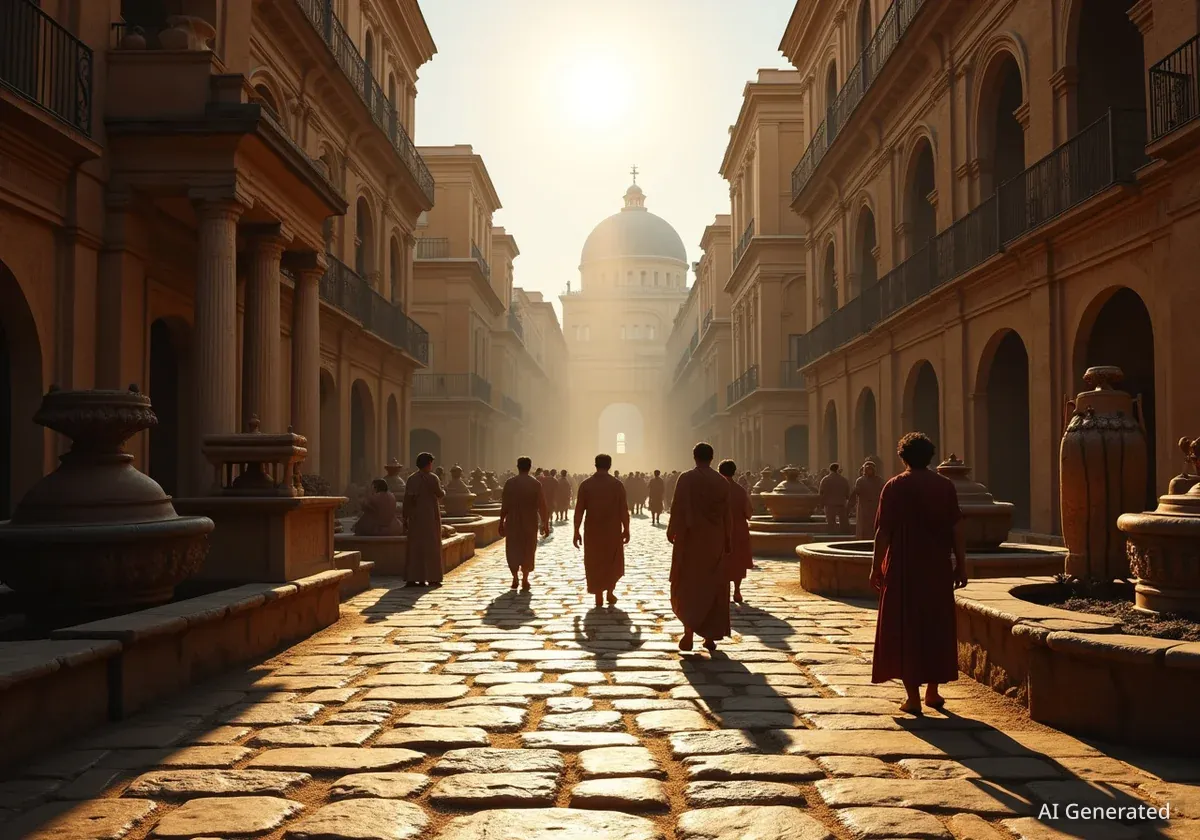
Recent digital reconstructions bring a thriving Pompeii back to life, showcasing everything from its aqueducts and forum to its specialized production facilities for wine and perfume. The city's infrastructure was robust, supporting a population estimated at around 12,000 people.
The core of Pompeii's public life revolved around its forum and basilica, central hubs for commerce, law, and social interaction. Private homes ranged from modest dwellings to elaborate villas, many featuring intricate frescoes and detailed mosaics that provide insight into the aesthetic tastes of the time.
Did You Know?
The Amphitheater of Pompeii, though smaller than Rome's Colosseum, was constructed approximately 140 years earlier. It served as a venue for gladiatorial combat, athletic feats, exotic animal displays, and public executions, reflecting the common Roman demand for such spectacles.
Public Spaces and Leisure
Pompeii boasted a full array of public amenities. Baths were essential for hygiene and social gatherings, functioning as community centers. Snack bars, known as thermopolia, were ubiquitous, serving hot food and drinks to residents on the go. Dining rooms within private homes were designed for elaborate banquets, reflecting the importance of hospitality.
The city's focus on leisure and public entertainment demonstrates that provincial life, while perhaps lacking the political intrigue of Rome, offered a comfortable and engaging existence for its inhabitants.
"Historians claim that about 2,000 people lost their lives in Pompeii that day, meaning about 10,000 managed to escape," notes a recent reconstruction project. This figure highlights the significant number of residents who successfully fled the disaster.
The Days Leading to Disaster
The eruption of Mount Vesuvius lasted for about two days, beginning with a massive column of ash and pumice. Despite the initial signs, many residents did not immediately evacuate. Historians believe this delay was due to a lack of understanding regarding the true danger of the volcano, which had been dormant for centuries.
The first day brought ashfall, which collapsed roofs and blocked escape routes. The second day saw pyroclastic flows, fast-moving currents of hot gas and volcanic debris, which were ultimately responsible for the remaining fatalities.
Historical Context
Pompeii's status as a medium-sized provincial city makes its preservation incredibly valuable. It offers a more typical representation of Roman life compared to the imperial grandeur of Rome itself, providing insights into the everyday lives of ordinary citizens, merchants, and artisans across the empire.
Eyewitness Accounts and Modern Understanding
Much of what we know about the eruption comes from the letters of Pliny the Younger. He provided the only written eyewitness account of the catastrophe, describing the immense cloud, the falling ash, and the panic that gripped the region. His detailed observations have been crucial for understanding the timeline and impact of the event.
Centuries of archaeological examination since Pompeii's rediscovery have built upon these accounts. Modern technology, including 3D modeling and computer animation, now allows researchers to create highly accurate visualizations of the city, bringing its history to a wider audience.
- Pliny the Younger's Letters: These documents are primary sources for understanding the human experience of the eruption.
- Archaeological Excavations: Ongoing work reveals new details about structures, artifacts, and human remains.
- Digital Reconstructions: Advanced technology helps visualize the city as it was, from lavish homes to public squares.
Pompeii's Enduring Legacy
Pompeii's legacy extends far beyond its tragic end. The city has become a symbol of ancient Roman life, offering an unparalleled archaeological record. Its preservation under layers of ash and pumice has allowed for the study of everything from Roman diets and trade networks to social structures and artistic expressions.
The site continues to be a major tourist destination, drawing millions of visitors annually. These visitors come to walk the ancient streets, see the preserved frescoes, and gain a tangible connection to a civilization that shaped much of the Western world. The ongoing research and interpretation of Pompeii ensure that its stories continue to inform and fascinate.
The city, once an ordinary provincial outpost, has transformed in its afterlife into the quintessential medium-sized Roman city, offering invaluable lessons about the ancient world as a whole. Its story serves as a powerful reminder of both the destructive force of nature and the enduring resilience of human history.